How to Prevent Fights Over Cat Trees & Territory
Cat trees are one of the most rewarding pieces of furniture you can bring into a home with felines. These tall, multi-level structures give your pets somewhere to climb, scratch, nap, and survey their kingdom from a safe height. Yet the very thing that enriches your cats’ lives can also become a flashpoint for conflict. In a busy household, cat trees often turn into prized real estate that several animals want at once, and that competition can spill over into hissing, swatting, and full-blown brawls. This guide walks through proven ways to prevent fights over cat trees and territory so peace can settle over your whole feline family.
Understanding Why Cats Fight Over Territory
Cats are territorial by instinct. In the wild, controlling space means controlling access to food, shelter, and safety, so the drive to claim and defend a patch of ground runs deep. Bring several cats under one roof and that instinct doesn’t switch off. Each animal will try to stake out its own zone and its own resources, and the most desirable cat trees frequently sit at the top of the wish list. When demand outstrips supply, the result is tension, posturing, and sometimes aggression. Recognizing this hardwired behavior is the first step toward designing a home where conflict rarely gets the chance to start.
Stress plays a quiet but powerful role here. A cat that feels crowded or insecure is far more likely to lash out over a perch or one of the cat trees. By giving every cat a sense of ownership and control, you remove much of the pressure that fuels disputes in the first place.

Provide Multiple Cat Trees
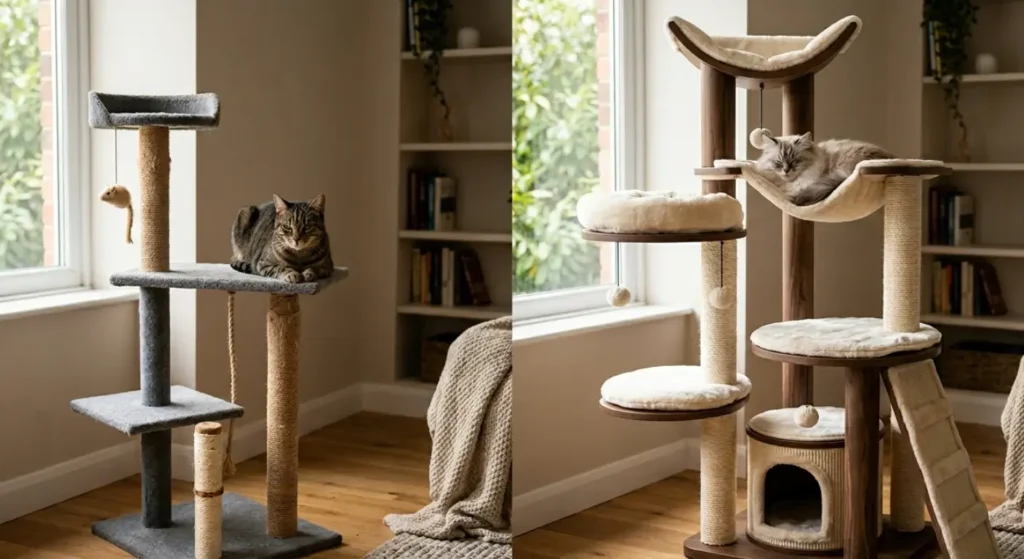
The single most effective way to head off fights over cat trees is simple: offer more than one. When each cat has a structure to call its own, the scramble for a single coveted spot disappears almost overnight. Multiple cat trees let every animal climb, scratch, and lounge without crowding a rival, which dramatically cuts down on territorial squabbles.
- Spread the cat trees across different rooms so each cat can carve out its own corner of the home rather than competing in one area.
- Mix up the heights, shapes, and styles of your cat trees, since cats have individual tastes and a shy cat may prefer a lower, more sheltered design while a confident one wants the highest lookout.
A good rule of thumb borrowed from feline behavior experts is “one per cat, plus one extra.” That spare structure gives a displaced cat somewhere to retreat instead of forcing a confrontation, so the cat trees stay shared rather than contested.
Make the Most of Vertical Space
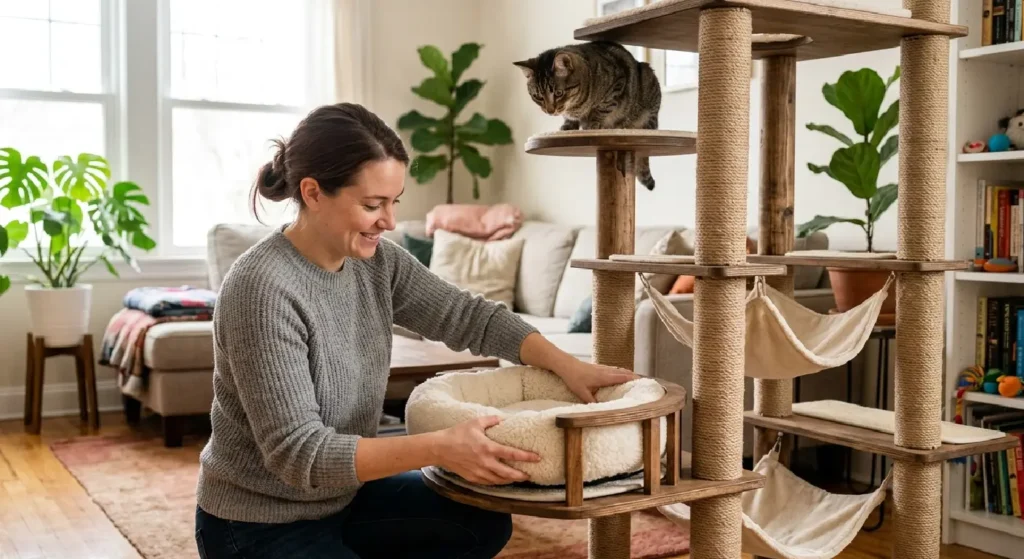
Cats are natural climbers, and they read a room in three dimensions rather than two. Beyond your cat trees, you can hand them an entire vertical landscape using wall shelves, cat perches, window seats, and other elevated surfaces. Expanding upward effectively enlarges your home’s usable territory without taking up an inch of floor space, and that extra room eases competition.
- Mount shelves and perches at staggered heights to build a climbing route that lets cats pass one another without face-to-face standoffs.
- Dress the shelves with soft beds, blankets, and a few toys so the high spots feel just as inviting as the cat trees themselves.
When cats can travel along walls and rest up high between the cat trees, lower-ranking animals gain escape routes, and escape routes are one of the best fight-prevention tools you have.
Quick Reference: How to Prevent Fights Over Cat Trees & Territory
| Strategy | Why It Helps | Quick Tip |
|---|---|---|
| Understand cat territory | Reveals the instinct driving conflict so you can design around it | Treat every cat as needing its own space and resources |
| Provide multiple cat trees | More structures mean less competition for one prized spot | One tree per cat, plus one spare |
| Make the most of vertical space | Expands usable territory and creates escape routes | Add wall shelves and perches at staggered heights |
| Choose the right cat trees | Stable, multi-platform designs let cats perch without touching | Wide base, separate levels, enclosed cubbies |
| Set a consistent feeding schedule | Reduces the scarcity that fuels mealtime aggression | Feed at the same times every day |
| Use separate feeding stations | Prevents food guarding and bullying at a shared dish | Place bowls in different rooms |
| Rotate toys and accessories | Stops any one cat from monopolizing resources | Swap toys and beds weekly |
| Give each cat individual attention | Eases jealousy over your affection | Schedule solo play and cuddle time |
| Provide individual hideaways | Gives anxious cats a retreat instead of a standoff | Add caves or condos in quiet corners |
| Introduce new cat trees carefully | Prevents change-related stress and turf disputes | Use neutral spots and transfer a communal scent |
| Read body language early | Lets you defuse a fight before it starts | Watch for flat ears, lashing tail, hard stare |
| Use pheromones and scent | Signals safety and blends a calming group scent | Try a feline pheromone diffuser |
| Know when to get help | Catches medical causes or severe behavioral issues | See a vet or behaviorist if fights draw blood |
Set Up a Consistent Feeding Schedule
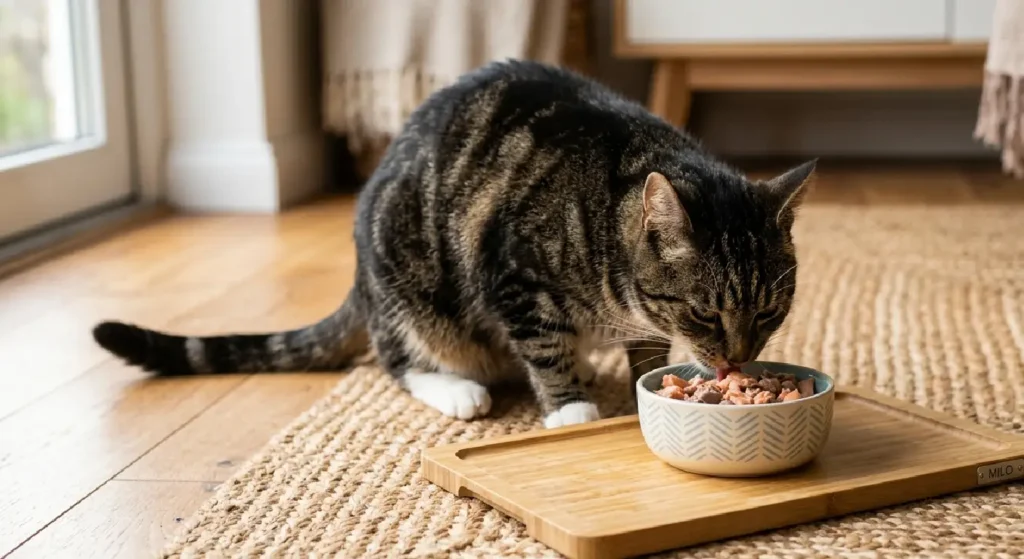
Food is one of the most common triggers for feline conflict, and mealtime tension can easily bleed into disputes over nearby cat trees and resting spots. Establishing a predictable feeding schedule creates a reassuring routine and lowers the sense of scarcity that drives competition over food and the cat trees alike. When cats trust that food arrives reliably, they stop guarding it so fiercely.
Use separate feeding stations, In a multi-cat home, every cat deserves its own feeding station. Separate bowls in separate locations prevent food guarding, stealing, and the bullying that often erupts at a shared dish.
- Set the stations in different rooms, or use raised stands, so cats aren’t forced to eat shoulder to shoulder.
- Watch body language during meals and step in early if you notice a stare-down, a lashing tail, or a cat blocking another’s path.

Rotate Toys and Accessories
Cats can grow possessive over toys, beds, and scratchers, and that ownership instinct sometimes extends to the cat trees parked beside their favorite playthings. Rotating accessories on a regular basis keeps the environment fresh and discourages any one cat from claiming a permanent monopoly.
- Introduce new toys, scratching posts, and beds periodically so novelty is shared rather than hoarded.
- Swap items in and out weekly to keep boredom, and the disputes boredom breeds around the cat trees, at bay.
Give Each Cat Individual Attention
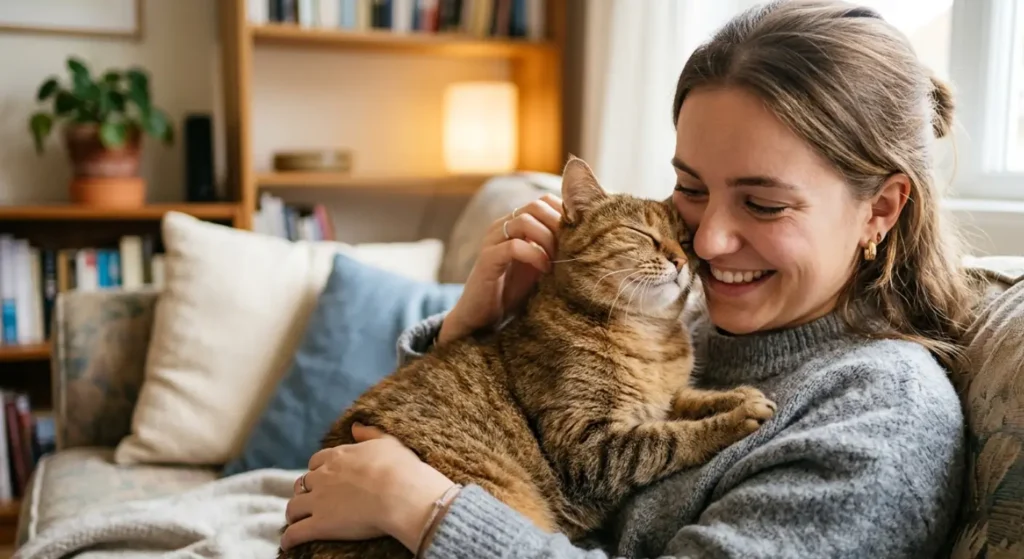
Cats are more social than their aloof reputation suggests, and many compete for their owner’s affection just as fiercely as they compete for cat trees. Spending one-on-one time with each animal reassures it of its place in the household and reduces the jealousy that can sour relationships between housemates and turn the cat trees into battlegrounds.
build bonding activities into your routine, Interactive play, gentle grooming, and quiet cuddle time all strengthen the trust between you and each cat. A secure, well-loved cat has far less reason to pick a fight.
- Carve out dedicated solo time with every cat so none feels overlooked.
- Rotate play and grooming sessions so each animal gets fair, equal attention.
Provide Individual Hideaways
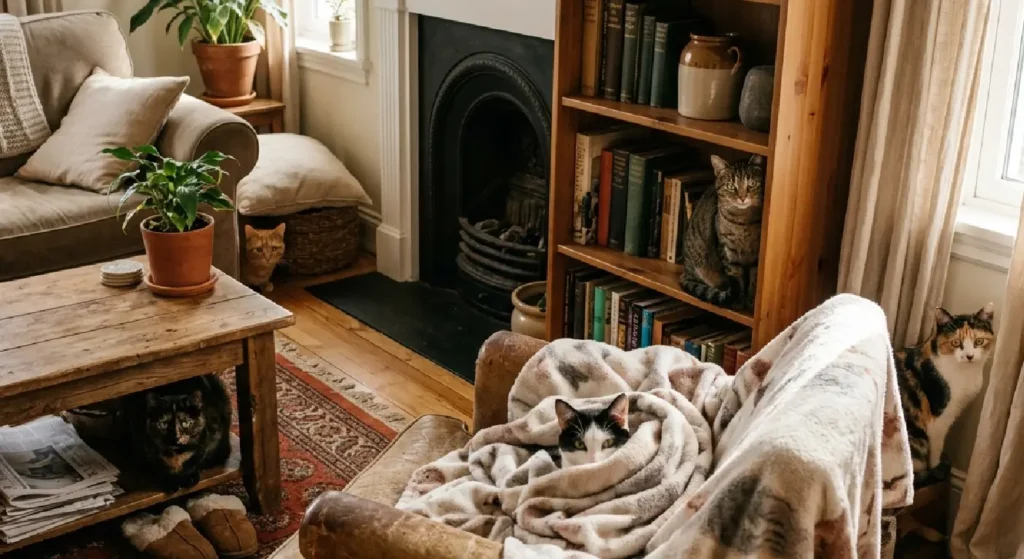
Every cat needs a private bolt-hole where it can decompress away from the others. Cat condos, covered caves, and tents give anxious animals somewhere to retreat instead of standing their ground on the cat trees.
- Tuck hideaways into quiet, low-traffic corners where a cat can enjoy real solitude.
- Line them with cozy bedding so they feel like genuine sanctuaries worth retreating to.
Conclusion
Preventing fights over cat trees and territory takes understanding, patience, and a little proactive design. By offering multiple cat trees, opening up vertical space, choosing the right structures, keeping a steady feeding schedule, rotating toys, giving each cat individual attention, and watching for early warning signs, you can dissolve most conflicts before they ignite. Every cat is an individual with its own preferences, so tailoring your approach to each personality is what ultimately keeps the peace.
With thoughtful planning, your cats can share their space, and their cat trees, without the hissing and swatting. The payoff is a calmer, happier home for your whole feline family, and for you.
Do you have your own tips for preventing fights over cat trees and territory? Share your experiences in the comments below.
Frequently Asked Questions
1. How many cat trees do I need for multiple cats?
A reliable formula is one tree per cat plus one spare. That extra structure gives a displaced cat somewhere to go instead of forcing a confrontation, which keeps competition for the cat trees low.
2. Why do my cats suddenly fight over the cat tree they used to share?
Sudden conflict often points to a change such as a new pet, a move, illness, or stress in the home. If two cats peacefully shared cat trees before and now clash, watch for triggers and consider a vet visit to rule out pain.
3. Where should I place cat trees to reduce fights?
Spread cat trees across different rooms rather than clustering them. Positioning them near windows and in separate territories gives each cat its own desirable spot and reduces head-to-head competition.
4. Will adding more cat trees actually stop the fighting?
In most multi-cat homes, yes. Extra cat trees and vertical perches expand the available territory, and more resources mean less reason to fight. Pair the new structures with separate feeding stations for the best results.
5. How do I introduce new cat trees without causing conflict?
Place new cat trees in a neutral area, let cats explore at their own pace, and transfer your cats’ communal scent onto them with a soft cloth. Avoid removing an old favorite at the same time, since abrupt change raises tension.
6. What size cat trees work best for several cats?
Choose tall, stable structures with wide bases and multiple separate platforms so more than one cat can perch without touching. Enclosed cubbies help shy cats feel secure on shared cat trees.
7. Can pheromone products help with territorial fighting?
Many owners find synthetic feline facial pheromone diffusers ease tension around cat trees and shared spaces. They mimic the calming scent cats leave naturally and can be a helpful part of a broader plan.
8. How can I tell a fight is about to happen?
Watch for flattened ears, a lashing tail, dilated pupils, a hard stare, and a tense crouch. These signals usually appear near contested cat trees or doorways before any physical clash, giving you time to redirect.
9. Should I punish a cat for starting fights over the cat tree?
No. Punishment increases stress and can make a cat more defensive, worsening the problem. Instead, redirect with toys, add more resources, and address the underlying competition over cat trees.
10. When should I see a vet or behaviorist about cat fighting?
Seek help if fights are frequent, cause injury, or lead to hiding, appetite loss, or litter box issues. Sudden aggression can stem from pain, so a vet should rule out medical causes before a behavior plan begins.