How to Remove Cat Hair from Furniture & Cat Trees
Sharing your home with a cat brings warmth, comfort, and plenty of personality, but it also brings a familiar struggle: the endless drift of fur across every soft surface you own. If you have ever sat down on the sofa only to stand up wearing a coat of fluff, you already know why so many owners want to remove cat hair quickly and keep it gone. The good news is that you do not need expensive gadgets or hours of scrubbing. With the right approach, you can remove cat hair from furniture and cat trees in minutes and keep your living space looking fresh.
This guide walks through the best tools, step-by-step methods, prevention strategies, and answers to the questions cat owners ask most. By the end, you will have a reliable system to remove cat hair from nearly any surface in your home.
Why Cats Shed So Much
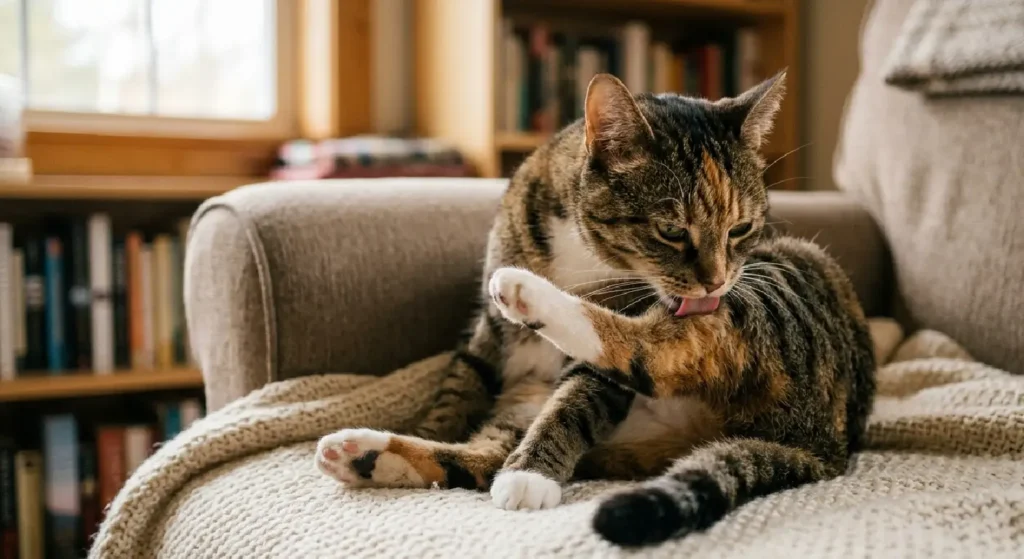
Before you learn how to remove cat hair, it helps to understand why it piles up in the first place. Shedding is a completely natural process. Cats lose old or damaged fur to make room for new growth, and most cats shed year-round with heavier “blowouts” in spring and fall as the seasons change.
Several factors influence how much your cat sheds, including breed, age, diet, stress levels, and overall health. Long-haired breeds such as Persians and Maine Coons naturally leave more fur behind, while diet and hydration affect coat quality. Because shedding is constant, the goal is not to stop it entirely but to remove cat hair consistently so it never has a chance to build up.
Best Furniture Fabrics for Cat Owners
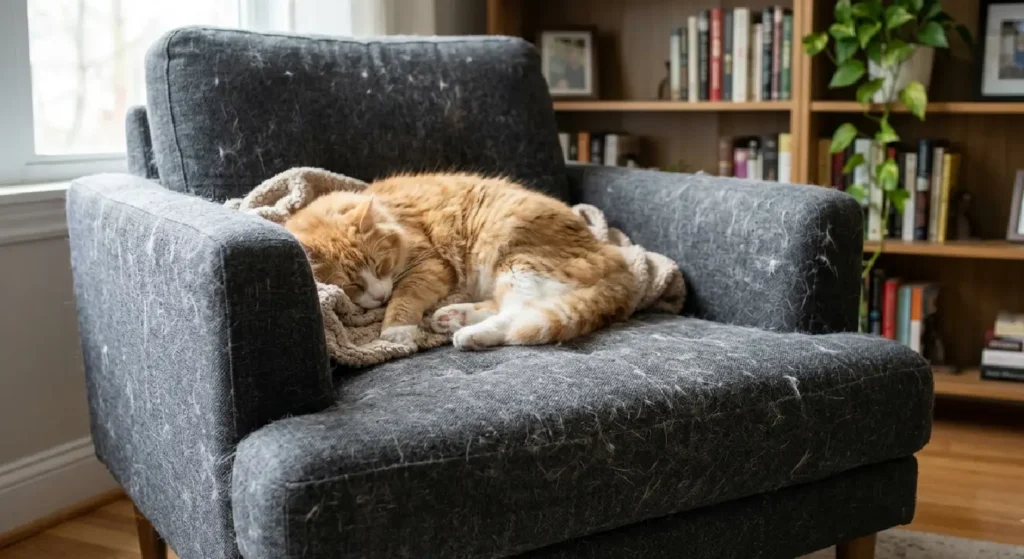
If you are shopping for new pieces, fabric choice affects how hard it is to remove cat hair down the road. Tightly woven materials such as microfiber, leather, and faux leather release fur easily and resist clinging. By contrast, loose weaves, velvet, and chenille trap fur deep in the pile, making it much harder to remove cat hair completely. Choosing the right material now saves you cleaning time for years.
Tools You Need to Remove Cat Hair
Having the right equipment on hand makes it far easier to remove cat hair without frustration. Keep these basics within reach:
- Lint roller: The fastest way to remove cat hair from cushions, throws, and clothing.
- Rubber gloves: Damp gloves create gentle friction and static that gather fur into easy-to-grab clumps.
- Vacuum with an upholstery attachment: Essential for deep cleaning sofas, chairs, and carpeted cat trees.
- Bristle or rubber pet brush: Ideal for lifting fur from rough or textured surfaces.
- Microfiber cloths: Slightly dampened, they attract loose fur instead of pushing it around.
- Squeegee or rubber broom: Surprisingly effective on rugs and woven fabric.
With these tools ready, you can remove cat hair from almost any spot in your home in a single cleaning session.
How to Prevent Cat Hair Buildup
The easiest way to remove cat hair is to stop so much of it from spreading in the first place. A few simple habits dramatically reduce daily cleanup.
- Brush your cat regularly. Grooming two or three times a week captures loose fur at the source. Long-haired cats may need daily brushing.
- Feed a quality diet. Omega-3 and omega-6 fatty acids support a healthier coat that sheds less.
- Keep your cat hydrated. Good hydration improves skin and coat condition.
- Use washable throws. Drape a blanket over favorite spots and wash it instead of the whole sofa.
- Run an air purifier. A HEPA filter captures airborne fur and dander before it settles, cutting down on cleanup later.
Consistency is the secret. A short weekly routine will always beat an occasional deep clean when you need to remove cat hair fast.
How to Remove Cat Hair from Furniture
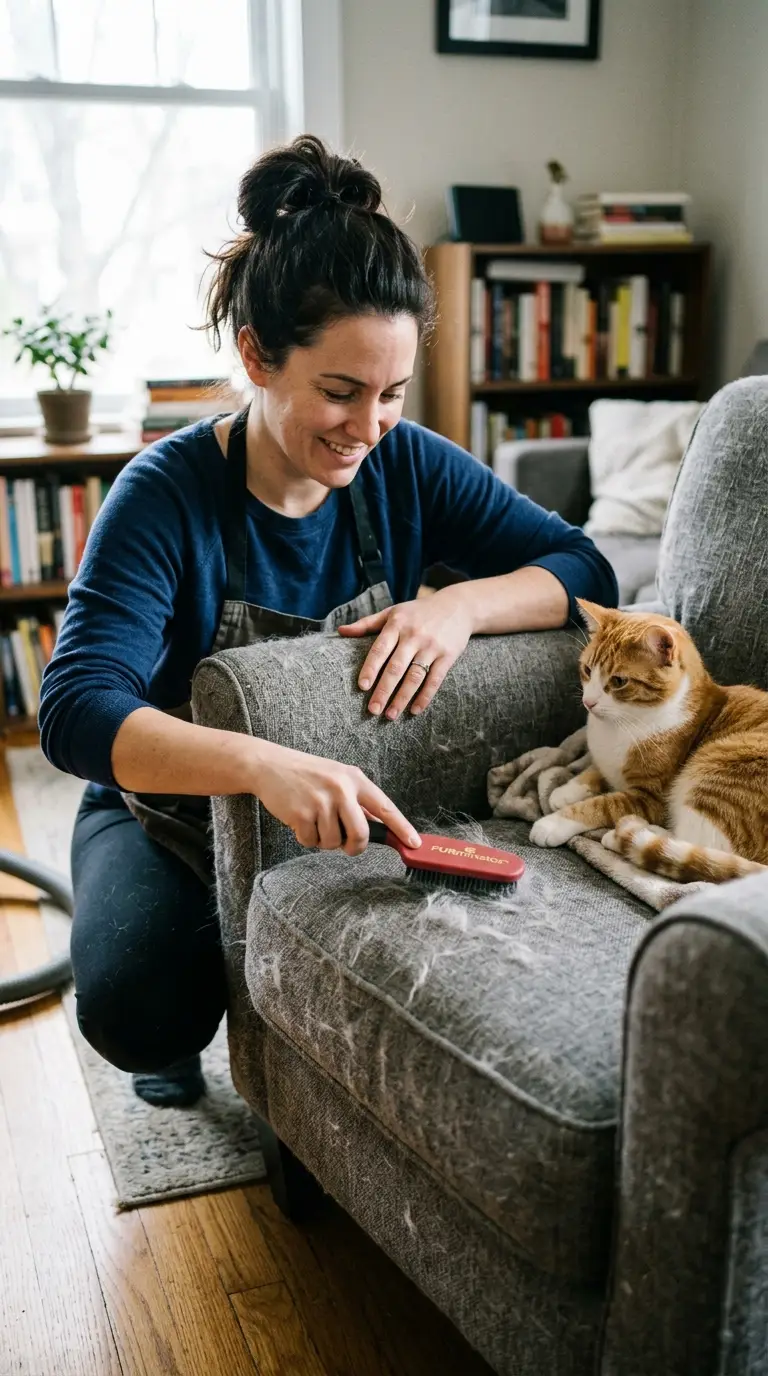
Furniture is where fur is most noticeable and most stubborn. Use the methods below to remove cat hair from couches, armchairs, and upholstered pieces.
Use a Lint Roller
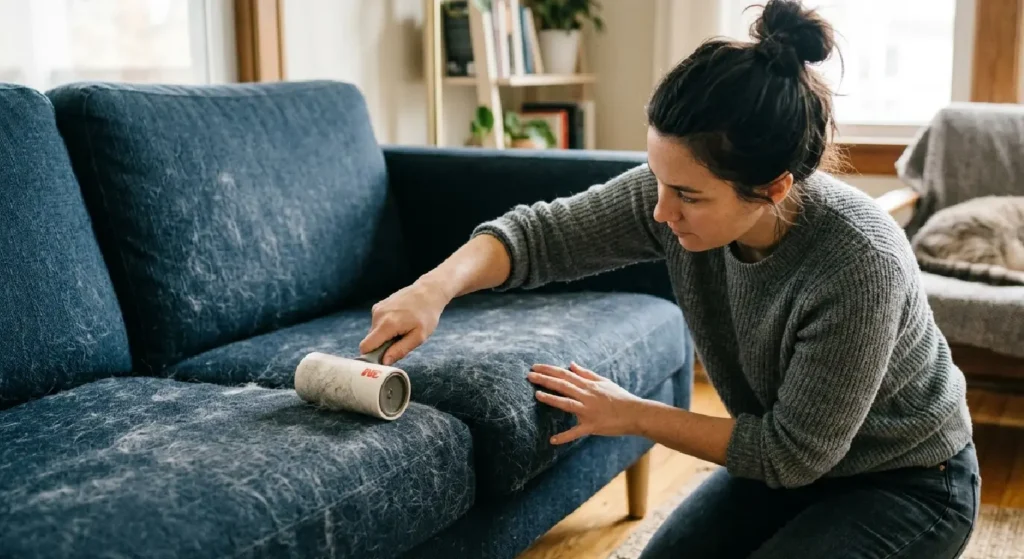
A lint roller is the quickest fix for everyday touch-ups. Roll the sticky sheet across the fabric in overlapping strokes, peel off the layer once it loses grip, and continue. This is the simplest way to tidy up cushions before guests arrive.
Try Rubber Gloves
Slip on a pair of rubber gloves, dampen them slightly, and run your hands over the upholstery. The friction and light static pull the fur into loose clumps that you can lift away and toss out. Rinse the gloves under water when they fill up, then repeat to remove cat hair from the rest of the surface.
Vacuum the Upholstery
For a deeper clean, attach the upholstery tool to your vacuum and work in slow, back-and-forth passes. Vacuuming lifts embedded fur that surface tools miss, so it is the best way to remove cat hair that has worked its way deep into the weave. Empty the canister often to keep suction strong.
Use a Damp Microfiber Cloth or Squeegee
Wipe a lightly dampened microfiber cloth across leather and tightly woven fabric, and the fur will gather into a ridge you can collect by hand. On rugs and heavier textiles, a rubber squeegee drags fur to the surface so you can remove cat hair that has settled deep into the fibers.
Cat Hair Removal Methods at a Glance
| Method / Tool | Best For | How It Works | Effort Level |
|---|---|---|---|
| Lint Roller | Cushions, throws, quick touch-ups | Sticky sheets lift loose fur from the surface in seconds | Very Easy |
| Rubber Gloves | Sofas & upholstered chairs | Friction and light static gather fur into easy-to-grab clumps | Easy |
| Vacuum + Upholstery Tool | Deep-set fur in furniture | Suction pulls embedded hair from deep within the weave | Moderate |
| Damp Microfiber / Squeegee | Leather, rugs, tight weaves | Drags fur into a ridge you can collect by hand | Easy |
| Bristle / Rubber Brush | Carpeted cat trees & sisal posts | Loosens trapped fur from rough, textured surfaces | Moderate |
| Vacuum + Brush Attachment | Cat tree platforms & perches | Gentle passes lift hair without snagging the carpet | Moderate |
| Washing Removable Covers | Cat trees with washable covers | Warm water loosens fur; a no-heat tumble shakes it free | Low (set & forget) |
How to Remove Cat Hair from Cat Trees
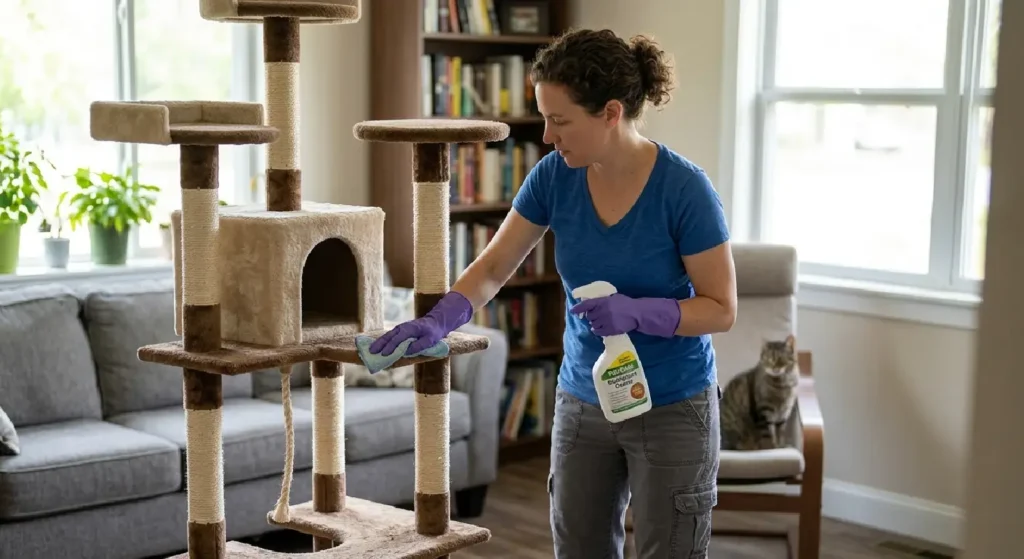
Cat trees are fur magnets because your cat spends so much time perched there. These methods help you remove cat hair from carpeted platforms, sisal posts, and plush hideaways.
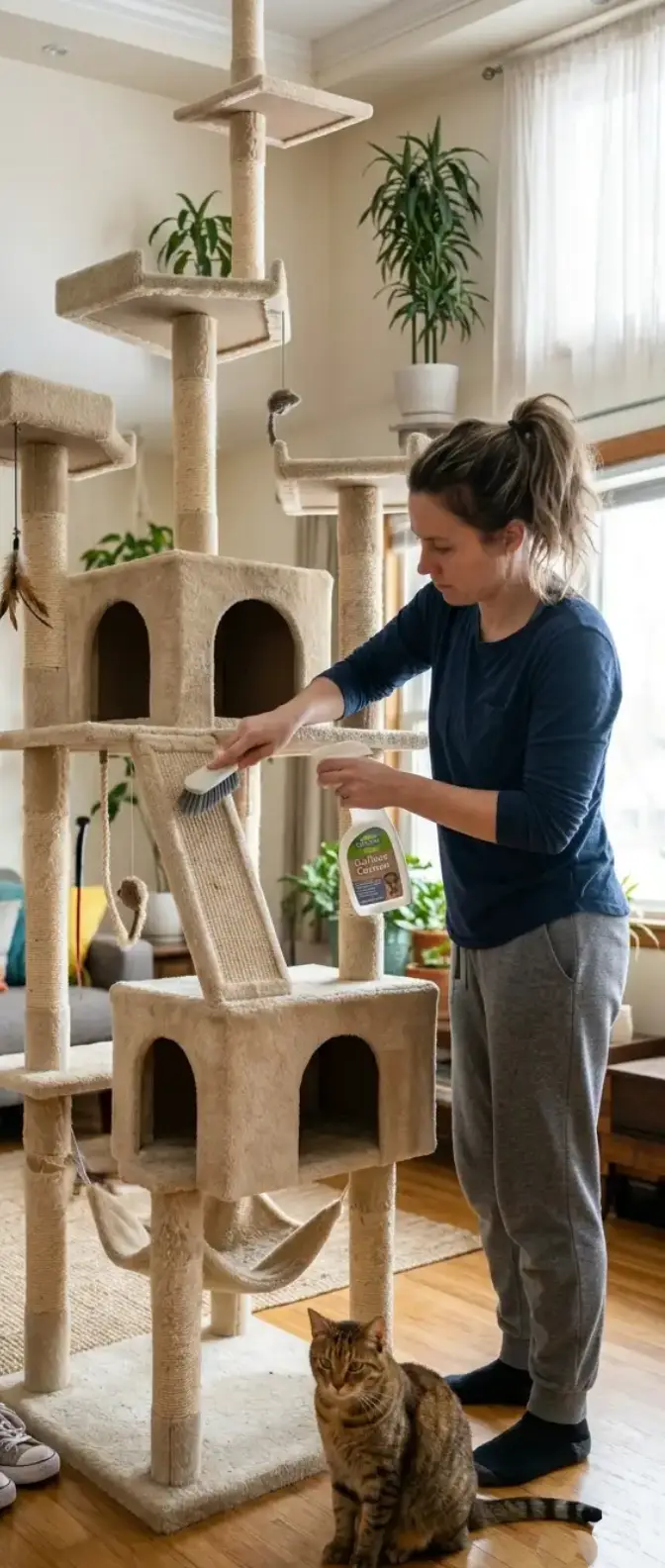
Brush With a Bristle or Rubber Brush
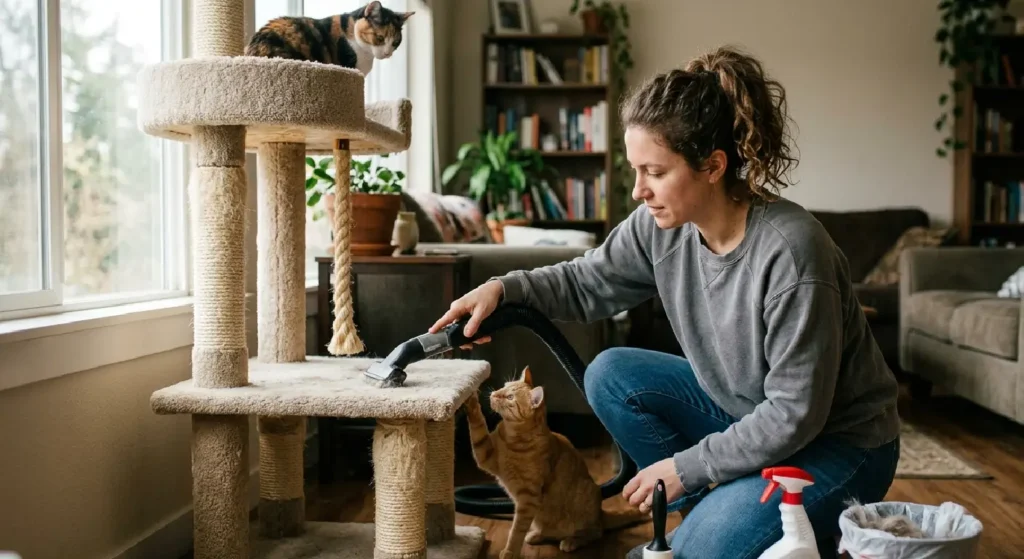
A stiff bristle brush or a rubber pet brush loosens trapped fur from carpeted surfaces and rough posts. Brush in one direction to collect the fur, then sweep or vacuum it up. This is often the only way to remove cat hair from textured sisal.
Vacuum the Platforms
Switch to a brush attachment and vacuum each level of the tree, including the underside of perches where fur collects unseen. Gentle, steady passes let you remove cat hair without snagging the carpet or loosening the staples.
Wash Removable Covers
If your cat tree has removable covers, take them off and launder them regularly. Washing in warm water loosens stubborn fur, and a quick tumble on a no-heat cycle helps remove cat hair before you put the covers back. Always check the manufacturer’s care label first.
How Often Should You Clean?
For most homes, a light pass with a lint roller or gloves every couple of days keeps surfaces presentable, while a full vacuuming once a week handles the deeper buildup. During heavy shedding seasons you may need to remove cat hair more frequently. Listen to your home: visible fur on dark fabric is your signal to clean.
Final Thoughts
Living with a cat means living with fur, but it does not mean surrendering to it. With a lint roller, rubber gloves, a good vacuum, and a few prevention habits, you can remove cat hair from furniture and cat trees quickly and keep your space comfortable and clean. Build a simple routine, choose pet-friendly fabrics where you can, and stay consistent. Do that, and you will spend less time cleaning and more time enjoying the company of your feline friend.
Frequently Asked Questions (FAQs)
1. What is the fastest way to remove cat hair from furniture?
A lint roller is the quickest option for everyday cleanup, while damp rubber gloves work well on larger upholstered areas. For deep buildup, a vacuum with an upholstery attachment is the most thorough way to remove cat hair.
2. Can I remove cat hair without a vacuum?
Yes. Rubber gloves, a damp microfiber cloth, a rubber squeegee, and a lint roller can all lift fur effectively without any vacuum at all.
3. How do I remove cat hair from a carpeted cat tree?
Loosen the fur with a stiff bristle or rubber brush, then vacuum it up with a brush attachment. Brushing in one direction first makes it much easier to remove cat hair from the carpet pile.
4. Does dampening rubber gloves help remove cat hair?
It does. A light spray of water increases friction and helps the fur clump together, so slightly damp gloves remove cat hair faster than dry ones.
5. Why does cat hair stick so stubbornly to fabric?
Static electricity and the texture of woven fabric cause fur to cling. Using a damp cloth or an anti-static spray reduces static and makes it easier to remove cat hair.
6. How often should I remove cat hair from my furniture?
A quick touch-up every few days plus a thorough weekly vacuum works for most homes. You may need to remove cat hair more often during spring and fall shedding seasons.
7. Can regular grooming reduce how much cat hair I have to clean?
Absolutely. Brushing your cat two to three times a week captures loose fur before it spreads, which means you will need to remove cat hair from surfaces far less often.
8. What fabrics make it easier to remove cat hair?
Tightly woven fabrics like microfiber and leather release fur easily. Velvet, chenille, and loose weaves trap fur, making it harder to remove cat hair completely.
9. Will washing cat tree covers really help?
Yes. Removable covers washed in warm water release trapped fur, and a no-heat tumble helps remove cat hair before you reattach them. Always check the care label first.
10. Is shedding a sign that something is wrong with my cat?
Some shedding is completely normal and healthy. However, sudden excessive shedding, bald patches, or skin irritation can signal stress, allergies, or a health issue, so consult your veterinarian if you notice these changes.