DIY Cat Beds: Easy and Affordable Ideas
Looking for a creative way to give your feline a snug place to rest? DIY cat beds are a fun, rewarding, and budget-friendly solution that any cat owner can tackle at home. Instead of spending money on a store-bought option, you can craft cozy homemade cat beds from simple materials you may already have around the house. In this guide, we’ll walk through easy and affordable DIY cat beds — from sturdy cat trees to plush cushions and upcycled baskets — so you can find inspiration for your next crafting project.
Why DIY Cat Beds Are Worth Making
There are plenty of reasons to make your own cat bed rather than buy one off the shelf. Here’s why DIY cat beds are such a smart choice for pet owners:
- Customizable: You can tailor the size, shape, and design of DIY cat beds to match your cat’s exact preferences.
- Affordable: Homemade DIY cat beds usually cost a fraction of what retail versions do.
- Unique: Your cat ends up with a one-of-a-kind bed that reflects your personal style.
- Fun: Crafting DIY cat beds is an enjoyable, creative project you can do solo or with the family.
- Sustainable: By repurposing recycled materials, you cut down on waste and help the environment.
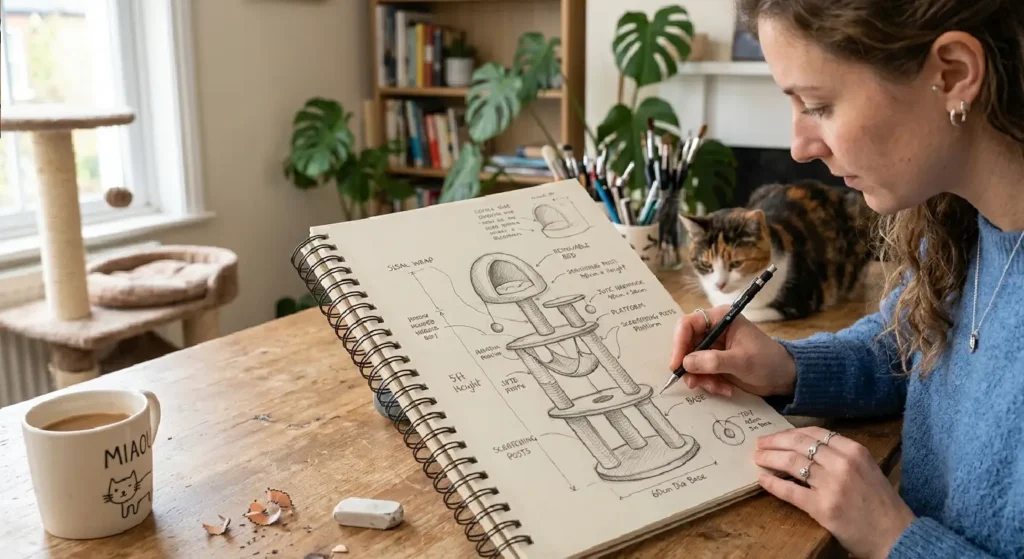
Before diving into specific projects, it helps to gather a few basic supplies. Most DIY cat beds rely on inexpensive, everyday items, so you rarely need to buy anything special. A typical materials list might include soft fabric or an old blanket, stuffing such as foam or cotton, a needle and thread (or a sewing machine if you have one), scissors, glue, and a base like a basket, box, or wooden board. Having these essentials on hand makes building DIY cat beds quick and stress-free.
Easy DIY Cat Bed Ideas to Try
Below are several beginner-friendly DIY cat beds, ranging from no-sew options to slightly more ambitious builds. Pick the one that best suits your cat’s habits and your crafting comfort level.
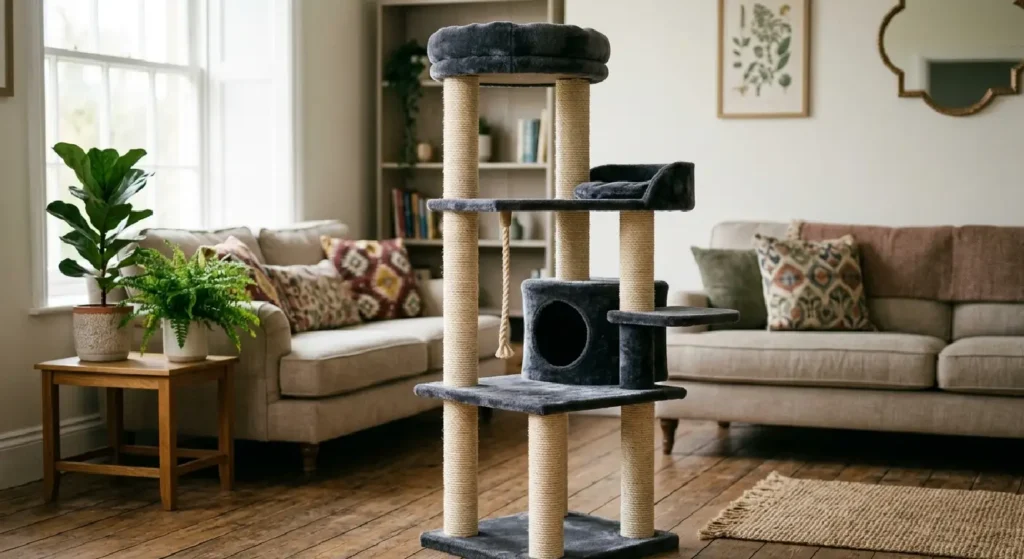
1. The Cat Tree
A cat tree is one of the most popular DIY cat beds because it doubles as a play and napping zone. Cat trees give your pet a fun, comfortable space to climb, scratch, and snooze. To build a simple version, you’ll need:
- Wooden boards
- Carpet or sisal rope
- Scratching posts
- Hammer and nails
- Glue
Cut the wooden boards to size and assemble them into a basic tree shape. Wrap the boards in carpet or sisal rope to create a scratch-friendly surface, then attach posts at different heights for climbing. The result is a mini jungle gym your cat will love to explore and rest on.
2. The Comfy Cushion
If your cat favors something soft, a plush cushion is one of the easiest DIY cat beds to sew. You’ll need:
- Fabric of your choice
- Stuffing material (foam or cotton)
- Needle and thread
- Sewing machine (optional)
Cut two squares or rectangles of fabric to your desired size. Sew the pieces together, leaving a small gap for stuffing. Fill it with your chosen padding, then stitch the opening closed. The finished cushion gives your cat a soft spot to curl up on day or night.
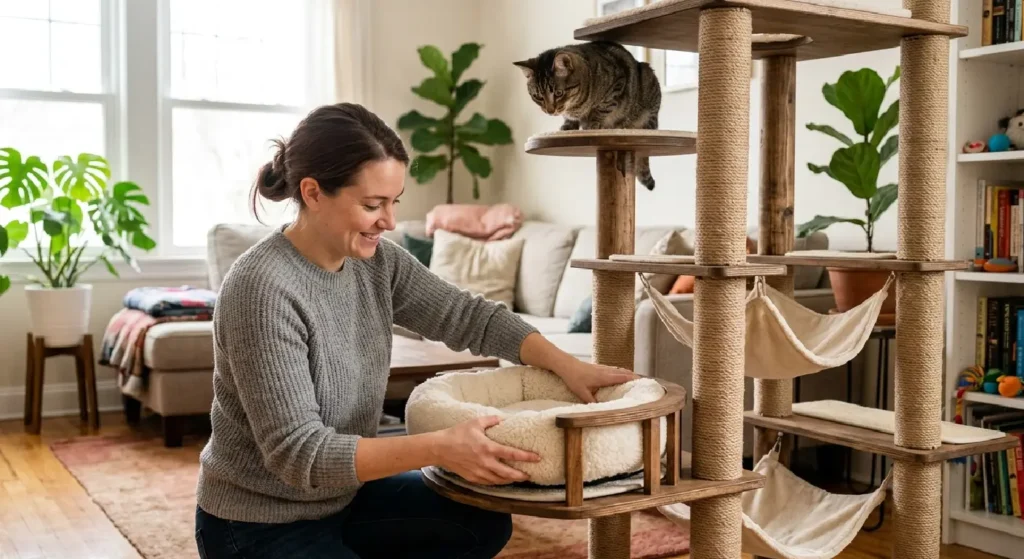
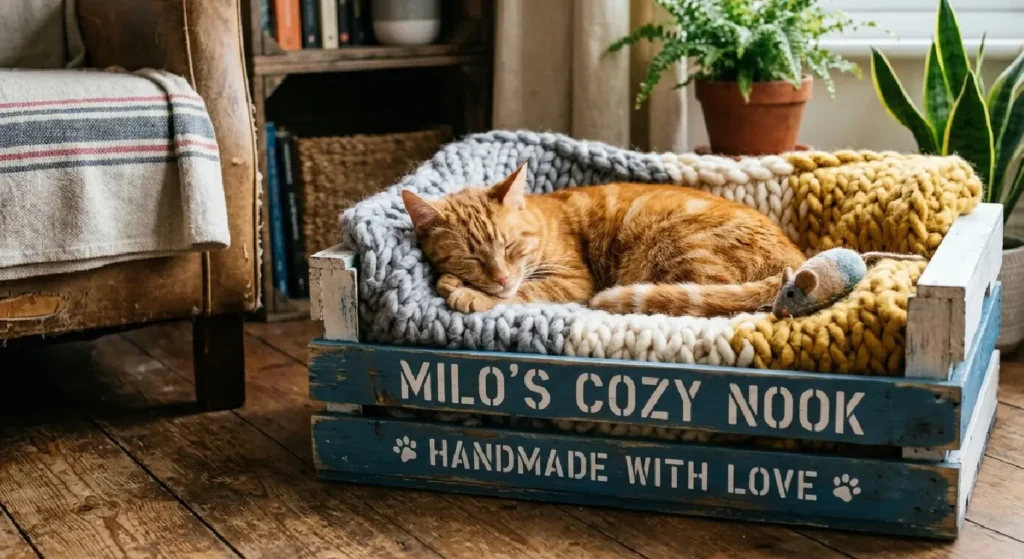
3. The Upcycled Basket
For a fast, low-effort build, repurpose an old basket or box into one of the coziest DIY cat beds around. Upcycling breathes new life into items that might otherwise be tossed out. You’ll need:
- An old basket or box
- Soft fabric or a blanket
- A pillow or cushion
Line the inside of the basket with soft fabric, then drop in a pillow or cushion for extra comfort. In minutes, you’ve created a snug little hideaway where your cat can relax.
4. The No-Sew T-Shirt Bed
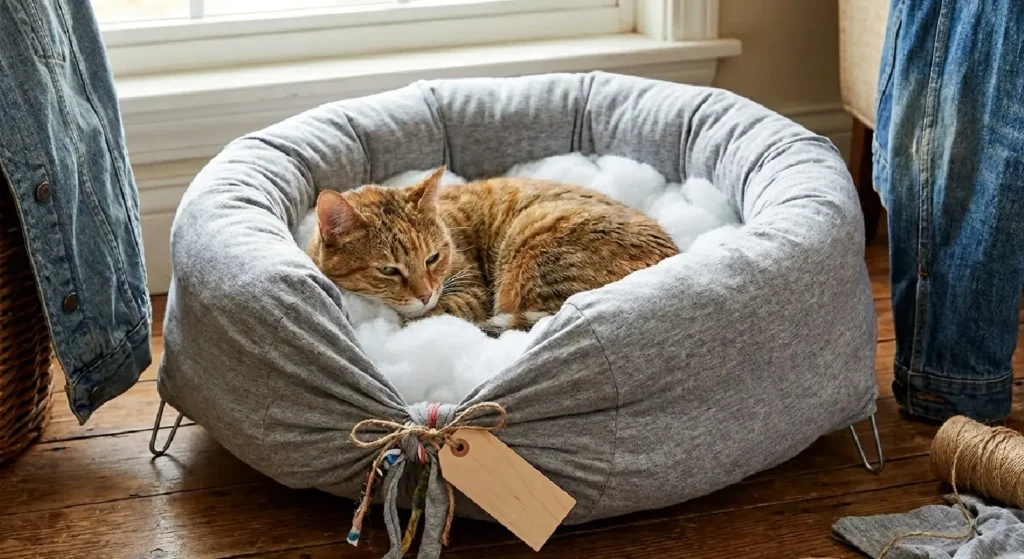
Don’t own a sewing machine? No problem. Among the simplest DIY cat beds is the no-sew T-shirt bed. Grab an old T-shirt, a wire hanger or a piece of cardboard for the base, and some pillow stuffing. Bend the hanger into a frame, slip the shirt over it, tuck stuffing inside, and tie or tuck the openings closed. It’s a clever, near-instant project that costs almost nothing.
5. The Cardboard Box Hideaway
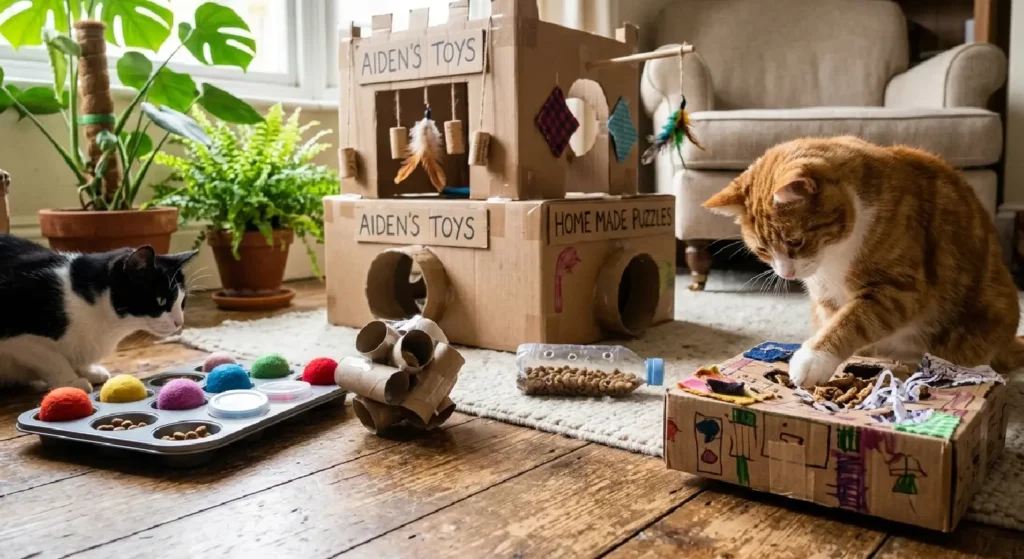
Cats famously adore boxes, which makes cardboard one of the best materials for DIY cat beds. Take a sturdy box, cut an entrance hole in one side, and line the bottom with a folded towel or blanket. You can stack or decorate multiple boxes to build a little fort. This enclosed style of DIY cat beds appeals to cats that crave a private, den-like space.
6. The Cozy Sweater Bed
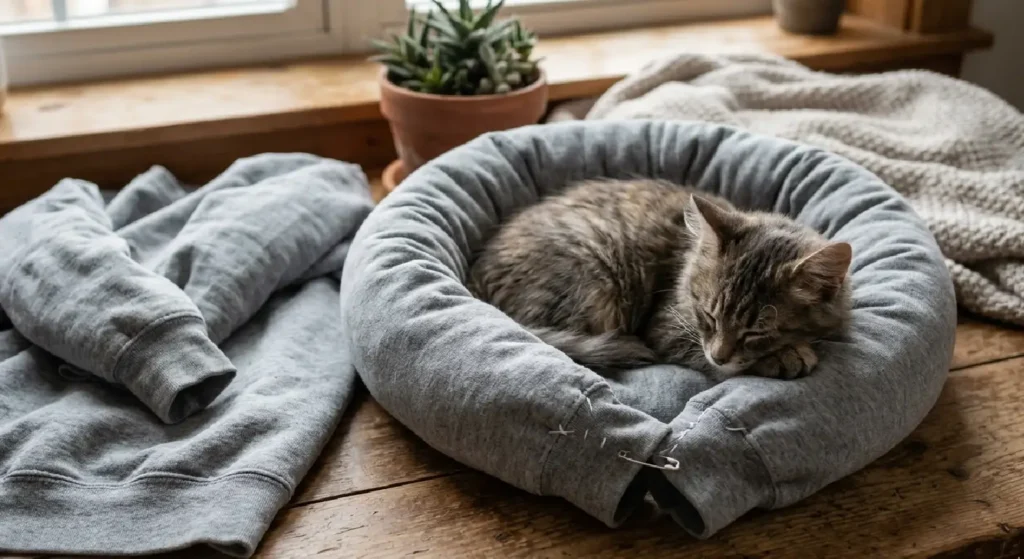
An old sweater or sweatshirt can become one of the warmest DIY cat beds with minimal effort. Stuff the sleeves and body lightly, fold the sleeves into a ring to form a raised edge, and secure them with a few stitches or safety pins. The familiar scent of worn clothing also helps anxious cats feel calm and secure.
DIY Cat Bed Ideas at a Glance
Not sure which project to start with? This quick comparison lays out the difficulty, time, and cost of each bed so you can match a build to your skill level and your cat’s personality.
| Bed Idea | Difficulty | Time | Cost | Sewing? | Best For |
|---|---|---|---|---|---|
| Cat Tree | Hard | 2–3 hrs | $$ | No | Climbers & scratchers |
| Comfy Cushion | Medium | 30–45 min | $ | Yes | Soft, snuggly sleepers |
| Upcycled Basket | Easy | ~10 min | Free–$ | No | Quick cozy nooks |
| No-Sew T-Shirt Bed | Easy | ~15 min | Free | No | Budget-friendly builds |
| Cardboard Box Hideaway | Easy | ~15 min | Free | No | Shy, den-loving cats |
| Cozy Sweater Bed | Medium | ~20 min | Free | Optional | Anxious cats & warmth |
Tips for Choosing the Right Materials
The fabrics and fillings you select have a big impact on how much your cat enjoys the finished bed. When planning DIY cat beds, lean toward machine-washable fabrics so cleanup stays simple, and pick soft, breathable materials like fleece or cotton for comfort. Avoid loose threads, small beads, or anything your cat might swallow. Choosing quality materials ensures your DIY cat beds stay safe, durable, and inviting for the long haul.
Safety Considerations to Keep in Mind
Safety should always come first when building DIY cat beds. Make sure any glue you use is non-toxic and fully dried before your cat moves in. Double-check that wooden structures are stable and won’t tip over during an energetic play session. Trim away dangling strings or ribbons that could become a choking hazard. A little extra caution keeps your DIY cat beds both cozy and worry-free.
How to Encourage Your Cat to Use Their New Bed
Even the best DIY cat beds sometimes get ignored at first — cats can be picky. To win them over, place the bed in a quiet, warm spot where your cat already likes to hang out. Add a familiar blanket or a piece of your clothing for a comforting scent, and sprinkle a little catnip to spark interest. Patience pays off; once your cat discovers how comfortable their new bed is, it’ll quickly become a favorite.
Final Thoughts
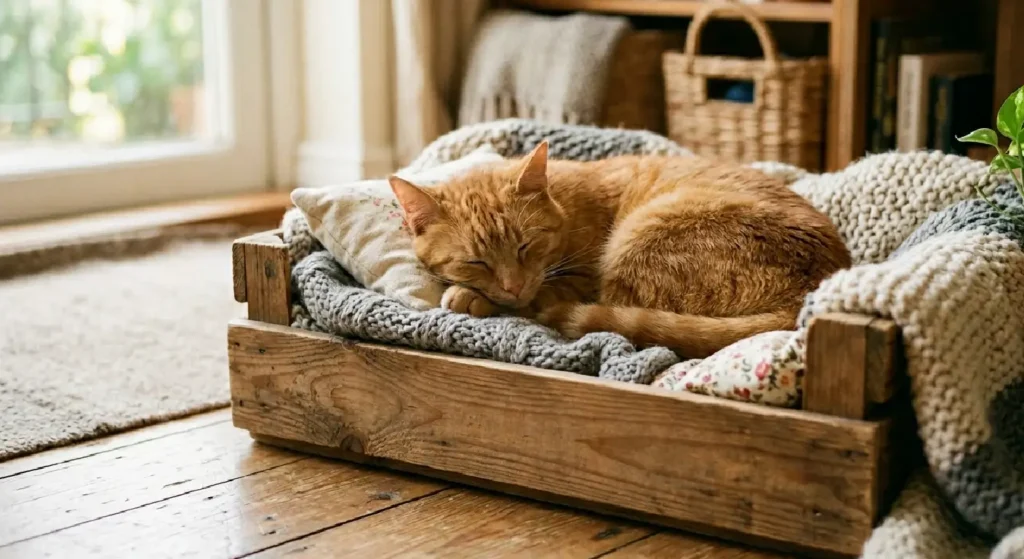
DIY cat beds are a fun and affordable way to give your furry friend a comfortable place to sleep. Whether you build a cat tree, sew a comfy cushion, upcycle a basket, or whip up a no-sew T-shirt bed, your cat will appreciate having a cozy spot to call their own. With a little creativity and a few simple materials, you can create custom DIY cat beds your pet will adore. Next time you’re thinking about upgrading your cat’s sleeping quarters, give one of these ideas a try — your cat will thank you for it.
Frequently Asked Questions
1. Are DIY cat beds cheaper than store-bought ones?
Yes. Most DIY cat beds use recycled or inexpensive household materials, so they typically cost far less than retail versions while still being just as cozy.
2. What materials are best for DIY cat beds?
Soft, breathable, machine-washable fabrics like fleece and cotton work best, paired with foam or polyester fiber stuffing. Sturdy bases such as baskets, boxes, or wooden boards round out most builds.
3. Can I make a cat bed without sewing?
Absolutely. No-sew DIY cat beds — like the T-shirt bed or the cardboard box hideaway — require only stuffing, an old shirt or box, and a few minutes of your time.
4. How big should a DIY cat bed be?
A good rule of thumb is to make the bed about one and a half times the length of your cat when stretched out, so they can curl up or sprawl comfortably.
5. Why won't my cat use the bed I made?
Cats can be selective. Try moving the bed to a quiet, warm spot, adding a familiar-smelling blanket, or sprinkling catnip to make your DIY cat beds more appealing.
6. Are DIY cat beds safe for kittens?
They can be, as long as you avoid small parts, loose threads, and toxic glue. Always supervise kittens around new beds until you’re confident the design is secure.
7. How do I clean a homemade cat bed?
Whenever possible, design DIY cat beds with removable, washable covers or use fabrics that can go straight into the washing machine for easy cleaning.
8. What's the easiest DIY cat bed for beginners?
The upcycled basket and the cardboard box hideaway are the simplest. Both require minimal tools and can be finished in under fifteen minutes.
9. Can I use old clothes to make a cat bed?
Yes — old T-shirts and sweaters are popular for DIY cat beds. As a bonus, your scent on the fabric helps your cat feel relaxed and secure.
10. Do DIY cat beds work for multiple cats?
They can. Simply scale up the size, or make several smaller DIY cat beds so each cat has a personal space, which helps reduce territorial squabbles.