Space-Saving Cat Trees: Best Picks for Small Apartments
Living in a compact home doesn’t mean your cat has to miss out on climbing, scratching, and lounging. The secret is choosing space-saving cat trees that work with your square footage instead of against it. In this guide, we’ll walk through the best space-saving cat trees for small apartments, explain why they matter, and help you pick the right one for your feline friend. Whether you rent a studio or share a one-bedroom with a roommate, there’s a design here that fits.
Why Space-Saving Cat Trees Matter in Small Apartments
Without a proper outlet, indoor cats can grow bored, anxious, or destructive, often turning to your sofa or curtains for entertainment. Well-chosen space-saving cat trees redirect that energy toward an approved zone, keeping both your cat and your furniture happy.
- They let your cat climb and perch up high, satisfying a natural survey instinct.
- They provide a dedicated scratching surface that protects your couch and walls.
- They offer a cozy retreat where your cat can nap and watch the room.
- They keep your cat active and mentally engaged, reducing boredom-driven behavior problems.
- They preserve floor space, which is the whole point of these compact designs in the first place.
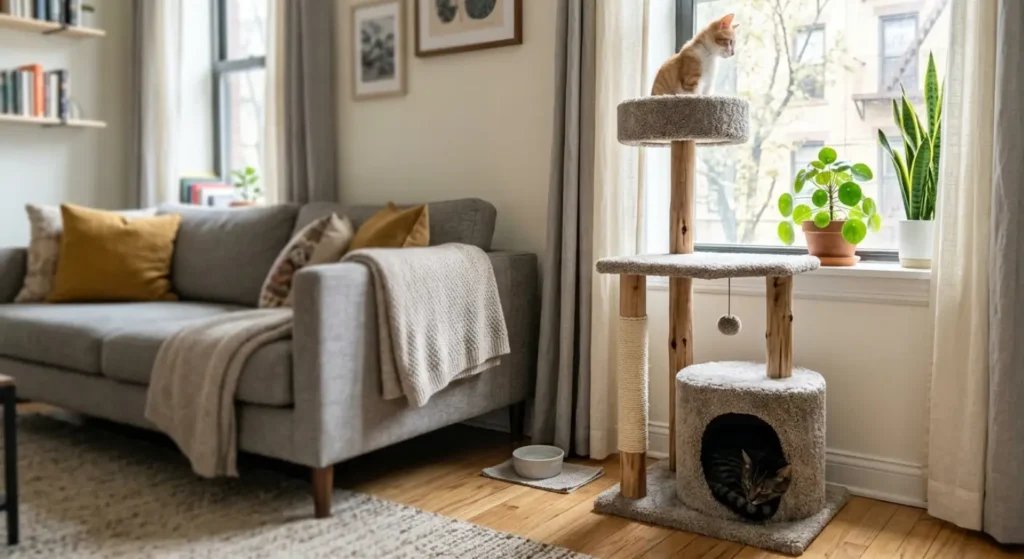
Cats are wired to climb, perch, and scratch. Giving them a dedicated place to act on those instincts is essential for their physical and mental health. The challenge in a small home is obvious: floor space is precious, and a bulky tower can swallow half a room. That’s exactly where space-saving cat trees earn their keep. These compact designs give your cat the vertical territory they crave without crowding your living area.
Top Picks: The Best Space-Saving Cat Trees for Small Apartments
Below are the three most reliable categories of space-saving cat trees, each suited to a different layout and lifestyle.
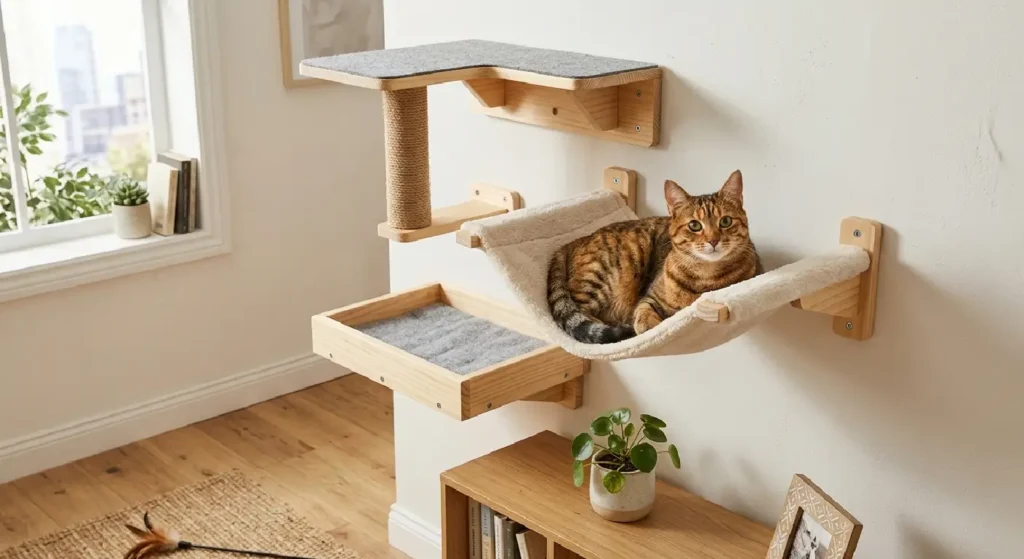
1. Wall-Mounted Cat Trees
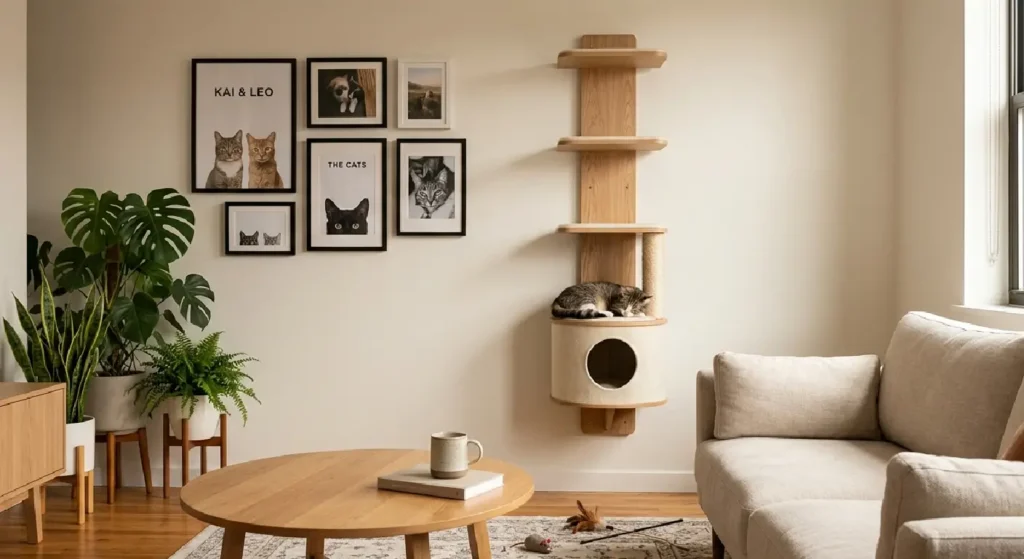
Wall-mounted cat trees are one of the smartest space-saving cat trees you can buy for a tiny home. Instead of standing on the floor, they bolt to your wall and use vertical space that would otherwise go unused. Most include a mix of platforms, hammocks, and scratching posts, so your cat gets a full climbing course on a single strip of wall.
These models suit minimalists and renters who want a clean, modern look. Choose a model that blends with your decor and includes several staggered platforms so your cat can hop from level to level with ease.
2. Corner Cat Trees
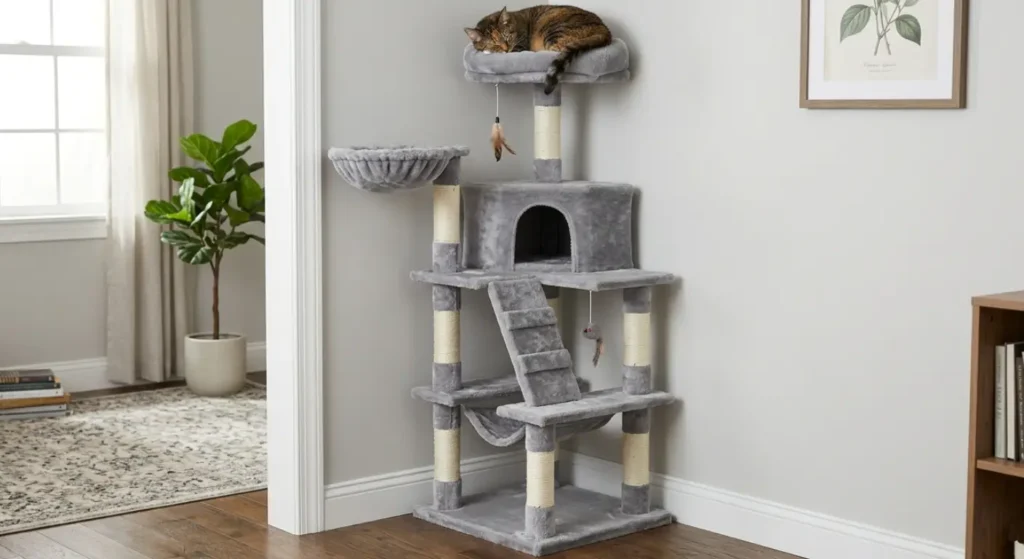
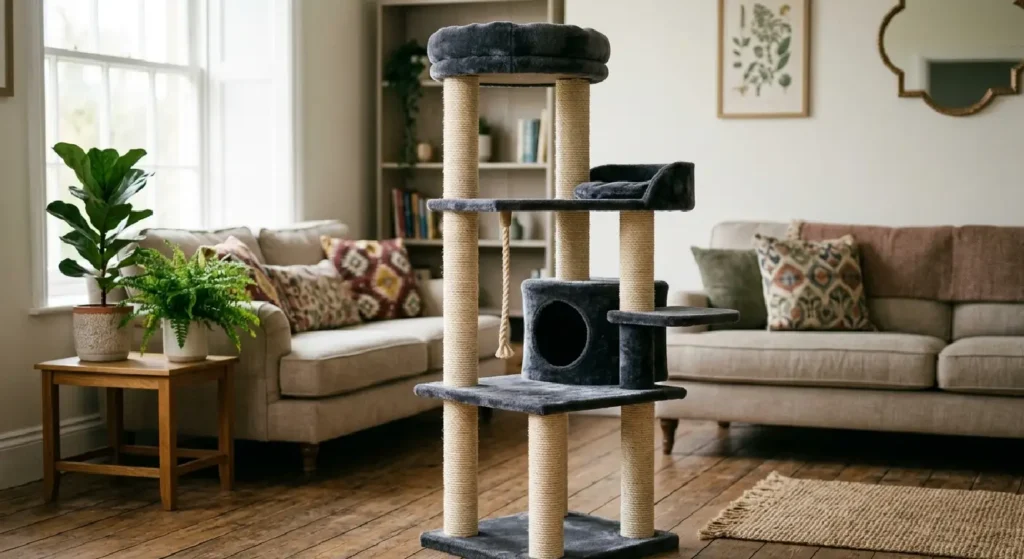
Corner cat trees are built to tuck neatly into the angle where two walls meet, claiming a slice of room that usually sits empty. These corner units stack multiple levels and scratching posts into a slim footprint, giving your cat plenty of room to climb without dominating the floor.
A corner unit with an enclosed cubby is ideal if your cat likes to hide. Among floor-standing space-saving cat trees, corner models offer the best balance of stability and small-space efficiency.
3. Multi-Functional Cat Trees with Built-In Features
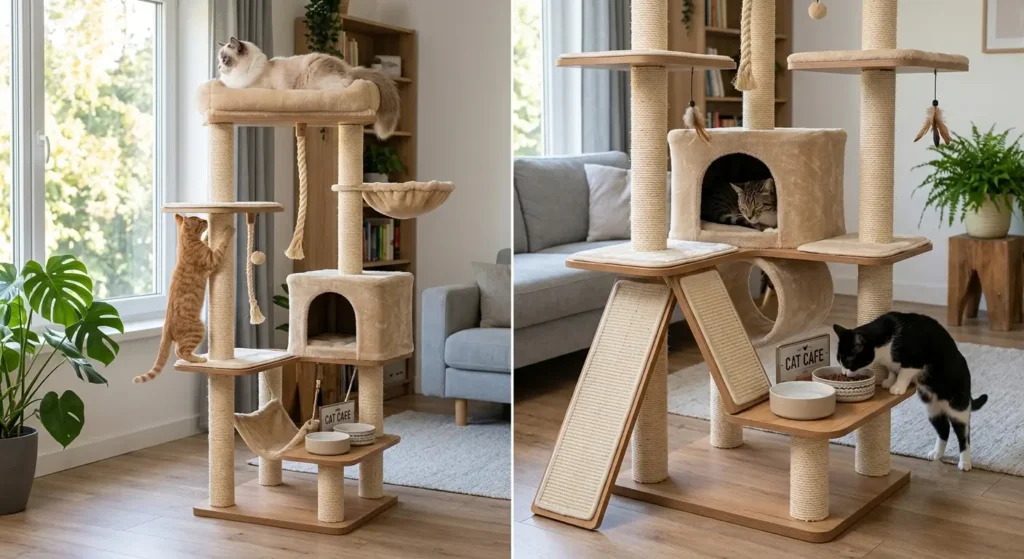
Some space-saving cat trees pull double duty as furniture. Think of a tower that doubles as a bookshelf, a side table, or a nightstand with a built-in scratching post and a cozy bed tucked inside. These multi-functional towers save room and add storage or surface space at the same time.
This category is perfect for design-conscious owners who don’t want an obvious “cat tower” on display. The best multi-functional space-saving cat trees disappear into your decor while still giving your cat a private nap spot and a place to scratch.
Space Saving Cat Trees Compared
Use this quick reference to match the cat tree type to your space and your cat:
| Type | Best for | Space it uses | Key features | Keep in mind |
|---|---|---|---|---|
| Wall-Mounted | Renters and minimalists who want a clean, modern look | Vertical wall space — zero floor footprint | Staggered platforms, hammocks, scratching posts | Must anchor into wall studs; leaves small, patchable holes |
| Corner | Cats who like to hide and rooms with an empty corner | An unused corner — slim floor footprint | Multiple levels, scratching posts, enclosed cubby | Choose a wide, solid base for stability |
| Multi-Functional | Design-conscious owners who want hidden cat furniture | Doubles as a bookshelf, side table, or nightstand | Built-in scratching post, cozy bed, storage or surface space | Often pricier; check the cat nook isn’t too small |
Where to Place Space-Saving Cat Trees for Maximum Impact
Placement turns a good purchase into a great one. Position your cat tree near a window so your cat can sunbathe and watch birds, which is prime entertainment for an indoor cat. A spot with light foot traffic feels safe yet social. Avoid tucking these designs into a closet or a dark corner your cat never visits, since even the best space-saving cat trees go ignored if they’re hidden away. Near a favorite napping zone or beside the sofa works well, because cats gravitate toward places where their humans already spend time.
Safety Tips for Space-Saving Cat Trees in Compact Homes
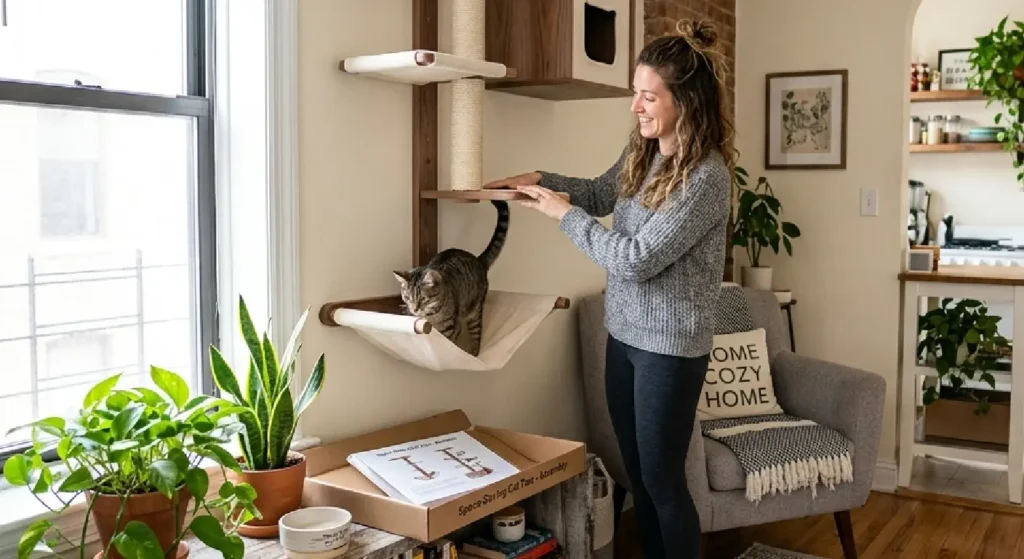
Safety is non-negotiable, especially with vertical designs. For wall-mounted space-saving cat trees, always anchor into wall studs and follow the weight rating; drywall anchors alone won’t hold an enthusiastic climber. For floor-standing models, check that the base is wide and heavy enough to resist tipping when your cat leaps onto the top platform. Inspect bolts, platforms, and scratching posts every few weeks, since regular use loosens hardware over time. Keeping your space-saving cat trees in good repair protects your cat from falls and extends the life of the product.
How to Choose the Right Space-Saving Cat Tree
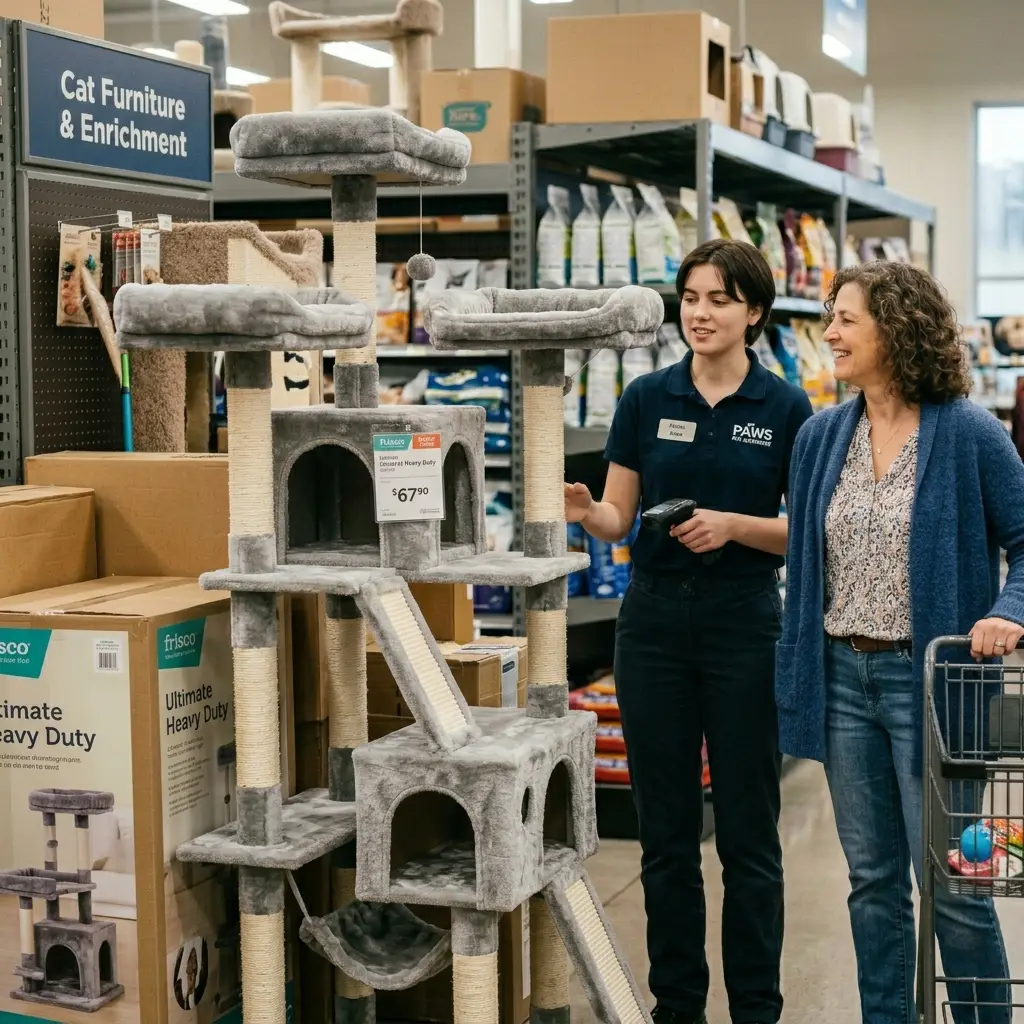
Picking among space-saving cat trees comes down to matching the product to your cat and your room. Keep these factors in mind:
- Size and footprint: Measure your space before you buy. The best space-saving cat trees fit comfortably without blocking walkways.
- Functionality: Look for a mix of climbing, scratching, and perching so a single piece covers all your cat’s needs.
- Stability: A wobbly tower scares cats off. Wall-mounted space-saving cat trees should hit a stud, and floor models should have a wide, weighted base.
- Material quality: Sturdy wood, dense sisal, and durable fabric outlast cheap particleboard and loose carpet.
- Style: Choose a finish that complements your apartment so the piece feels intentional rather than like an afterthought.
Making the Most of Vertical Space
In a small apartment, the floor is finite but the walls are wide open. Space-saving cat trees turn that vertical real estate into a playground, and you can build on it by adding a single shelf, a window perch, or a hammock nearby to create a connected climbing route. This layered approach gives your cat far more territory than a footprint-heavy tower ever could, which is the entire appeal of compact climbing furniture for small-space living.
Conclusion
Space-saving cat trees are a practical, stylish answer for anyone raising a cat in a small home. By choosing the right design, whether wall-mounted, corner, or multi-functional, you give your cat the climbing, scratching, and lounging space they need while keeping your apartment open and clutter-free. Measure your room, match the model to your cat’s habits, place it near a window, and keep it well maintained. Invest in one of these space-saving cat trees today and watch your feline friend claim their new favorite spot.
Frequently Asked Questions About Space-Saving Cat Trees
1. What are space-saving cat trees?
Space-saving cat trees are compact climbing structures designed for small homes. They use vertical space, corners, or built-in furniture features to give cats room to climb and scratch without taking over your floor.
2. Are space-saving cat trees suitable for small apartments?
Yes. Space-saving cat trees are made specifically for small apartments. Wall-mounted and corner models in particular fit into tight layouts where a traditional tower wouldn’t.
3. Do wall-mounted cat trees damage walls?
They require drilling, but when anchored into studs they hold securely and cause only small, patchable holes. They’re a popular space-saving option for renters who can repair walls before moving out.
4. How much weight can space-saving cat trees hold?
It varies by model. Most wall-mounted designs support 20 to 40 pounds per platform, which is plenty for one cat. Always check the manufacturer’s weight rating before buying.
5. Can space-saving cat trees work for multiple cats?
Yes, though you’ll want extra perches and levels so each cat has its own spot. Connecting several space-saving cat trees or shelves into one route works well for multi-cat homes.
6. Are corner cat trees stable enough for active cats?
Quality corner cat trees are very stable because two walls support them. Look for a wide base and solid construction so the unit stays steady during energetic climbing.
7. How do I get my cat to use a new cat tree?
Place it near a window or a favorite spot, rub it with catnip, and reward your cat for exploring it. Patience helps, since some cats warm up to new space-saving cat trees over a few days.
8. What materials are best for space-saving cat trees?
Look for solid wood frames, natural sisal scratching posts, and durable fabric. These materials outlast cheap particleboard and loosely glued carpet.
9. How do I clean space-saving cat trees?
Vacuum platforms and posts regularly, spot-clean fabric with a pet-safe cleaner, and wipe down hard surfaces. Routine cleaning keeps the structure fresh and hygienic.
10. Are space-saving cat trees worth the money?
For small-apartment cat owners, absolutely. They protect your furniture, keep your cat active, and reclaim floor space, making space-saving cat trees one of the best value purchases for compact living.