Rotating Your Cat’s Toys: How to Keep Playtime Exciting
If you share your home with a feline friend, you already understand how much playtime shapes their day. Play delivers exercise, sharpens the mind, and deepens the bond you share with your companion. Yet even the most beloved plaything loses its sparkle when it sits in the same spot week after week. This is exactly where rotating your cat’s toys becomes a game-changer. By swapping playthings in and out on a regular schedule, you trick that curious brain into treating familiar items as fresh discoveries. In this guide we’ll cover why rotating your cat’s toys matters, how to do it without any fuss, and plenty of ideas to keep every session lively and enriching.
Why Rotating Your Cat's Toys Matters
Cats are clever, inquisitive animals that crave novelty and variety. Offer the same mouse or jingle ball every single day and your pet will tune it out, the same way we stop noticing a picture that’s hung on the wall too long. That fading interest usually shows up as shorter, lazier play sessions and, over time, a more sluggish and under-exercised companion.
Rotating your cat’s toys solves the problem at its root. When playthings disappear for a while and then reappear, your pet greets them as brand-new prizes. This sense of discovery reignites their natural hunting drive and keeps them moving, pouncing, and stalking the way nature intended.
There’s a behavioral payoff, too. A bored cat often invents its own entertainment, and that can mean shredded furniture, knocked-over plants, or obsessive over-grooming. Keeping a varied, ever-changing lineup of toys gives that restless energy a healthy outlet, so your cat is far less likely to channel it into destructive habits.
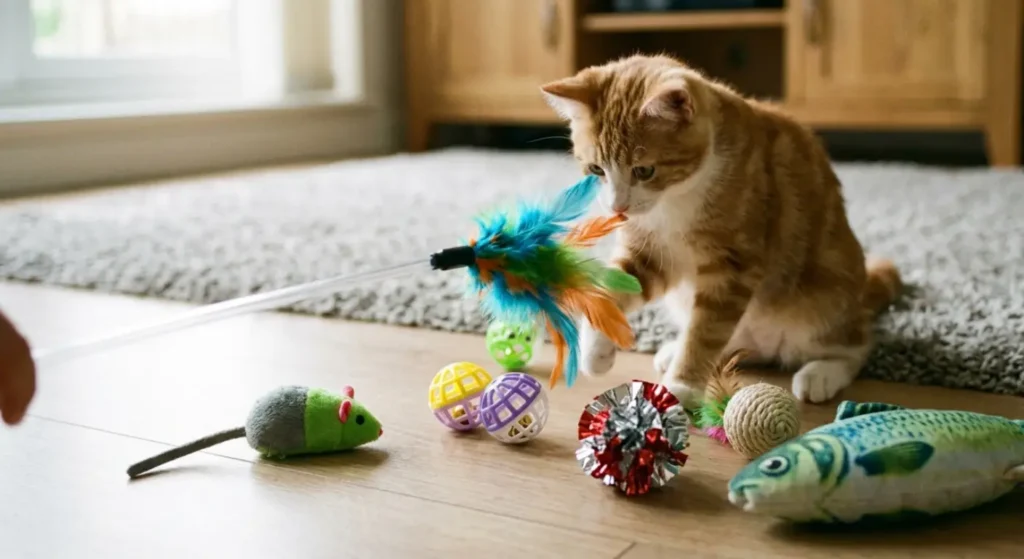
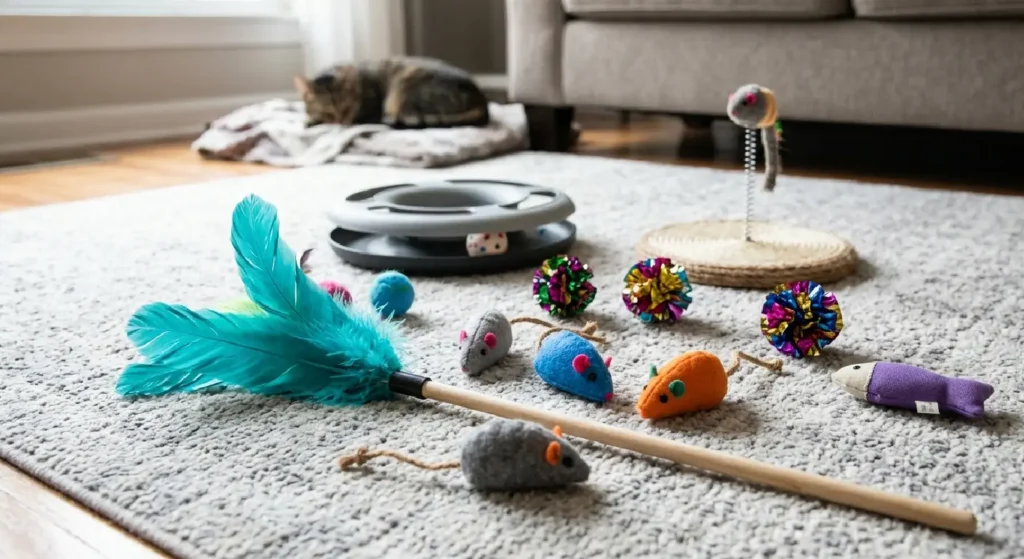
How to Rotate Your Cat's Toys Effectively
The good news is that rotating your cat’s toys takes only minutes and almost no equipment. Follow this straightforward routine:
- Gather everything in one place. Round up every toy you own so you can see the full collection at a glance.
- Pick a small active set. Choose just a few toys from each category to leave out for the current week.
- Store the rest out of sight. Tuck the remaining toys into a lidded bin or basket where your cat can’t reach them.
- Keep the cycle going. Repeat the swap regularly so there’s always something that feels new.
That’s the entire system. With this lightweight habit in place, your pet always has a rotating cast of playthings, and playtime stays exciting instead of stale.
Signs Your Cat Is Bored With Their Toys
Knowing when to swap is half the battle. Watch for these telltale clues that the current lineup has gone stale:
- Your cat sniffs a toy briefly and then wanders off.
- Play sessions are getting noticeably shorter.
- Your pet sleeps far more than usual during waking hours.
- Furniture scratching, curtain climbing, or nibbling on houseplants increases.
- Mealtime excitement outshines anything play-related.
- Excessive grooming or attention-seeking meowing creeps in.
Spot two or three of these signals and that’s your cue to start rotating your cat’s toys sooner rather than later.
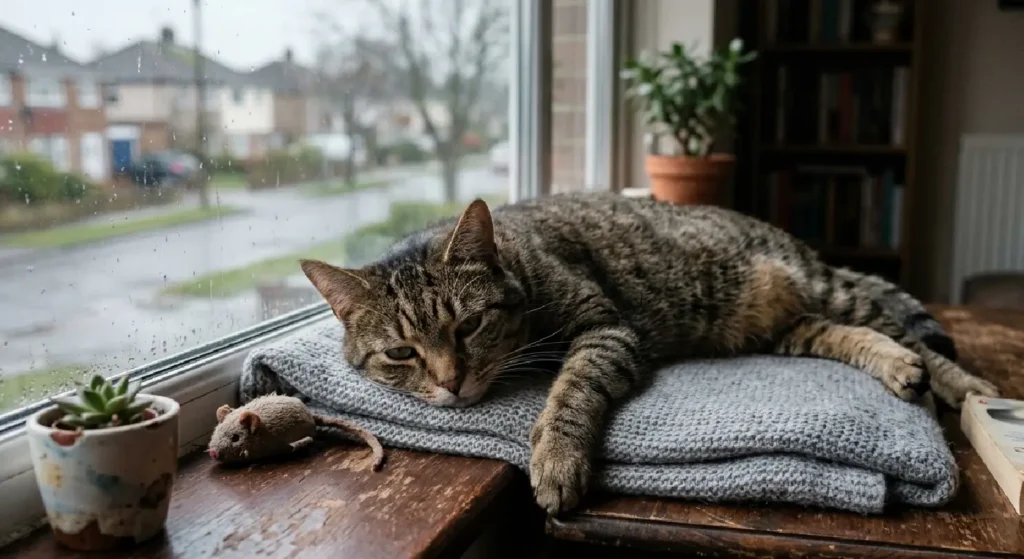
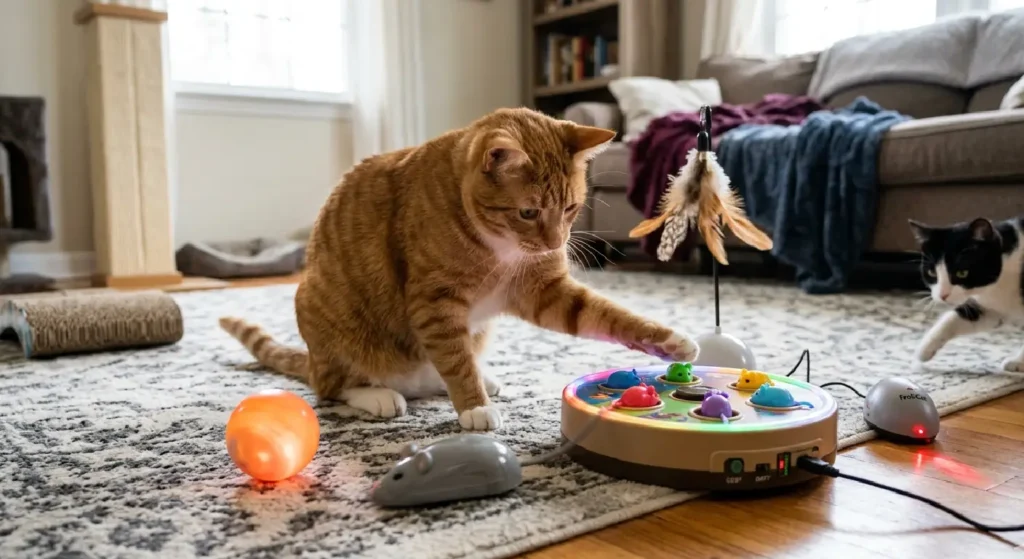
How Often Should You Rotate the Toys?
There’s no single magic number, but a good starting rhythm is every three to five days. Some cats stay enthusiastic for a full week, while highly energetic kittens and intelligent breeds may need a refresh every couple of days. Watch your individual cat: if a toy still sparks chasing and batting, leave it out a little longer; if your pet walks past it without a glance, it’s time to rotate. Over a few weeks you’ll learn your companion’s natural attention span and can fine-tune the schedule to match.
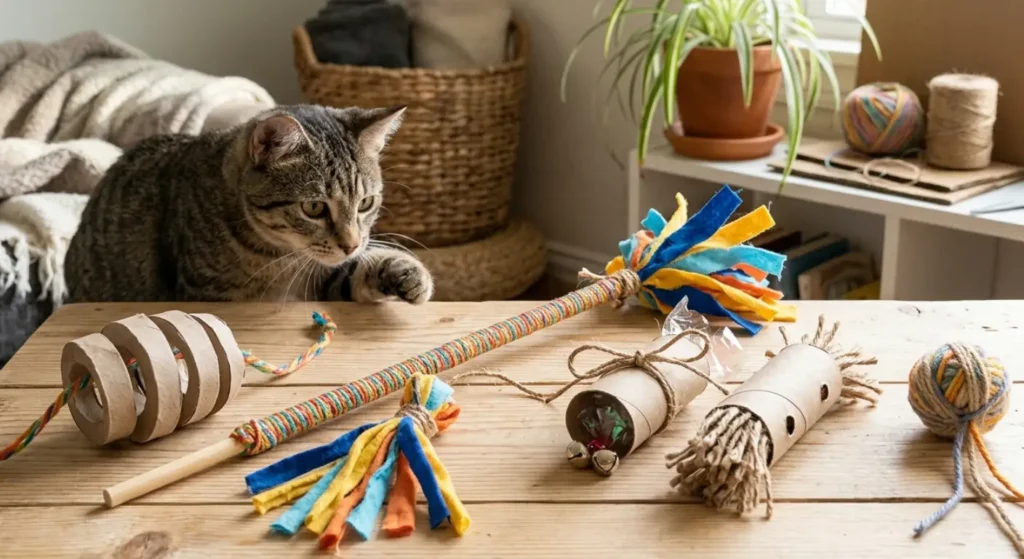
DIY and Budget-Friendly Rotation Ideas
You don’t need a pet-store splurge to keep things fresh. Save and rotate clean cardboard boxes of different sizes. Stuff an old sock with a pinch of dried catnip and knot the end. Cut a few holes in a shoebox lid to make an instant treat puzzle. Because these homemade items cost almost nothing, you can cycle them through freely and toss anything that gets worn out, keeping the rotation both safe and affordable.
Safety Tips for Toy Rotation
A fresh lineup should always be a safe one. Before any toy goes back into circulation, give it a quick inspection. Look for loose strings, cracked plastic, or chewed-off pieces that could become choking hazards, and retire anything damaged. Store wand and string toys completely out of reach between sessions, since unsupervised string play can lead to dangerous swallowing. Wash plush and fabric toys periodically to keep them hygienic, and confirm that any catnip you use is genuine and free of additives.
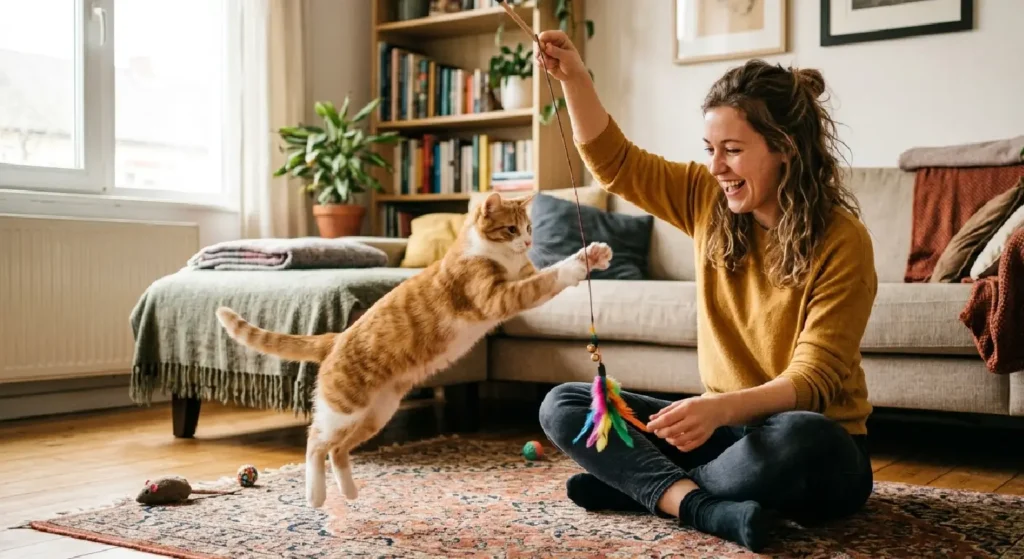
Cat Toy Rotation Quick-Reference Guide
| Toy Category | Examples | Key Benefit | Suggested Rotation |
|---|---|---|---|
| Interactive / Wand | Feather wands, laser pointers, teasers | Triggers hunting instinct & builds your bond | Supervised sessions; rotate weekly |
| Plush & Catnip | Stuffed mice, catnip socks, soft toys | Comfort and easy solo play | Every 3–5 days |
| Movement / Chase | Crinkle balls, spring toys, track balls | Short bursts of cardio exercise | Every 3–5 days |
| Puzzle & Food-Dispensing | Treat balls, puzzle feeders, snuffle mats | Mental challenge; slows fast eaters | Weekly |
| DIY / Household | Cardboard boxes, paper bags, catnip socks | Free novelty you can swap freely | Swap anytime / as worn |
Tracking Your Rotation Schedule
If you tend to lose track of which toys are “in” and which are “out,” a little organization goes a long way. Label your storage bins by category, or jot the swap dates on a sticky note inside the lid. Some owners keep a simple note on their phone listing the current active set. A light tracking habit ensures rotating your cat’s toys stays consistent instead of slipping off your radar during busy weeks.
Conclusion
Playtime is a cornerstone of your cat’s physical health and emotional well-being, and rotating your cat’s toys is the easiest way to keep that time genuinely exciting. By cycling familiar favorites in and out, introducing the occasional new find, and mixing in cat trees, puzzle feeders, and shared interactive sessions, you give your companion the variety their curious mind craves. With just a few minutes of effort every few days, you can make sure playtime never grows dull and your feline friend stays active, engaged, and content for years to come.
Frequently Asked Questions (FAQs)
1. What does "rotating your cat's toys" actually mean?
It simply means keeping only a handful of toys available at a time and swapping them for stored ones every few days. The break makes familiar toys feel new again when they return, which keeps your cat curious and engaged.
2. How often should I be rotating my cat's toys?
Every three to five days works well for most cats. Energetic kittens may need a swap every couple of days, while mellower adults can go up to a week. Let your cat’s interest level guide the timing.
3. Will rotating toys really stop my cat from getting bored?
For the vast majority of cats, yes. Reintroducing a toy after a break revives its novelty, which keeps play sessions longer and more enthusiastic and reduces boredom-driven behaviors.
4. How many toys should I leave out at once?
A small active set of three to five toys from different categories usually hits the sweet spot. Too many at once overwhelms the effect and there’s nothing fresh left to bring out later.
5. Where should I store the toys that aren't in use?
Keep them in a lidded bin, drawer, or basket your cat can’t open. Out of sight is key, since toys your cat can still see or smell don’t get the “new again” boost.
6. Can I rotate toys for a cat that ignores most playthings?
Absolutely, and rotation often helps reluctant players the most. Pair the rotation with short interactive sessions using a wand toy, and experiment with different textures and sounds to find what sparks interest.
7. Do I need to buy new toys to keep the rotation interesting?
Not at all. Cardboard boxes, paper bags, and homemade catnip socks all work beautifully. New purchases are a nice bonus, but variety, not spending, is what matters.
8. Is it safe to rotate string or wand toys?
Yes, with one rule: use them only during supervised play and store them completely out of reach afterward. Unsupervised string and wand toys pose a swallowing risk.
9. How do I know it's time to swap the current toys?
Watch for waning interest, such as shorter play, sniff-and-walk-away reactions, or more napping. Those signals mean the novelty has faded and a fresh batch is due.
10. Does toy rotation work for multiple cats in one home?
It does, though you may want extra toys so each cat has plenty of options and competition stays low. Observe which toys each cat prefers and build rotations that include something for everyone.