How to Clean a Cat Tree: Step-by-Step Guide
A cat tree is one of the most loved pieces of furniture in any feline household. It gives your cat a dedicated place to climb, scratch, lounge, and watch the world go by. Yet because it gets used every single day, a cat tree quickly collects fur, dander, dust, and bacteria. If you want to learn how to clean a cat tree properly, this step-by-step guide walks you through everything, from gathering supplies to keeping it fresh long-term. Knowing how to clean a cat tree the right way protects both your pet’s health and your home’s air quality.
Why It Is Important to Clean a Cat Tree Regularly
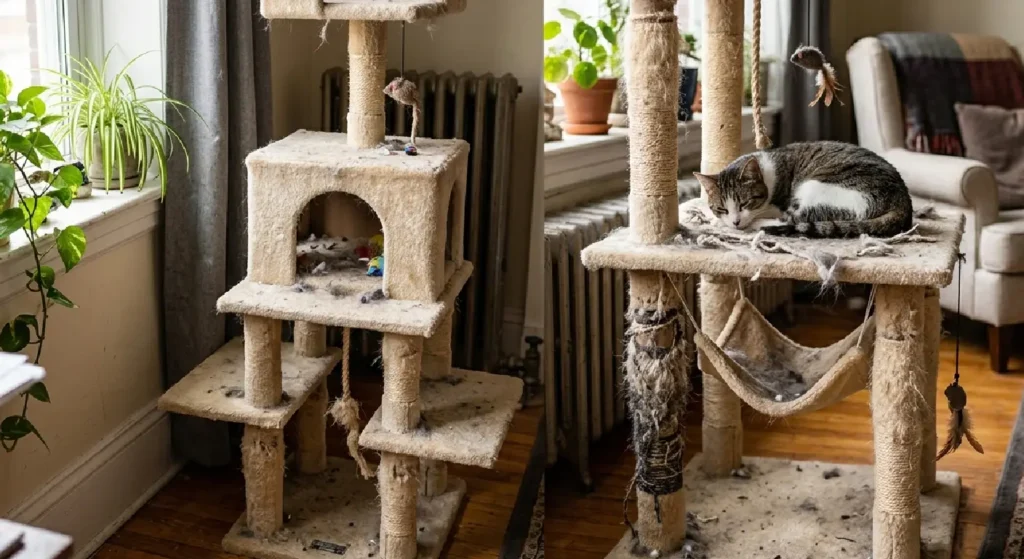
Many owners overlook the cat tree when they tidy up, but it deserves attention just like bedding or litter boxes. Over weeks of use, a cat tree traps shed hair, saliva, skin oils, and tracked-in dirt deep within its carpet and sisal surfaces. Left alone, this buildup creates stubborn odors and becomes a breeding ground for germs.
A dirty cat tree can also aggravate allergies in sensitive household members and may discourage your cat from using it altogether. When you clean it consistently, you reduce allergens, eliminate smells, and extend the life of the structure. In short, a fresh cat tree keeps your cat comfortable and your living space hygienic.
How to Clean Different Cat Tree Materials
Not every cat tree is built the same, so adjust your approach to the materials involved.
Carpeted surfaces: Vacuum first, then spot clean with diluted soap and blot dry. A stiff brush helps lift matted fur.
Sisal rope posts: Brush vigorously to dislodge shredded fibers and debris, then wipe with a barely damp cloth. Avoid soaking sisal, as excess water weakens the rope.
Plush or faux-fur platforms: Use a lint roller and gentle suction, and hand-wash removable covers in cold water.
Wooden frames: Wipe with a slightly damp microfiber cloth and dry immediately to protect the finish.
How Often Should You Clean a Cat Tree?
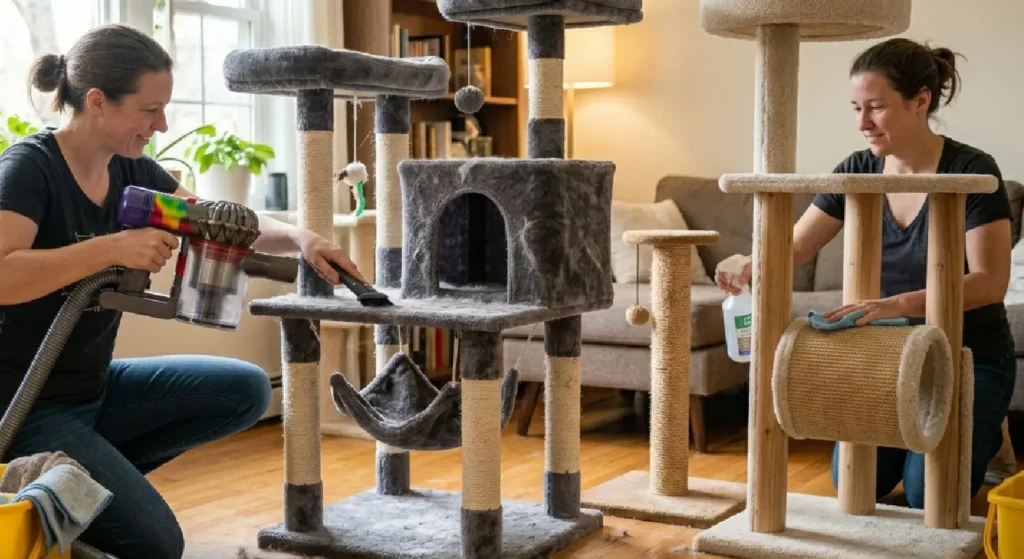
The ideal frequency depends on how many cats you own and how heavily they use the structure. As a general rule, give your cat tree a quick surface clean once a week and a deeper clean every two to four weeks. Homes with multiple cats, long-haired breeds, or shedding seasons may require more frequent attention.
Spot-treat accidents and spills the moment they happen so stains do not set. A predictable routine makes the job faster and prevents grime from ever becoming overwhelming.
Step 1: Gather Your Cleaning Supplies
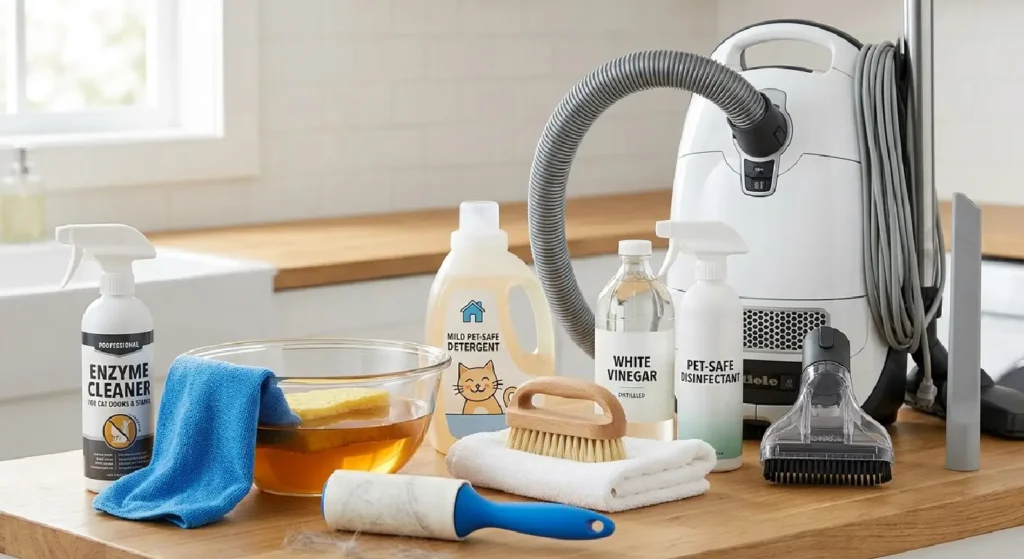
Before you start, collect everything you need so the process flows smoothly. Having the right tools on hand makes it far easier to clean a cat tree thoroughly. Here is a simple checklist:
- A vacuum cleaner with an upholstery or crevice attachment
- Mild soap or pet-safe detergent
- Warm water
- A soft-bristled brush or cloth
- White vinegar or a pet-safe disinfectant
- A microfiber cloth
- A lint roller for quick fur removal
- An enzyme cleaner for tough odors (optional)
Step 2: Remove Your Cat and Loose Items
Encourage your cat to step away from the area, and take off any hanging toys, removable cushions, or accessories. Clearing the structure first prevents distractions and lets you reach every platform and post. Set the removable pieces aside to wash separately if the manufacturer allows it.
Step 3: Vacuum the Entire Cat Tree
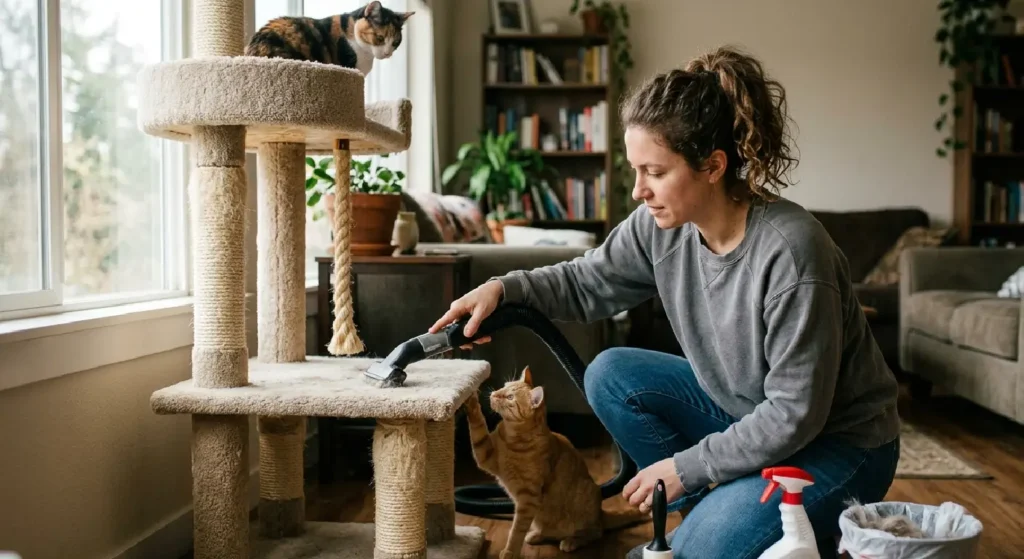
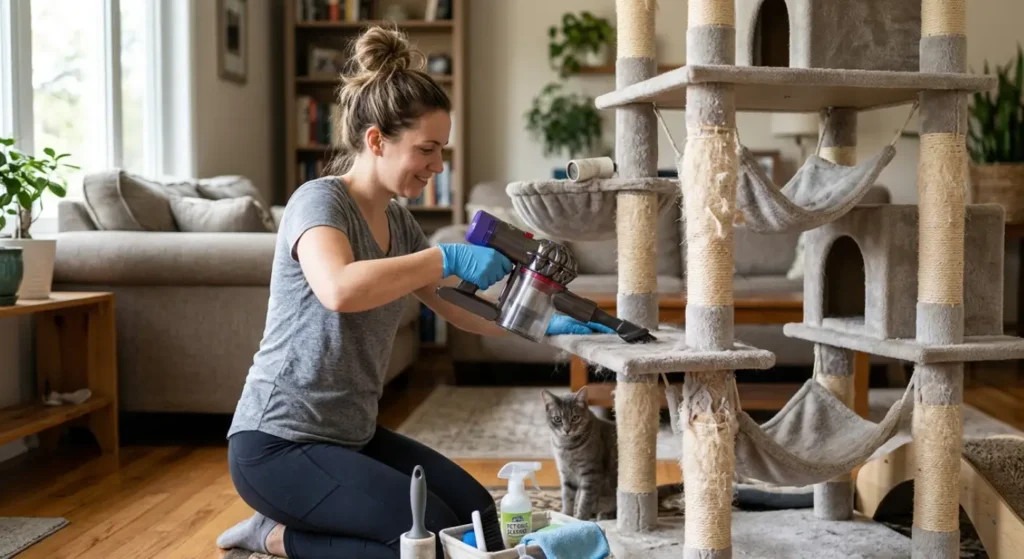
Fur is the number one thing you will battle, so vacuuming is the most important step. Run the upholstery attachment over every platform, post, and hideaway, paying close attention to seams and crevices where hair collects. For lingering fur that the vacuum misses, a lint roller or slightly damp rubber glove works wonders. Thorough vacuuming makes the rest of the job to clean a cat tree much simpler.
Step 4: Spot Clean Stains and Marks
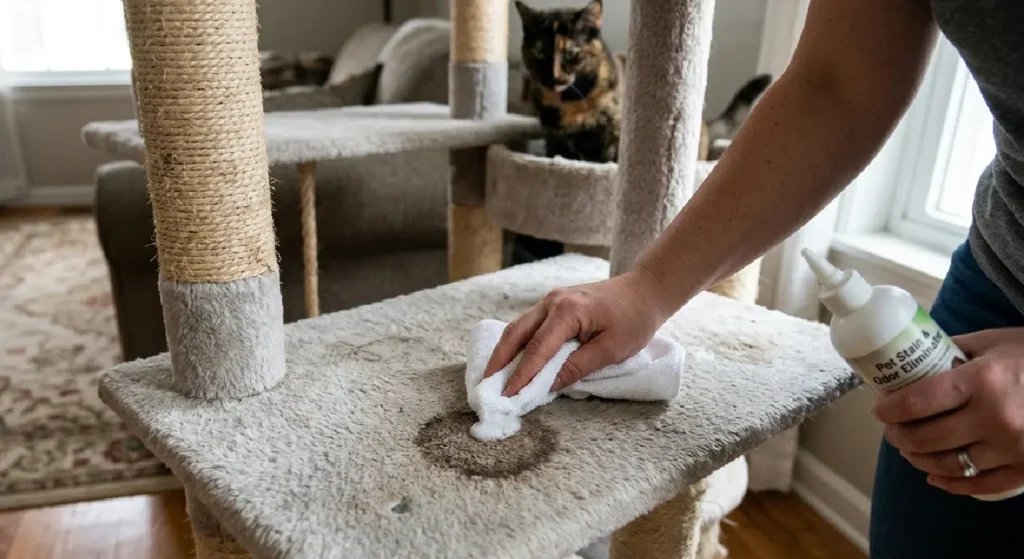
For visible stains, mix a small amount of mild soap with warm water to form a gentle solution. Dip a soft cloth or brush and work the stain in small circular motions, then blot with a clean damp cloth. Steer clear of harsh chemicals and abrasive scrubbers, which can fray fabric or strip the finish off wooden parts. Always test any solution on a hidden spot first.
Step 5: Disinfect the Surfaces
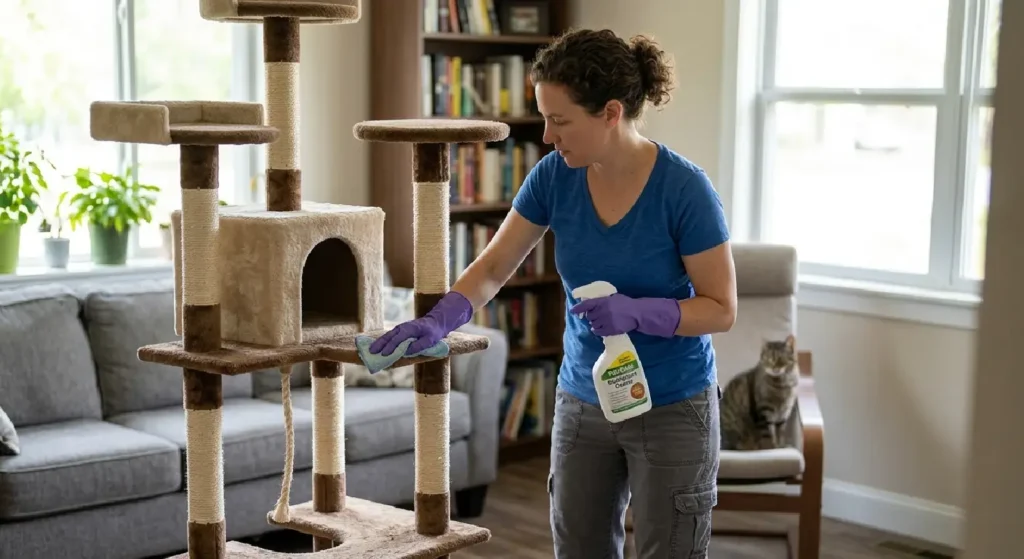
Once dirt and stains are gone, disinfect to kill lingering bacteria. Combine equal parts white vinegar and water, or use a pet-safe disinfectant, and wipe down each surface with a microfiber cloth. Focus on the spots where your cat sleeps, scratches, and rubs its face, since these areas carry the most germs. Vinegar also neutralizes odors naturally, making it a favorite when you clean a cat tree.
Step 6: Let the Cat Tree Air Dry
Moisture left behind can encourage mold and mildew, so allow the cat tree to dry fully before your cat returns to it. Position it near an open window, in gentle sunlight, or in front of a fan to speed things along. Make sure the carpet and sisal feel completely dry to the touch, as damp fibers attract new dirt quickly.
Step 7: Keep a Regular Cleaning Routine
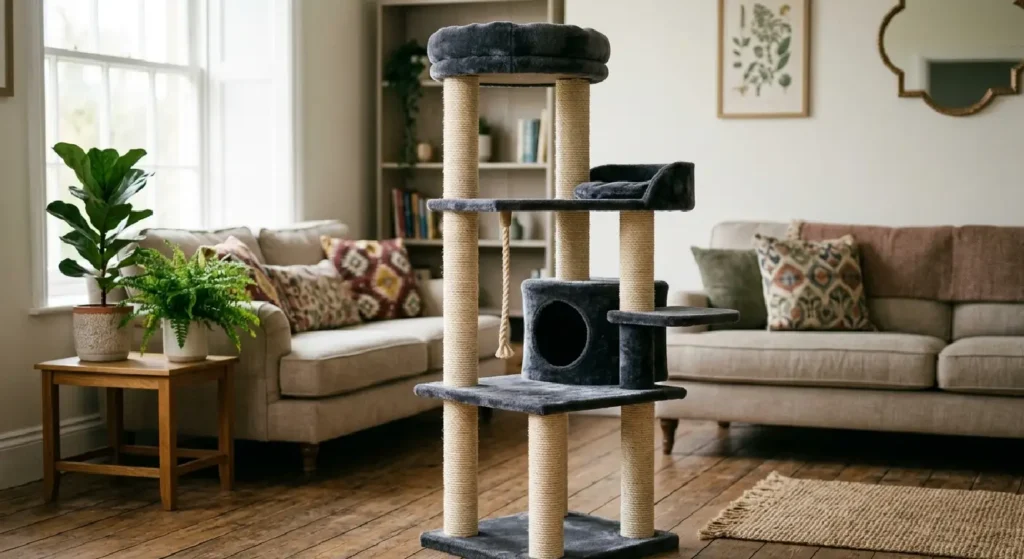
Consistency is the secret to a fresh structure. Build a recurring schedule that matches your household, whether that is weekly light cleaning or a monthly deep clean. A steady routine prevents buildup, reduces odors, and helps the structure last for years. The more regularly you clean a cat tree, the less effort each session takes.
How to Remove Stubborn Odors From a Cat Tree
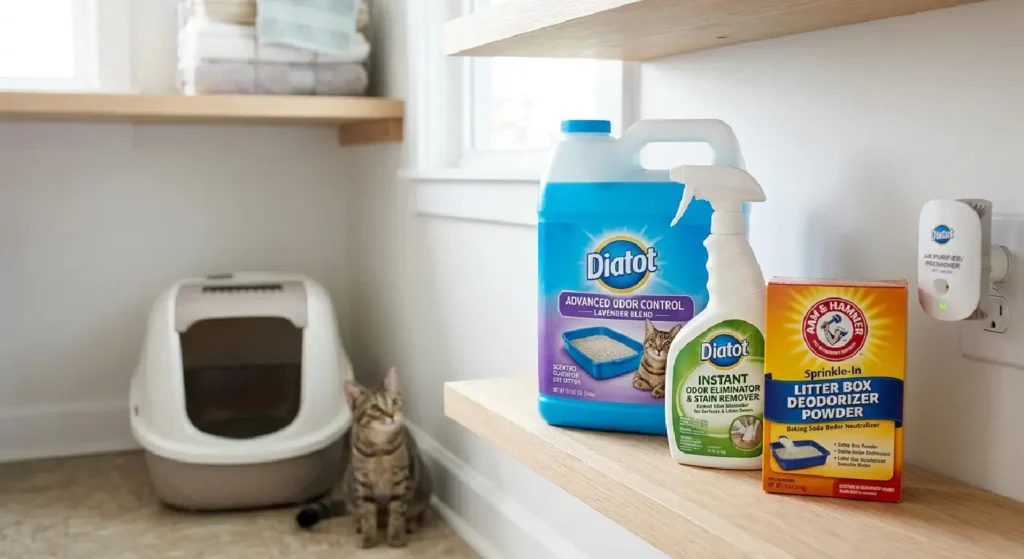
Sometimes vacuuming and wiping are not enough to banish smells. Sprinkle baking soda over carpeted areas, let it sit for fifteen to twenty minutes, then vacuum it away to absorb trapped odors. For accidents or strong urine smells, an enzyme-based cleaner breaks down the source rather than masking it. Always let the cat tree dry fully afterward so new moisture does not create fresh odors.
Common Mistakes to Avoid When You Clean a Cat Tree
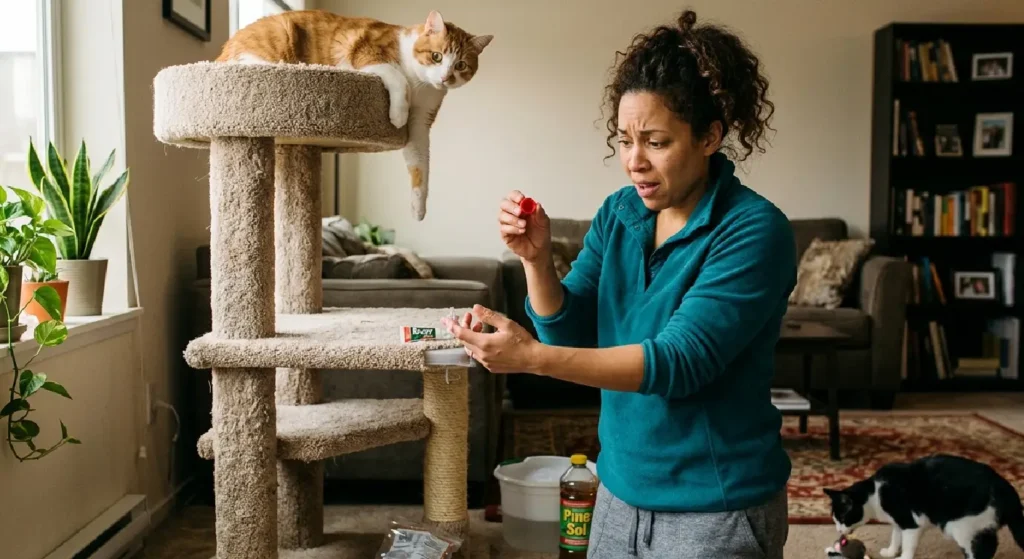
Even well-meaning owners can damage a cat tree with the wrong technique. Avoid soaking any part of the structure, since trapped water rots wood and weakens glue. Skip bleach, ammonia, and strongly scented products, because they can irritate your cat’s sensitive nose and skin. Never return your cat to a damp tree, and do not ignore small stains, as they harden over time. Sidestepping these mistakes keeps the cleaning process safe and effective.
Conclusion
Learning how to clean a cat tree is a simple but worthwhile habit for every cat owner. By gathering your supplies, removing your cat, vacuuming, spot cleaning, disinfecting, and letting everything air dry, you keep the structure safe, fresh, and inviting. Tailor your method to the materials, tackle odors at the source, and stick to a regular schedule. With a little consistent effort, your cat tree will stay clean, comfortable, and ready for countless naps and play sessions for years to come. For more pet-care tips, check out our related guide on how to clean cat toys. A clean cat tree truly makes for a happy cat.
Frequently Asked Questions (FAQs)
1. How often should I clean a cat tree?
Aim for a quick surface clean weekly and a deeper clean every two to four weeks. Homes with several cats or heavy shedding may need more frequent cleaning.
2. Can I wash a cat tree in water?
You can dampen cloths and brushes, but never fully soak a cat tree. Excess water damages wood, loosens glue, and weakens sisal rope.
3. What is the safest disinfectant for a cat tree?
A mix of equal parts white vinegar and water is safe and effective. Pet-safe commercial disinfectants also work, but avoid bleach and ammonia.
4. How do I get cat hair off a cat tree quickly?
Use a vacuum with an upholstery attachment, a lint roller, or a slightly damp rubber glove to lift fur from carpet and crevices fast.
5. How can I remove urine smell from a cat tree?
Apply an enzyme-based cleaner that breaks down odor at the source, then let the area dry completely. Baking soda also helps absorb lingering smells.
6. Is it safe to use essential oils to clean a cat tree?
No. Many essential oils are toxic to cats. Stick to vinegar, water, or products clearly labeled as pet-safe.
7. How long should a cat tree dry before my cat uses it again?
Allow it to dry fully, which can take several hours depending on airflow and humidity. The carpet and sisal should feel completely dry to the touch.
8. Can I put cat tree parts in the washing machine?
Only removable covers or cushions, and only if the manufacturer says they are machine-washable. Wash in cold water and air dry.
9. Why does my cat avoid the cat tree after cleaning?
Strong cleaning scents can deter cats. Use unscented or mildly scented pet-safe products, and let the tree air out before reintroducing your cat.
10. How do I make my cat tree last longer?
Regular cleaning, prompt stain treatment, proper drying, and gentle products all help. Brushing sisal posts and re-securing loose parts also extend its lifespan.