The Best Placement for Your Cat Tree
Every cat owner wants to give their feline the most enriching home possible, and getting your cat tree placement right is a huge part of that. A cat tree gives your pet a dedicated spot to scratch, climb, nap, and survey their territory. Yet even the fanciest tower will gather dust in the wrong corner. The secret to success isn’t only the tree you buy, it’s the cat tree placement you choose. In this guide we’ll walk through the smartest spots, the common mistakes, and the small tweaks that turn an ignored tower into your cat’s favorite hangout.
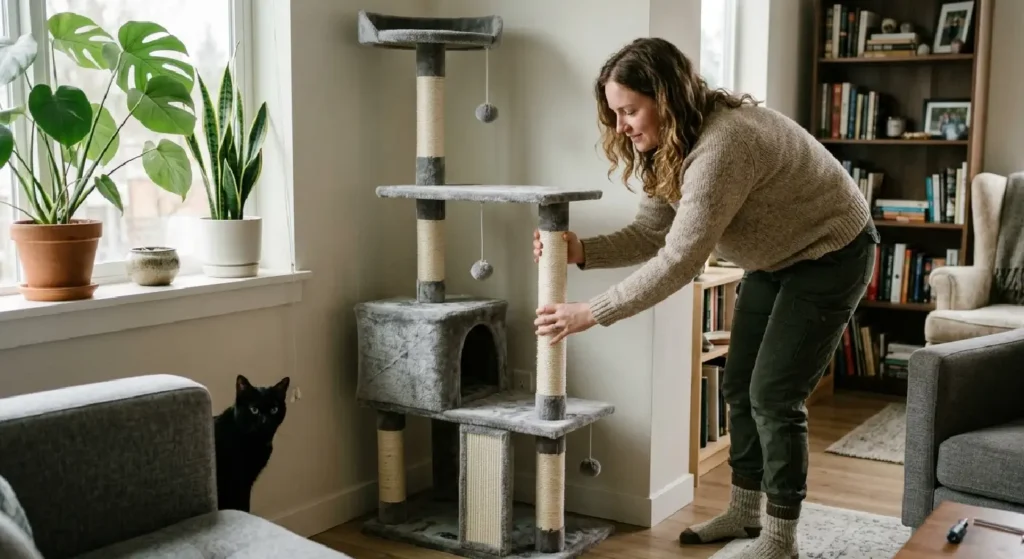
Why Cat Tree Placement Matters
Good cat tree placement can be the difference between a beloved perch and an expensive piece of furniture nobody touches. Cats are deeply territorial and instinct-driven, so where a tree sits affects whether they feel safe enough to use it. Vertical space is essential for a cat’s physical health and mental well-being, giving them room to climb, stretch, and burn energy. Height also delivers a sense of security and control, letting your cat watch over their domain from above. On top of that, a well-positioned tree offers a healthy outlet for scratching, which protects your furniture and keeps claws in good shape. Thoughtful cat tree placement supports all of these natural behaviors at once.
Choosing the Right Tree Before You Decide on Placement
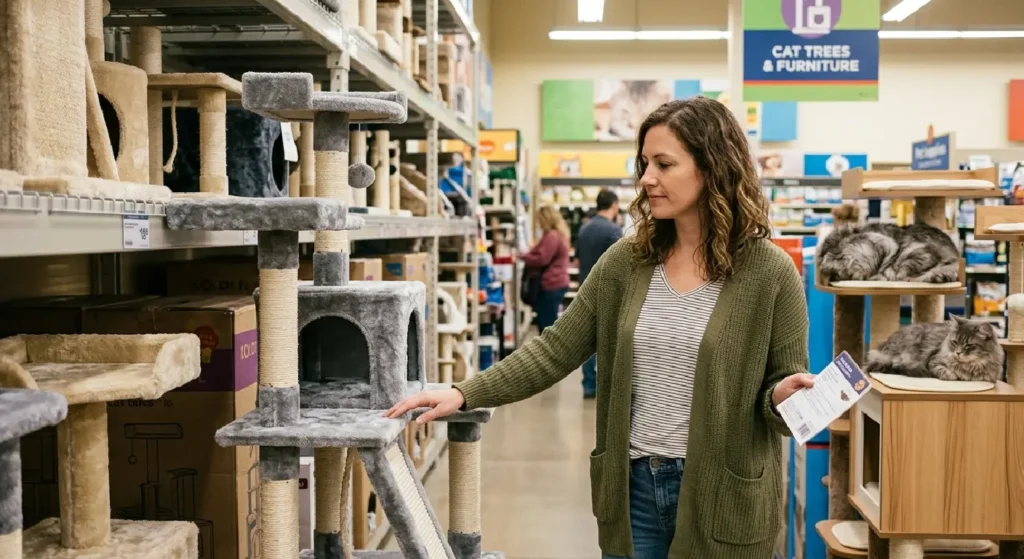
Before you lock in your cat tree placement, make sure the tree itself fits your cat. Consider your pet’s age, size, weight, and personality. A heavy adult needs a sturdier, wider base than a lightweight kitten, while a senior cat benefits from lower platforms and easy ramps. Look for a stable structure with perches at varying heights so your cat can choose how high they want to climb. Once you’ve matched the tree to the cat, the question of cat tree placement becomes much easier to answer.
The Best Spots for Cat Tree Placement
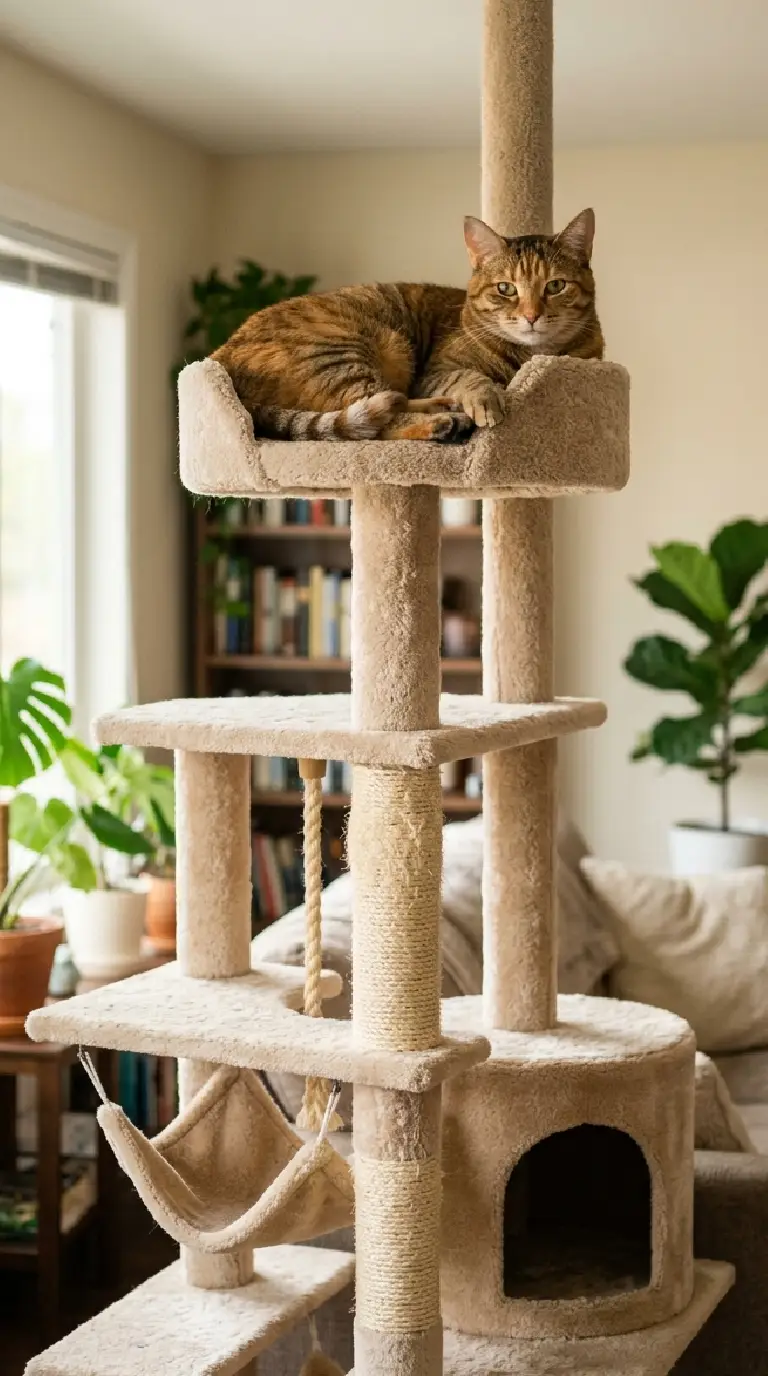
The ideal cat tree placement balances stimulation with safety. These four locations consistently win cats over.
Near a Window
Placing a tree by a window is one of the most reliable cat tree placement choices you can make. Cats adore watching birds, squirrels, and passing traffic, and a window view delivers hours of free mental stimulation. Choose a window that is secure and stable so your cat can lounge and watch the world without any risk of a fall.
In a Quiet, Low-Traffic Area
Cats value calm, so a peaceful corner is excellent for cat tree placement. Steer clear of busy hallways, loud appliances, or doorways that slam, since constant noise and movement can leave a sensitive cat feeling stressed. A tucked-away nook gives your cat a retreat where they can relax and recharge undisturbed.
Away From Food and Litter Boxes
Cats instinctively keep their dining and bathroom zones separate from their resting spots, which makes this a key cat tree placement rule. Position the tree well away from food bowls and the litter box. Crowding these areas together can make the tree feel unappealing, leaving your cat reluctant to climb or nap there.
Somewhere Easy to Reach
Accessibility shapes whether your cat actually uses the tower, so factor it into your cat tree placement plan. Pick a location free of awkward obstacles, and consider positioning the tree near a staircase, sofa, or other raised surface. Connecting the tree to existing climbing routes encourages your cat to hop up and explore more often.
Best Cat Tree Placement Spots at a Glance
| Placement Spot | Why It Works | How to Use It |
|---|---|---|
| Near a Window | Live view of birds and traffic for free mental stimulation. | Pick a secure window so the perch doubles as a safe lookout. |
| Quiet Corner | A calm spot lets sensitive cats relax and nap stress-free. | Keep it away from hallways, doorways and loud appliances. |
| Away From Food & Litter | Cats keep resting areas separate from eating and bathroom zones. | Place the tree in a different part of the room or home. |
| Easy to Reach | Obstacle-free access encourages cats to climb more often. | Position near a sofa or staircase to link climbing routes. |
| Sunny Spot | Warm sunlight turns a perch into an irresistible napping zone. | Track where sunlight lands longest during the day. |
| Corner for Small Spaces | Going vertical adds climbing room without crowding the floor. | Choose a slim, tall, space-saving model. |
| Spread Across Rooms | Multiple perches let each cat claim territory and avoid conflict. | Use multi-platform trees or several trees in different areas. |
Cat Tree Placement in Small Apartments
Limited square footage doesn’t mean you have to skip a tower. Smart cat tree placement is all about going vertical when floor space is tight. In a small apartment, corners are your friend, as they let a tall, narrow tree rise without eating into walkways. A sunny window ledge area is ideal cat tree placement in compact homes because it stacks entertainment and warmth into one footprint. Look for slim, space-saving models that deliver height without bulk, so your cat gains climbing territory while you keep your living room functional.
Cat Tree Placement for Multi-Cat Households
Homes with more than one cat call for extra thought around cat tree placement. Cats divide territory partly by vertical levels, so a tree with multiple platforms lets each cat claim their own perch and reduces squabbling. Where you have the room, spreading two or more trees across different areas eases competition and gives shy cats an escape route. Strategic positioning across the home helps every cat feel they have a secure, personal spot, which keeps the peace in a busy feline household.
Lighting, Warmth, and Seasonal Considerations
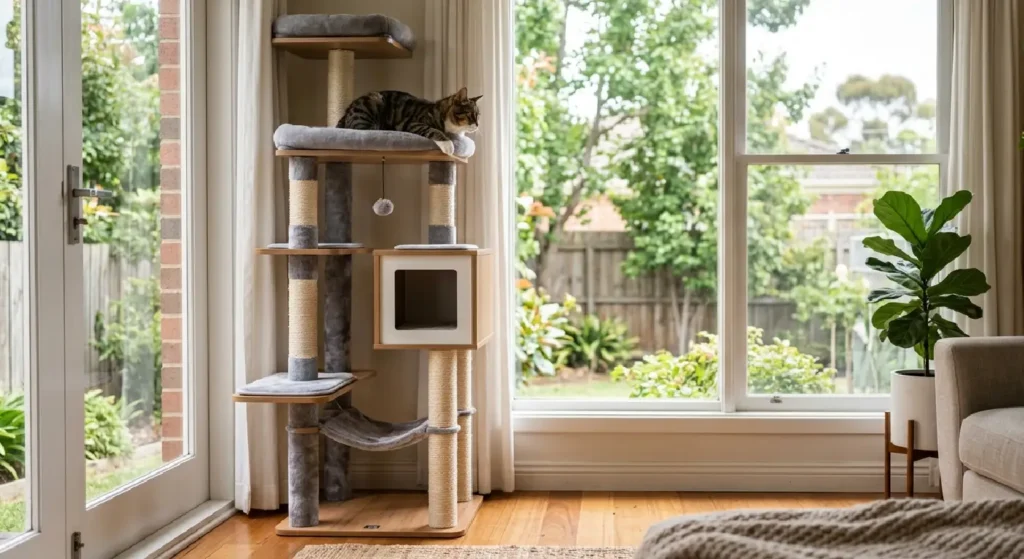
Cats are sun worshippers, and that instinct should guide your cat tree placement. A perch that catches the morning or afternoon sun becomes an irresistible napping spot. Pay attention to how light moves through your home across the day, then place the tree where a warm patch lands for the longest stretch. In colder months, keep the tree away from drafty doors and chilly windows, and steer clear of placing it directly over a blasting heat vent. Tuning cat tree placement to light and temperature makes the tower far more inviting year-round.
How to Encourage Your Cat to Use a New Spot
Sometimes the right cat tree placement still needs a little marketing. Sprinkle catnip on the platforms or hang a favorite toy from a perch to spark curiosity. Reward your cat with treats and praise whenever they climb, reinforcing the tree as a positive place. Give them time, too, since cats can be cautious about new furniture. Patience combined with thoughtful cat tree placement almost always wins them over in the end.
Conclusion
Nailing your cat tree placement is one of the simplest ways to make sure your investment actually gets used. By matching the tree to your cat, parking it near a window, keeping it in a calm spot away from food and litter, and tuning the location to light and traffic, you create a space your cat will genuinely love. Avoid the common mistakes, adapt the approach for small apartments or multiple cats, and add a little encouragement, and your thoughtful cat tree placement will reward you with a happier, more active, and more contented feline.
Frequently Asked Questions About Cat Tree Placement
1. Where is the best cat tree placement in my home?
The best cat tree placement is usually near a window in a quiet, low-traffic area, away from food bowls and the litter box. This combines a stimulating view with the calm and security cats prefer.
2. Are cat trees worth it for different cat breeds, or is it just marketing?
Yes. A window is one of the top cat tree placement spots because cats love watching outdoor activity. Just make sure the window is secure so there’s no risk of a fall.
3. How far should a cat tree be from the litter box?
Keep the tree in a separate area from the litter box entirely. Cats dislike resting and eating near their bathroom, so this cat tree placement detail strongly affects whether they use the tower.
4. Can I put a cat tree in a small apartment?
Absolutely. In tight spaces, vertical cat tree placement in a corner or beside a window maximizes climbing room without crowding your floor. Slim, space-saving models work best.
5. Where should I place cat trees in a multi-cat home?
Spread multiple trees or choose a tree with several platforms so each cat can claim their own level. This kind of cat tree placement reduces territorial tension between cats.
6. Why is my cat ignoring its cat tree?
Often the issue is cat tree placement. A spot that’s too noisy, too isolated, too close to food or litter, or lacking a view can put cats off. Try relocating it to a sunny, quiet area.
7. Should I move my cat tree around often?
No. Frequent moves disrupt the scent and routine cats rely on. Settle on a good cat tree placement and leave it there so your cat can build a comfortable habit.
8. Is it okay to place a cat tree in a high-traffic area?
It’s not ideal. Busy, noisy zones can stress a sensitive cat. The most effective cat tree placement leans toward calm corners where your cat can relax undisturbed.
9. Does sunlight matter for cat tree placement?
Very much. Cats love warm, sunny perches, so positioning the tree where sunlight lands for part of the day makes it far more appealing for napping.
10. How do I get my cat to use a newly placed tree?
After choosing the right cat tree placement, use catnip, toys, treats, and praise to draw your cat in. Be patient, as some cats need a few days to warm up to new furniture.