Why Cats Need Mental Stimulation & How to Provide It
As a devoted cat parent, you naturally want your companion to live a content and rewarding life. Food, fresh water, and a warm shelter cover the basics, but they’re only part of the picture. Your cat’s emotional and cognitive needs matter just as much. In fact, mental stimulation for cats is one of the most overlooked pieces of feline care, yet it directly shapes behavior, mood, and long-term health. Much like people, cats grow restless and unhappy without enough to occupy their clever minds, which is why mental stimulation for cats matters from kittenhood onward.
This guide explains why mental stimulation for cats deserves a permanent spot in your routine, and it walks you through practical, affordable ways to keep your feline engaged, curious, and thriving.
Why Mental Stimulation for Cats Is So Important
Cats are born hunters with a deep, instinctive drive to stalk, chase, climb, and investigate their surroundings. Out in nature, a cat might spend the bulk of its waking hours tracking prey, scaling branches, and exploring new territory. Every one of those activities feeds both body and brain.
Indoor cats, however, rarely get those same outlets. Without intentional enrichment, that unused energy turns into boredom, frustration, and sometimes anxiety, so consistent mental stimulation for cats becomes the antidote. This is exactly why mental stimulation for cats is not a luxury but a genuine necessity. A bored cat often becomes a destructive or withdrawn cat, while a mentally engaged cat tends to be calmer, friendlier, and far more confident.
Key Benefits of Mental Stimulation for Cats
Providing mental stimulation for cats pays off in visible ways across mood, health, and behavior:
- Prevents boredom and the destructive habits that follow it
- Eases stress, anxiety, and tension
- Encourages healthy movement and regular exercise
- Sharpens problem-solving skills and cognitive ability
- Deepens the bond between you and your pet
One of the most effective ways to deliver mental stimulation for cats is through interactive play paired with enrichment tools such as cat trees, puzzle feeders, and other supplies built to capture your cat’s attention.
What Makes Cat Trees Effective
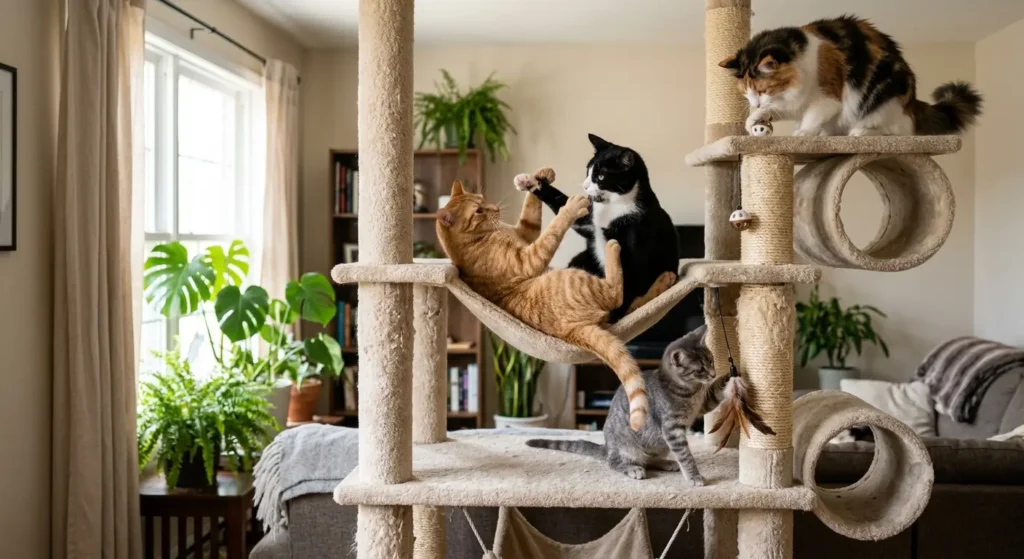
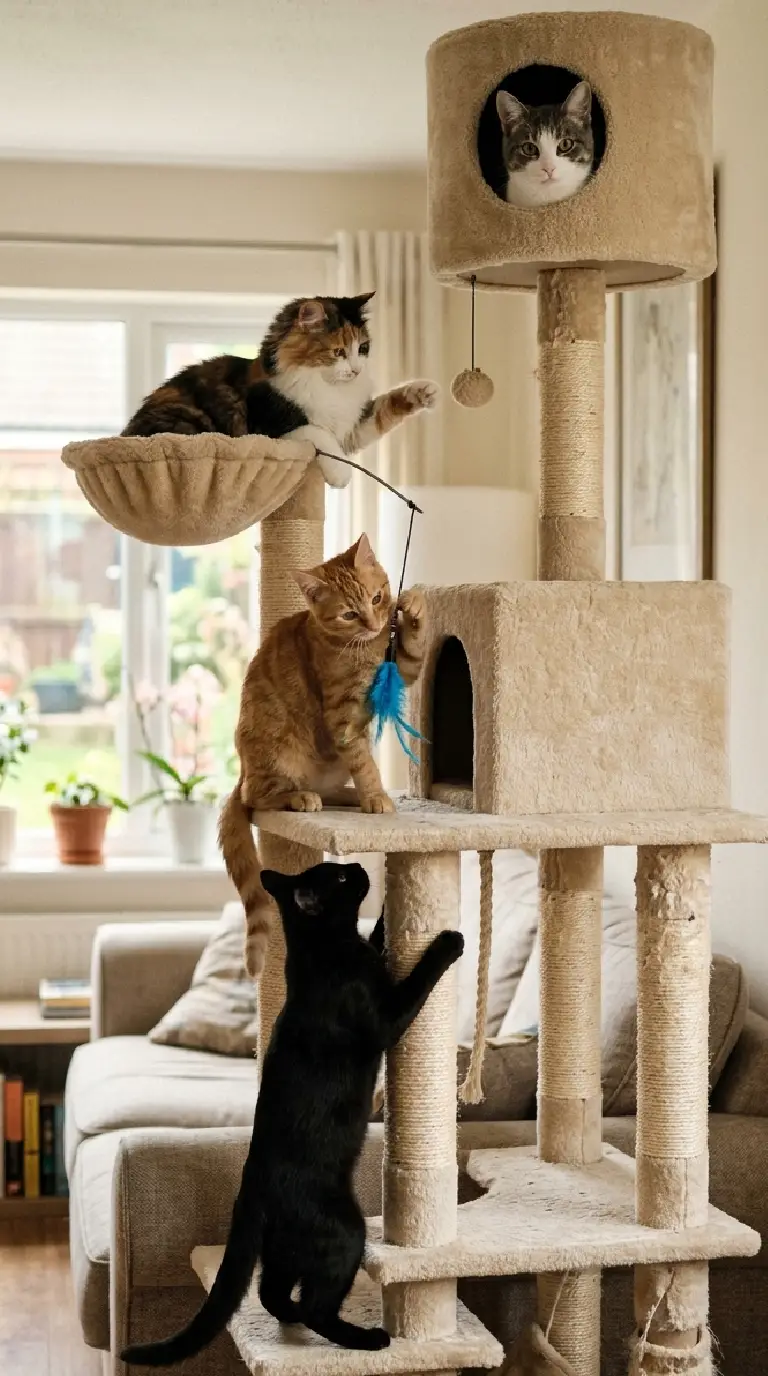
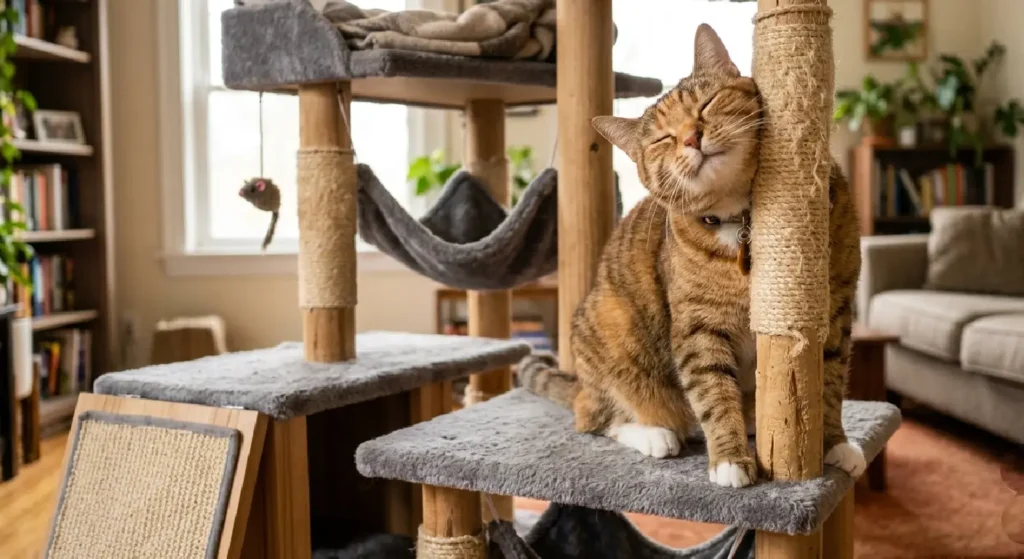
Cat trees, sometimes called cat condos or kitty towers, are multi-level structures designed for climbing, scratching, perching, and lounging. They add vertical territory for climbing and surveying the room
- They include scratching surfaces that satisfy a natural urge
- They offer cozy nooks for napping and quiet retreat
- They invite movement through play and exploration
- They help relieve stress in busy or multi-pet homes
When shopping for a cat tree, weigh factors like height, stability, materials, and built-in features such as posts, platforms, and hideaways. Choose a sturdy model that can handle enthusiastic leaping, and position it somewhere your cat can climb safely without any risk of tipping or injury, turning it into a daily source of mental stimulation for cats.
Other Tools That Deliver Mental Stimulation for Cats
A cat tree is a fantastic foundation, but variety keeps things fresh. Rotating in a few extra supplies multiplies the mental stimulation for cats and prevents the predictability that leads to boredom. Consider weaving these options into your cat’s daily rhythm.
Interactive Toys
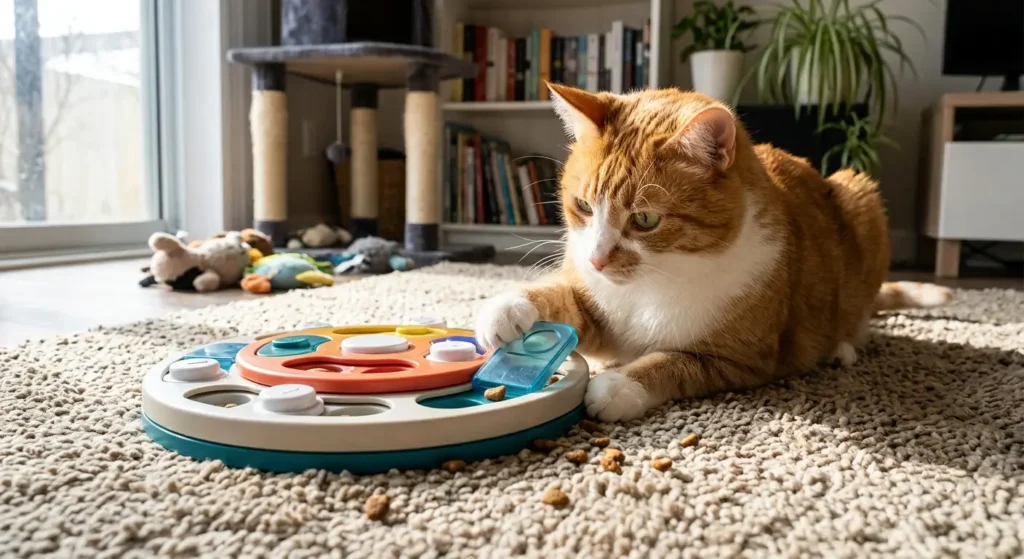
- Puzzle feeders that reward patience and problem-solving
- Feather wands for active, hands-on play sessions
- Catnip toys that spark bursts of energy
- Rolling ball toys for solo chasing
Scratching Stations
- Vertical scratching posts
- Horizontal scratching pads
- Angled scratching ramps
Window Perches
- Window-mounted perches for bird-watching
- Wall shelves for climbing and lounging
By combining toys, scratchers, and elevated lookouts, you create an environment rich in mental stimulation for cats, which keeps unwanted behaviors at bay and supports steady mental stimulation for cats day after day.
Daily Habits That Boost Mental Stimulation for Cats
Equipment alone won’t do all the work; your involvement matters just as much, and your attention is the heart of mental stimulation for cats. A few small, consistent habits dramatically increase the mental stimulation for cats living indoors.
Set aside ten to fifteen minutes twice a day for focused, interactive play that lets your cat “hunt” and pounce. Rotate toys weekly so familiar objects feel new again. Hide treats around the home to encourage natural foraging. Introduce gentle clicker training to challenge the brain, and let your cat watch the outside world from a safe, sunny window. Each of these simple routines layers extra mental stimulation for cats into ordinary days.
Signs Your Cat Needs More Mental Stimulation
Cats can’t tell you they’re bored, but their behavior speaks volumes. Watch for these common red flags that signal a shortage of mental stimulation for cats:
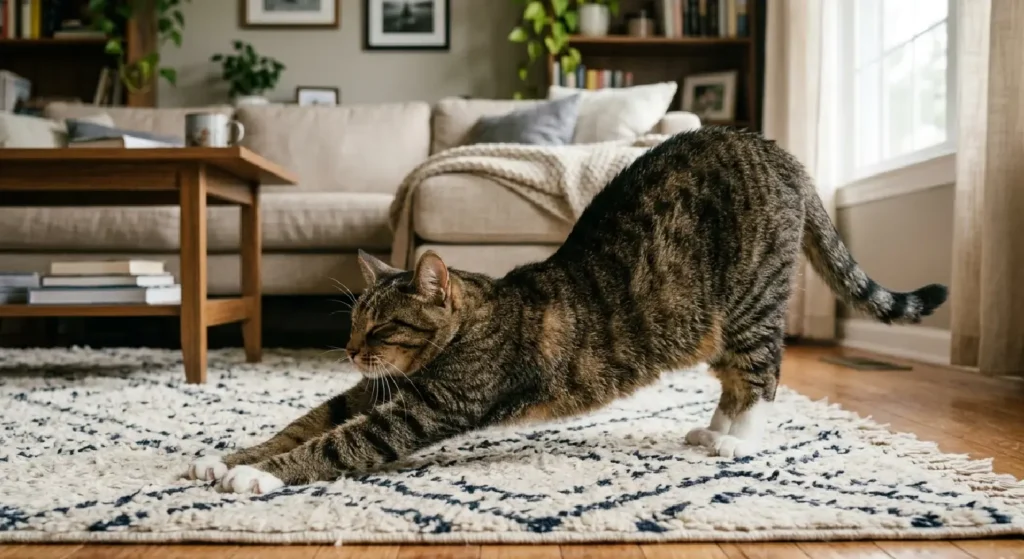
- Excessive scratching of furniture or carpet
- Overgrooming or pulling out fur
- Aggression, nipping, or sudden mood swings
- Constant meowing or attention-seeking
- Lethargy, withdrawal, or sleeping far more than usual
- Overeating driven by boredom rather than hunger
If any of these patterns show up, increasing mental stimulation for cats is often the gentlest and most effective first step toward a happier household.
Conclusion
Cats need more than food and shelter to truly flourish; they need engagement, challenge, and play. Prioritizing mental stimulation for cats through cat trees, interactive toys, scratching posts, and window perches gives your companion the physical and cognitive outlets that wild instincts demand. Rotate toys often, set up varied play zones, and carve out real time to bond with your feline friend. Investing in your cat’s mental well-being is one of the most rewarding things you can do, and prioritizing mental stimulation for cats pays you back in a calmer, healthier, and more affectionate companion.
Frequently Asked Questions
1. What is mental stimulation for cats?
Mental stimulation for cats means engaging their natural instincts to hunt, climb, explore, and solve problems through play, enrichment toys, and interactive activities that keep their minds active and prevent boredom.
2. Why do indoor cats need mental stimulation?
Indoor cats lack the natural challenges of an outdoor environment. Without enrichment, they grow bored and stressed, which can lead to destructive behavior, anxiety, and health issues. Mental stimulation fills that gap.
3. How much playtime does my cat need each day?
Most cats benefit from two play sessions of about ten to fifteen minutes each. Active or young cats may need more, while older cats often enjoy shorter, gentler sessions.
4. What are the best toys for mental stimulation for cats?
Puzzle feeders, feather wands, catnip toys, and rolling ball toys are all excellent. Rotating between them keeps play fresh and prevents your cat from losing interest.
5. Can a cat tree really improve my cat's mental health?
Yes. A cat tree provides vertical space, scratching surfaces, and hiding spots that satisfy core instincts. This reduces stress and offers consistent mental stimulation for cats throughout the day.
6. How do I know if my cat is bored?
Signs of boredom include excessive scratching, overgrooming, aggression, constant meowing, lethargy, and boredom-driven overeating. Adding more enrichment usually helps quickly.
7. Are puzzle feeders good for cats?
Absolutely. Puzzle feeders make your cat work for food, mimicking the mental effort of hunting. They slow down fast eaters and provide valuable mental stimulation for cats at mealtime.
8. Does mental stimulation help with cat behavior problems?
In many cases, yes. A large share of behavioral issues stem from boredom or pent-up energy. Increasing enrichment and play often reduces scratching, aggression, and anxiety.
9. How can I provide mental stimulation for cats on a budget?
You don’t need to spend much. DIY cardboard boxes, homemade wand toys, treat-hiding games, and a simple window perch all deliver meaningful enrichment at little to no cost.
10. Should I rotate my cat's toys?
Yes. Rotating toys every week makes old favorites feel new again and keeps your cat curious. This simple habit is one of the easiest ways to sustain mental stimulation for cats over time.