Best Odor-Control Products for Cat Owners
You adore your cat, but shared living comes with a downside: smells. Litter boxes, food dishes, bedding, and your cat’s own natural scent can all leave your home smelling less than fresh. The good news is that you don’t have to put up with it. A wide range of odor control products is made specifically for cat households, and the right ones can transform how your space feels. In this guide, we’ll walk through the most effective odor control products and show you how to use them.
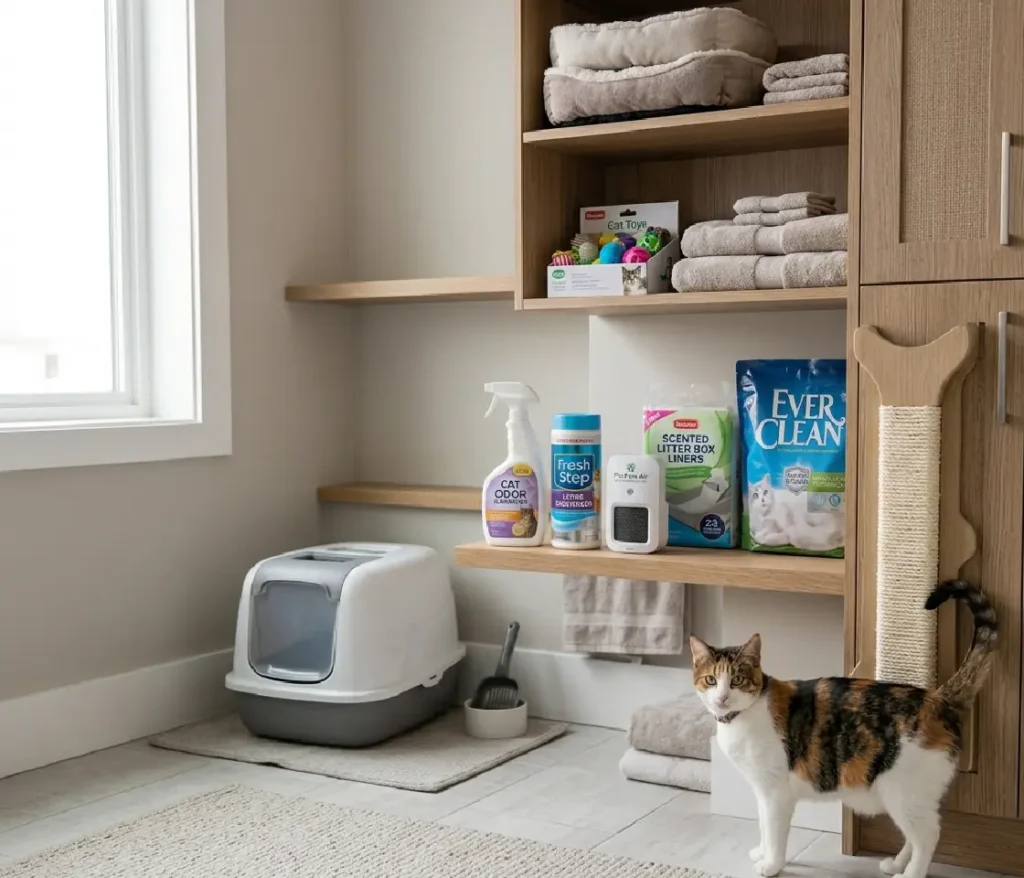
Why Cats Create Odors in the First Place
Before you reach for any odor control products, it helps to understand where the smells actually come from. Most cat odors trace back to a few predictable sources, and knowing them makes your cleaning routine far more targeted.
The litter box is the usual culprit, since urine and feces release ammonia and other strong-smelling compounds. Food bowls left out too long can turn rancid, especially with wet food. Beyond that, cats carry a faint natural musk in their fur, and accidents outside the litter box can soak into carpets and upholstery where smells linger for weeks.
- Common sources of cat odor:
- Litter box waste and ammonia buildup
- Leftover or spoiled wet food
- Natural skin and coat oils
- Accidents absorbed into soft surfaces
Once you know the source, choosing the correct odor control products becomes much easier, because you can match the product to the problem instead of guessing.
Introduction to Odor Control Products
A consistent cleaning routine is the foundation of a fresh home. Still, scrubbing alone rarely defeats stubborn pet smells, and that’s exactly the gap that odor control products are built to fill. Rather than masking smells with perfume, the best odor control products neutralize the molecules that cause them, so your rooms actually smell clean instead of merely covered up.
Think of these odor control products as a second layer of defense that works between your deep-cleaning sessions, keeping things fresh day to day.
Cat Trees Help Reduce Odor
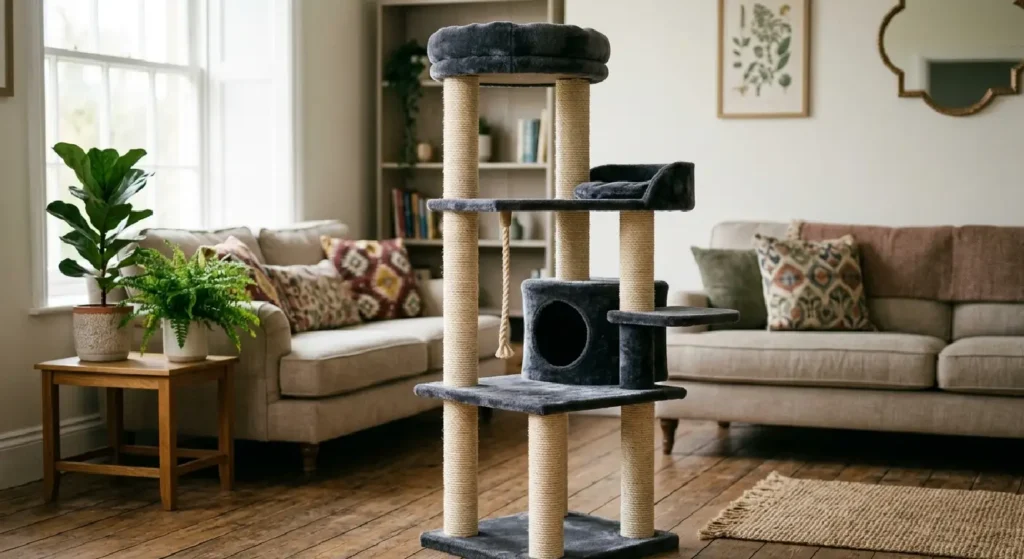
Giving your cat a dedicated zone to climb, scratch, and lounge is an underrated form of odor management. Cat trees pull your cat away from your sofa and bed, which means fewer body oils and less shed fur soaking into your furniture. While a cat tree isn’t a chemical odor control product, it supports the same goal of a fresher home.
- Benefits of cat trees:
- Give your cat a personal place to play and rest
- Encourage healthy scratching instead of furniture clawing
- Keep oils and dander off your couch and carpets
Well-known cat tree makers include Go Pet Club, Armarkat, and New Cat Condos, all of which offer a broad range of sizes and styles to match your décor.
Cat Trees Help Reduce Odor
Beyond trees, a handful of everyday supplies pair beautifully with your odor control products. The right gear stops smells from forming in the first place, which is always easier than removing them later.
- Essential cat supplies for odor control:
- A litter box paired with odor-absorbing litter
- Easy-to-clean food and water bowls
- Grooming brushes that lift loose, oily fur
- Toys and scratchers that keep your cat active
Spending a little more on quality supplies pays off, since durable, washable gear works alongside your odor control products to keep your home consistently fresh.
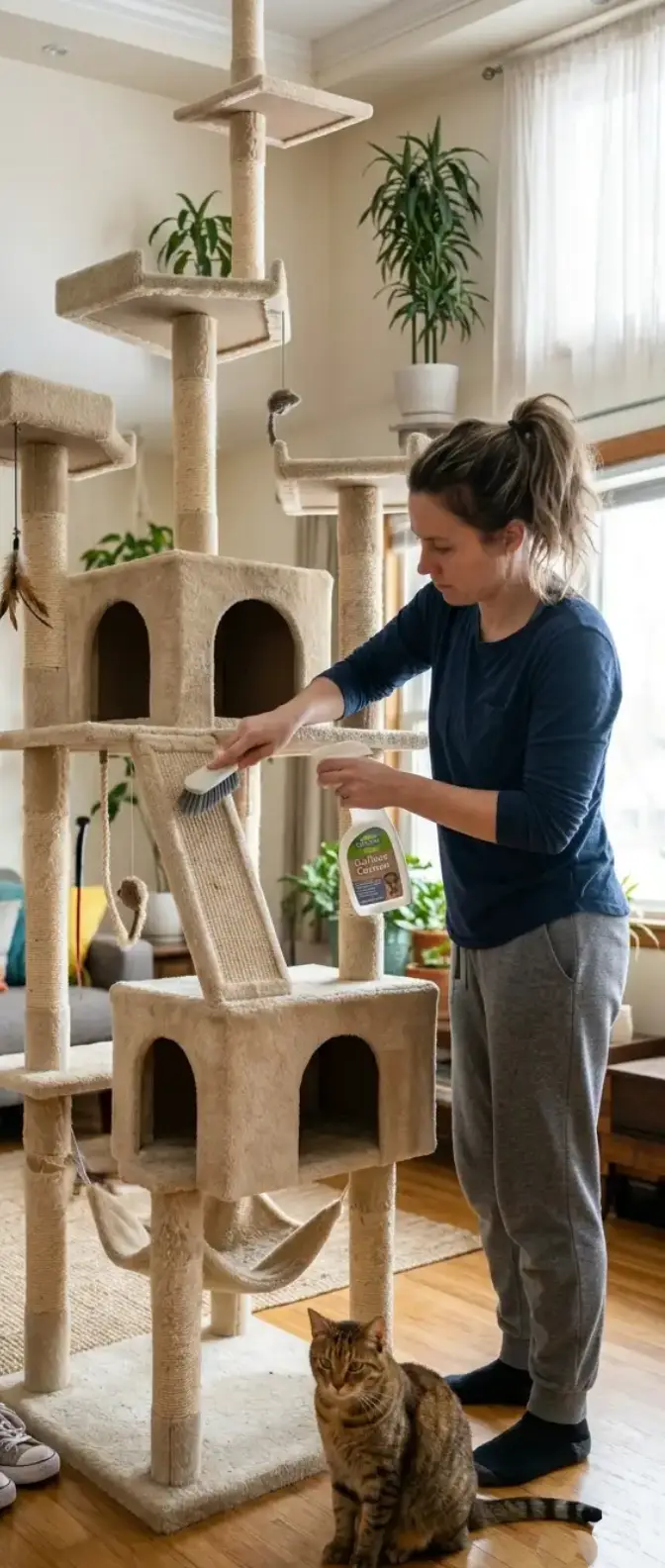
The Best Odor Control Products for Cat Owners
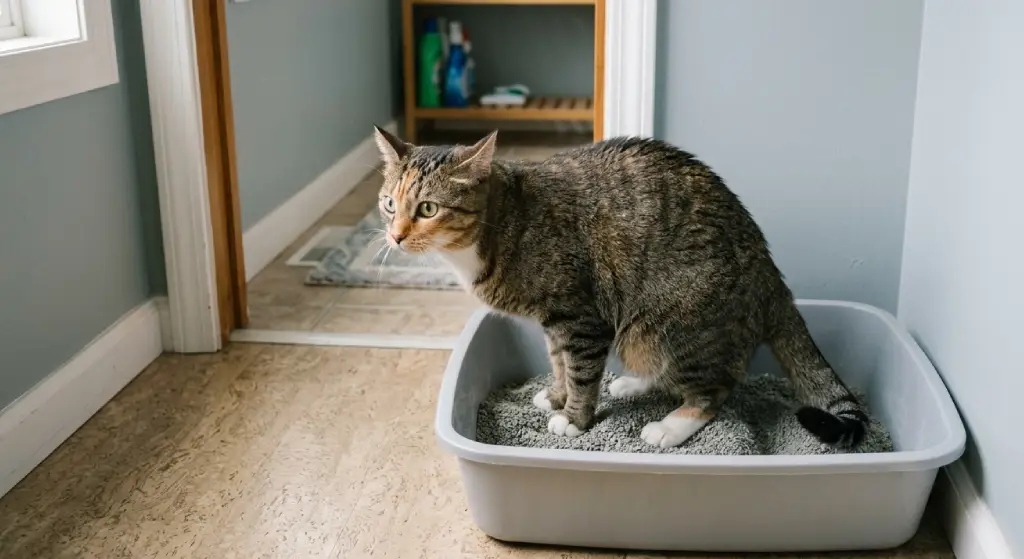
Now for the heart of this guide. Below are the odor control products that deliver the strongest results, organized by how they tackle the problem.
1. Pet Odor Eliminator Spray
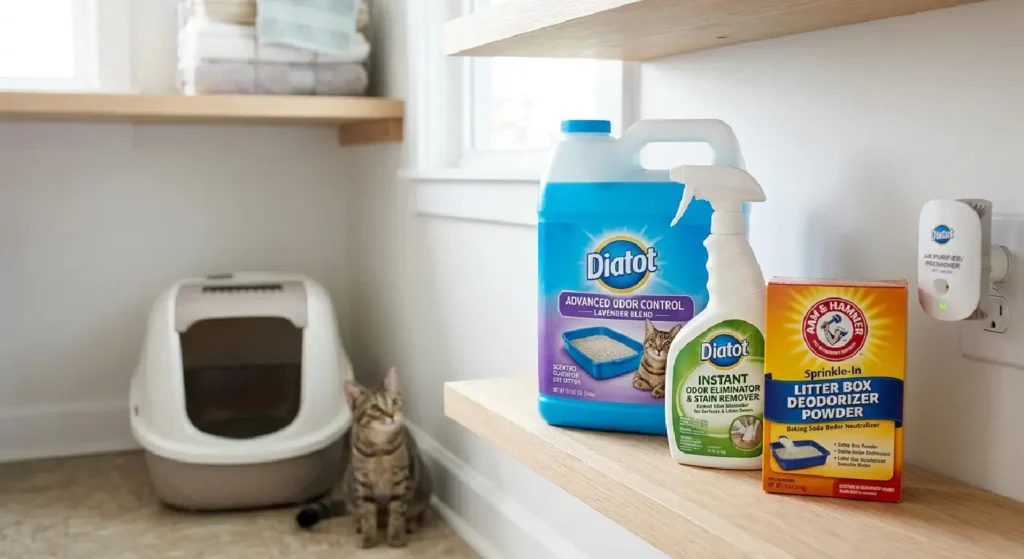
A pet odor eliminator spray is one of the most versatile odor control products you can own. These sprays break down smell-causing molecules on contact and are safe for beds, carpets, furniture, and other surfaces. A quick mist refreshes a room in seconds.
2. Litter Box Deodorizer
Since the litter box is the number-one smell source, a dedicated litter box deodorizer belongs in every cat owner’s lineup of odor control products. Sprinkle it into fresh litter and it absorbs ammonia before it ever reaches your nose.
3. Air Purifier
An air purifier rounds out your collection of odor control products by tackling smells you can’t reach with a spray. These machines pull airborne odors, dander, and allergens through a filter, refreshing the entire room. Position one centrally for the best coverage.
4. Enzyme Cleaners for Accidents
When an accident happens, ordinary cleaners only mask the problem, and your cat will often return to the same spot. Enzyme-based odor control products digest the proteins in urine completely, removing both the stain and the scent marker. Keep a bottle on hand for fast cleanup on carpets and upholstery.
5. Activated Charcoal and Baking Soda Absorbers
For a low-cost, fragrance-free option, charcoal bags and baking soda containers are excellent passive odor control products. Tuck them near the litter box, in closets, or under furniture, and they quietly soak up smells for weeks with zero effort, making them some of the easiest odor control products to maintain.
How to Choose the Right Odor Control Products
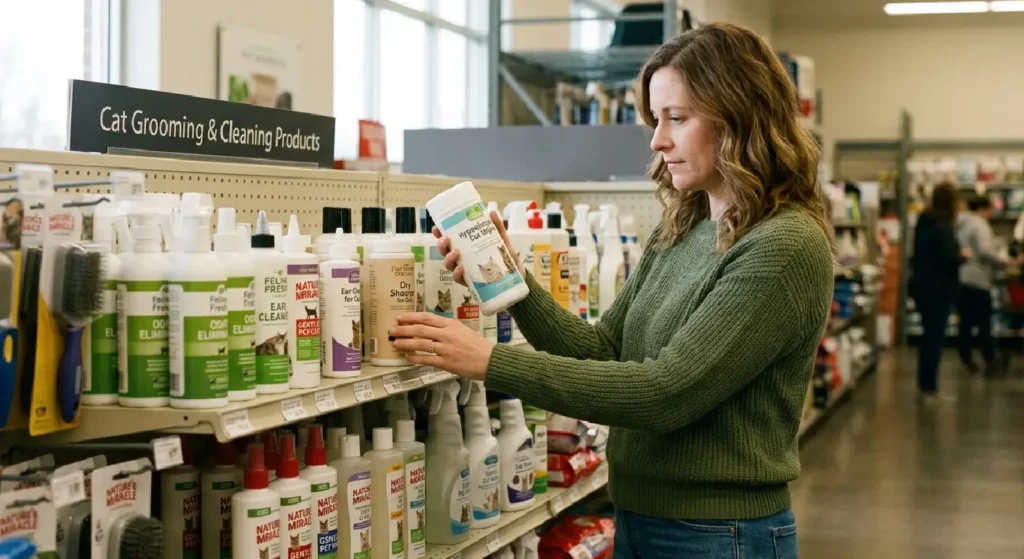
With so many odor control products on the market, a few simple criteria will help you choose wisely. Match the product to your specific smell source, check that every formula is labeled pet-safe, and favor enzyme or activated-carbon options over heavy perfumes that only mask odors.
It’s also smart to combine several odor control products rather than relying on a single one. A spray, a deodorizer, and an air purifier working together cover surfaces, the litter box, and the air all at once.
A Simple Daily Routine for a Fresh Home
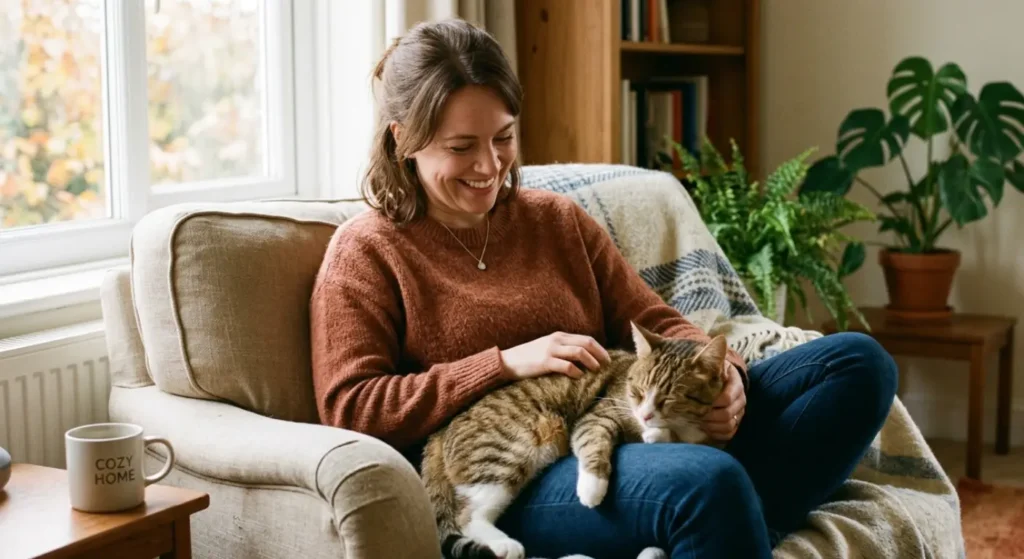
Even the best odor control products work better with good habits. Scoop the litter box at least once a day, wash food bowls after every meal, and brush your cat a few times a week to remove oily, shed fur. Launder pet bedding weekly, and refresh your passive absorbers every month.
Pairing this light routine with your favorite odor control products keeps smells from ever building up, so your home stays welcoming for you and your guests.
Conclusion
Keeping a cat-friendly home smelling clean is completely achievable with the right strategy. By combining quality supplies, smart habits, and a thoughtful mix of odor control products, you can neutralize pet smells at every source. Whether you lean on an eliminator spray, a litter box deodorizer, an air purifier, or natural absorbers, there’s a solution for every home and budget.
Show your cat some love and enjoy a fresh-smelling space by putting these odor control products to work. For more pet care and home tips, browse the rest of our blog.
Frequently Asked Questions About Cat Trees in the UK
1. What are the best odor control products for cat owners?
The most effective odor control products include enzyme-based eliminator sprays, litter box deodorizers, HEPA air purifiers, and natural absorbers like activated charcoal. Combining a few covers surfaces, the litter box, and the air.
2. Are odor control products safe to use around cats?
Most odor control products are formulated to be pet-safe, but always read the label. Avoid products with essential oils like tea tree or citrus in concentrated form, as some can be harmful to cats.
3. How often should I use odor control products in my home?
Use sprays and litter deodorizers as part of your daily or every-other-day routine, run an air purifier continuously, and refresh passive absorbers about once a month for the best results.
4. Do air purifiers really remove cat odors?
Yes. Air purifiers with HEPA and activated carbon filters capture dander and trap the airborne molecules that cause smells, making them one of the most reliable odor control products for whole-room freshness.
5. What is the best odor control product for the litter box?
A dedicated litter box deodorizer from brands like Arm & Hammer or Fresh Step works well, and adding baking soda boosts absorption. Scooping daily matters more than any single product.
6. Can I make my own natural odor control products at home?
Absolutely. Baking soda, diluted white vinegar, and unscented activated charcoal are effective, low-cost natural odor control products that avoid synthetic fragrances.
7. Why does my cat's litter box still smell after cleaning?
Lingering ammonia is usually the cause. Switch to a clumping, odor-absorbing litter, add a deodorizer, and wash the box itself periodically, since plastic can hold smells over time.
8. Do odor control products work on carpet accidents?
Enzyme-based odor control products are essential here. They break down the proteins in urine completely, removing both the stain and the scent marker so your cat won’t re-mark the spot.
9. How can I reduce cat odor without using sprays?
Focus on prevention: scoop daily, groom your cat regularly, wash bedding, and use passive odor control products like charcoal bags. Good airflow and a clean litter box do most of the work.
10. Are expensive odor control products worth the money?
Not always. Many affordable odor control products perform just as well as premium ones. Prioritize enzyme or carbon-based formulas and pet-safe labeling over price or brand name.