Best Scratching Posts for Cats: How to Choose the Right One
Every cat owner eventually faces the same dilemma: scratched-up couch arms, shredded carpet edges, and frayed door frames. The fix is rarely complicated. In most cases, the right scratching post for cats redirects that natural urge away from your furniture and toward a surface your cat is actually allowed to destroy. Scratching is hardwired feline behavior, and giving your pet a dedicated outlet is one of the kindest, most practical things you can do for them.
In this guide, we’ll break down how to pick the best scratching post for cats, the different styles available, the factors that separate a great post from a useless one, and our top product recommendations. By the end, you’ll know exactly what to look for.
Why Do Cats Scratch in the First Place?
Before shopping for a scratching post for cats, it helps to understand why cats scratch at all. Scratching isn’t your cat misbehaving or trying to ruin your home. It serves several important purposes that every owner should appreciate.
Cats scratch to remove the dead outer layers of their claws, keeping them sharp and healthy. They also scratch to mark territory, since their paws contain scent glands that deposit a personal signature on whatever surface they work over. On top of that, scratching is a full-body stretch that flexes the back, shoulders, and legs. When you provide a quality scratching post for cats, you’re supporting claw health, territorial confidence, and physical exercise all at once.
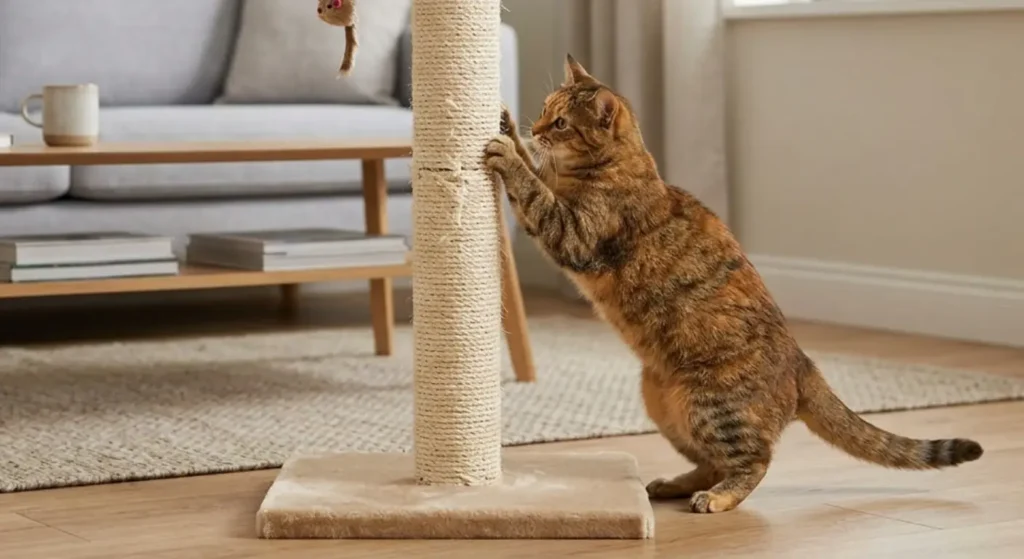
Understanding this behavior makes it obvious why simply punishing a cat for scratching never works. The instinct doesn’t disappear; it just relocates. A proper scratching post for cats channels that drive somewhere acceptable.
The Importance of Cat Trees and Cat Supplies
Beyond the scratching post itself, broader cat supplies play a major role in your pet’s wellbeing. Cats are curious, active animals that crave both mental stimulation and physical movement to stay healthy and content. Cat trees deliver vertical territory where your cat can climb, perch high above the room, and survey their domain like the small predator they are.
A scratching post for cats works best as part of this larger ecosystem. Pair it with cat trees, interactive toys, and cozy resting spots, and you create an environment that satisfies your cat’s instincts instead of leaving them bored and frustrated. Bored cats are far more likely to scratch the wrong things, so investing in well-rounded supplies pays off in protected furniture and a happier pet.
Why the Right Cat Supplies Matter
Good cat supplies do more than fill a shopping cart. They support your pet’s physical health, mental stimulation, and emotional security. Choosing thoughtful cat supplies from day one helps your cat settle in faster and prevents common headaches like scratched furniture or litter box accidents. Tailor your cat supplies to your individual pet, because every cat has unique preferences.
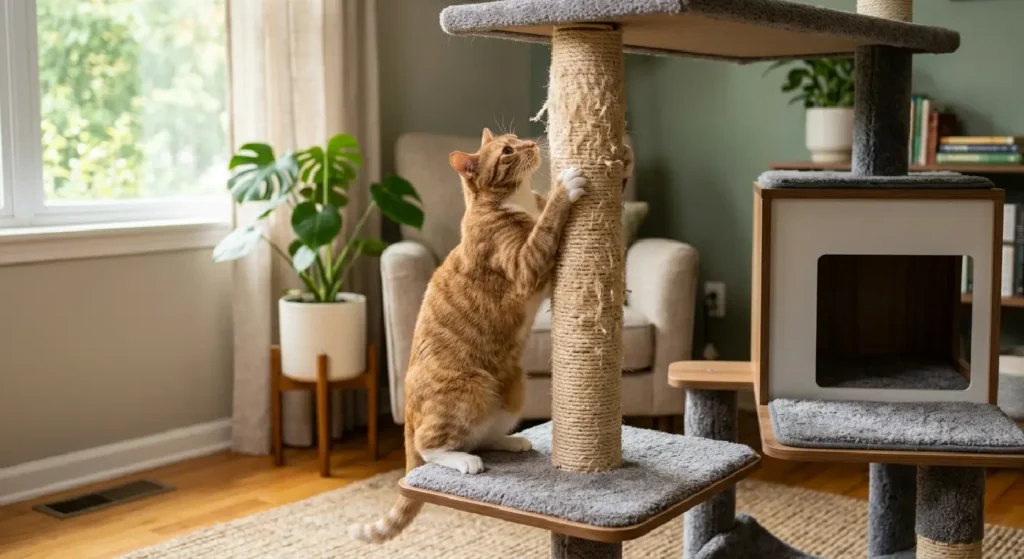
1. Vertical Scratching Posts
A vertical scratching post is a tall, upright column that lets a cat reach up and pull down through a full stretch. These are typically wrapped in sisal rope or carpet, both of which give claws something satisfying to dig into. A vertical scratching post for cats is the perfect match for pets that like to scratch standing up and lengthen their spine in the process.
Benefits of a vertical scratching post include:
- Lets cats fully extend their bodies during a scratch
- Occupies very little floor space
- Offers a range of grippy scratching surfaces
2. Horizontal Scratching Posts
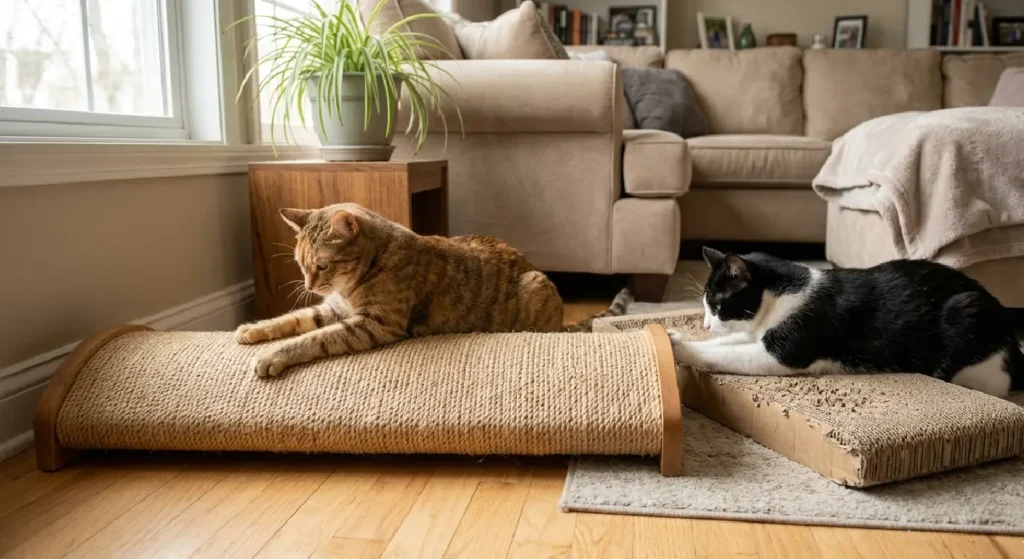
A horizontal scratching post is a flat board, pad, or mat that sits directly on the floor. Cats use it while crouching, sitting, or lounging. This style of scratching post for cats suits pets that instinctively scratch downward or like to relax while they work their claws.
Benefits of a horizontal scratching post include:
- Encourages low, ground-level scratching while seated or lying down
- Lightweight and easy to slide between rooms
- Comes in many shapes, sizes, and price points
3. Inclined and Curved Scratchers
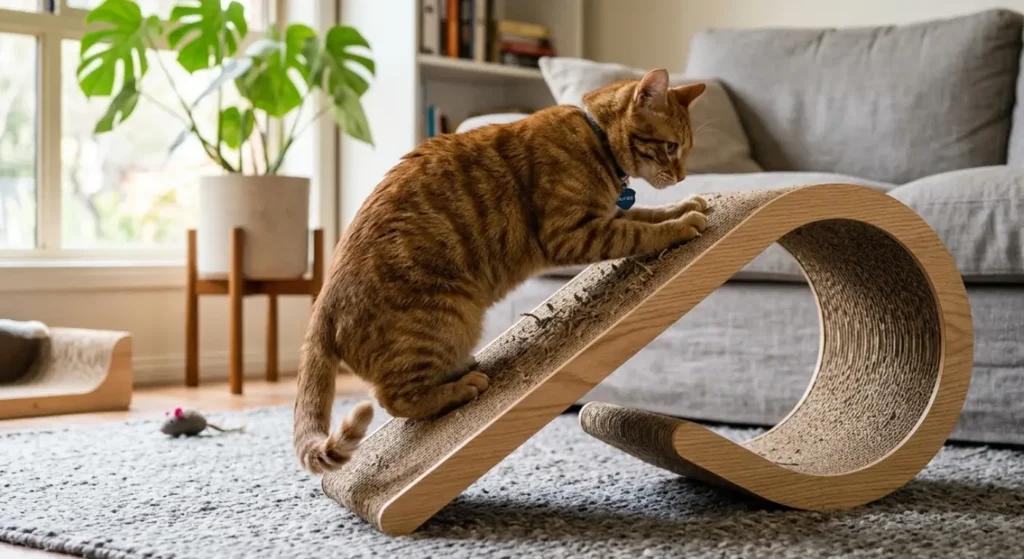
A newer addition to the lineup, the inclined or curved scratching post for cats splits the difference between vertical and horizontal. The angled surface lets a cat scratch at a comfortable diagonal and often doubles as a lounging spot. Many cardboard “wave” or “lounge” scratchers fall into this category, and they’re a budget-friendly way to test what angle your cat prefers.
4. Scratching Posts Built into Cat Trees
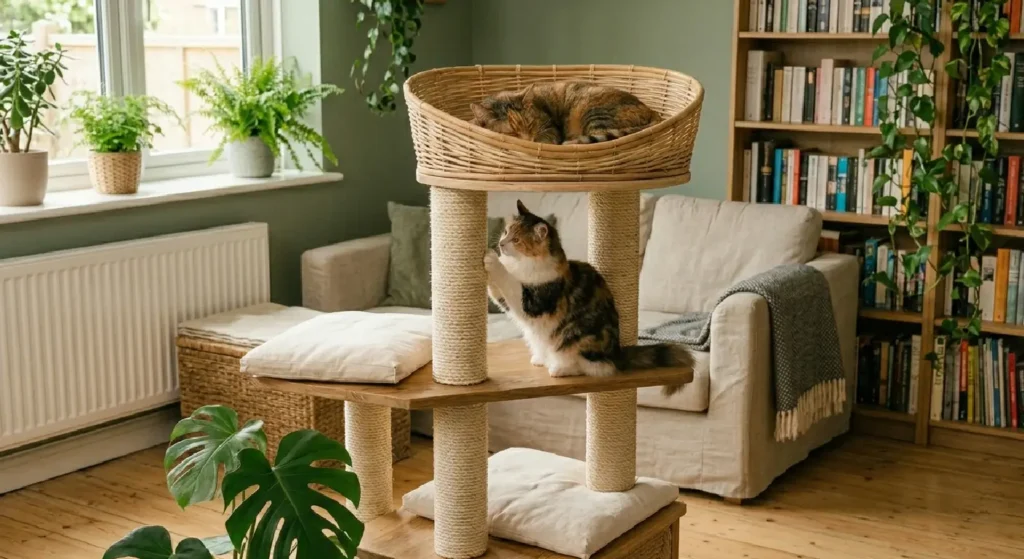
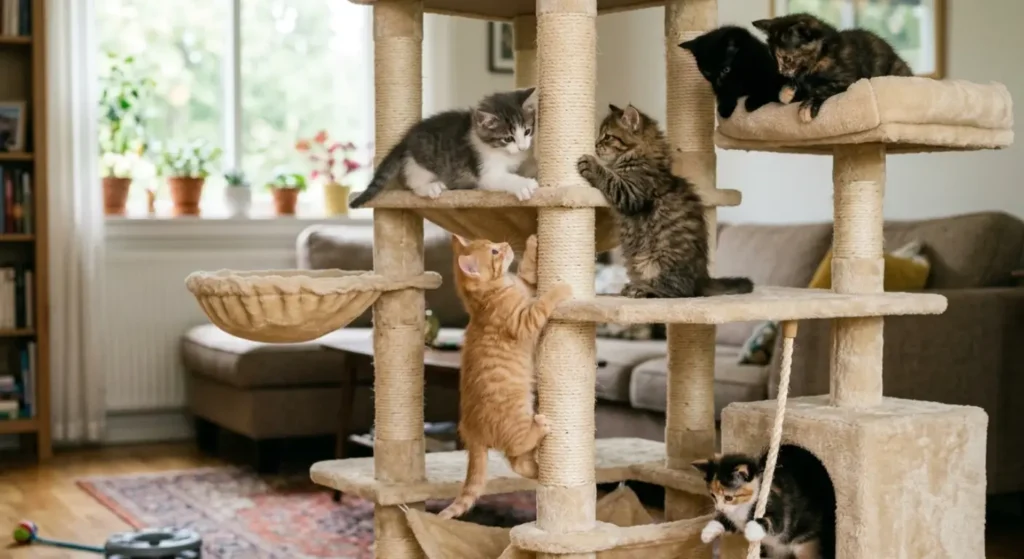
Many multi-level cat trees include one or more wrapped columns, effectively combining a scratching post for cats with climbing platforms and hideaways. If you’re short on space or want a single statement piece, an all-in-one cat tree delivers scratching, climbing, and napping in one footprint.
Factors to Consider When Choosing a Scratching Post
Picking the right scratching post for cats comes down to a handful of practical considerations. Keep these in mind and you’ll avoid the most common buyer’s regret.
Size and Height
Match the post to your cat’s body. A good scratching post for cats should be tall enough for an adult cat to stretch fully without hunching, and the base should be wide enough to keep the whole thing grounded. As a rule of thumb, a vertical post under about 30 inches is often too short for a fully grown cat.
Material
Durability matters. Look for a scratching post for cats covered in tough, claw-friendly materials like sisal rope, sisal fabric, or dense carpet. Avoid flimsy coverings that shred after a week or bases that feel hollow and cheap. Sisal in particular holds up to heavy daily use.
Stability
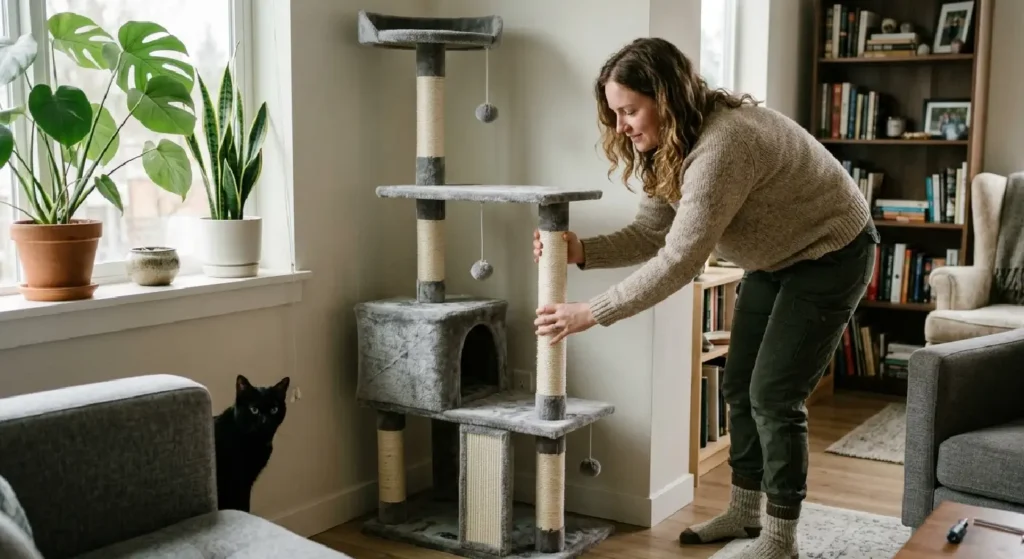
Stability can make or break a purchase. If a scratching post for cats wobbles or tips the first time your cat leans into it, they’ll abandon it for good and head straight back to your sofa. A heavy, low-set base or a wall-mounted design keeps the post planted and reassures your cat that it’s safe to commit to a full-strength scratch.
Design and Texture
Finally, consider design and texture. Some cats love sisal, others prefer cardboard or carpet, and many enjoy variety. Pick a scratching post for cats that suits your cat’s texture preference while still fitting your home’s look. The good news is that modern posts come in finishes ranging from minimalist wood to plush, so matching your decor is easy.
How to Train Your Cat to Use a Scratching Post
Buying a great scratching post for cats is only half the battle; your cat actually has to use it. Fortunately, encouraging the habit is straightforward.
Start by placing the post where your cat already likes to scratch, such as next to the couch they’ve been targeting. Rub a little catnip on the surface or dangle a toy near it to spark interest. Whenever your cat scratches the post, reward them with praise or a small treat so the behavior gets reinforced. If your cat keeps returning to the furniture, gently move them to the scratching post for cats instead and reward the redirect. With consistency, most cats adopt their new post within a couple of weeks.
Never force your cat’s paws onto the surface or punish them for mistakes. Positive association is what makes a scratching post for cats stick.
Where Should You Place a Scratching Post?
Placement is one of the most overlooked factors. The best scratching post for cats in the world will be ignored if it’s tucked away in a corner your cat never visits.
Cats often scratch right after waking up, so positioning a post near their sleeping area is smart. They also like to mark high-traffic and socially important spots, which is why a scratching post for cats placed in the living room frequently outperforms one hidden in a spare bedroom. If your cat has a favorite scratching victim, set the new post directly in front of it at first, then gradually shift it to a more convenient location once the habit forms.
For multi-cat homes, provide more than one scratching post for cats so no single pet can monopolize the resource and trigger conflict.
Top Picks for Scratching Posts
Now that you understand the types and selection factors, here are three standout products that consistently win over both cats and owners.
SmartCat Ultimate Scratching Post
The SmartCat Ultimate is a tall, rock-solid vertical scratching post for cats wrapped in durable sisal. Its generous height lets even large cats stretch to their full length, and the weighty base resists tipping. If you want a no-frills post that lasts for years, this is a reliable choice.
PetFusion 3-Sided Vertical Cat Scratching Post
The PetFusion 3-Sided model is a versatile scratching post for cats that offers scratching surfaces on multiple faces. The three-sided layout lets your cat dig in from whatever angle they approach, making it a smart pick for households where one cat has unpredictable scratching habits or where multiple cats share the post.
Catit Scratcher with Catnip
For fans of the horizontal style, the Catit Scratcher is a compact, catnip-infused scratching post for cats that fits neatly into small apartments. The built-in catnip draws cats in immediately, and the low profile makes it an easy, affordable entry point if you’re not ready to commit to a tall tower.
Common Mistakes to Avoid
Even well-meaning owners trip over a few predictable errors when introducing a scratching post for cats. Steer clear of these and you’ll get results faster.
The first mistake is buying a post that’s too short or too unstable, which teaches your cat that scratching it is uncomfortable. The second is hiding the post somewhere inconvenient and then wondering why it goes unused. A third common slip-up is offering only one texture; some cats simply prefer cardboard or carpet over sisal, so a single rejected scratching post for cats doesn’t mean your cat dislikes posts altogether. Finally, giving up too soon is the biggest mistake of all, since habit formation takes patience and a steady stream of positive reinforcement.
How to Maintain Your Scratching Post
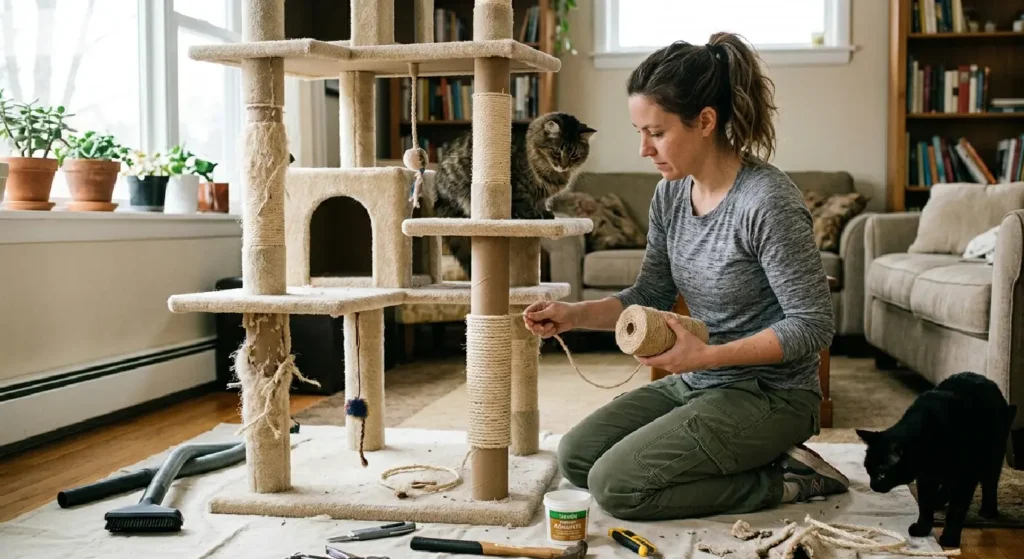
A scratching post for cats isn’t entirely set-and-forget, but upkeep is minimal. Vacuum or brush away loose fibers and fur regularly so the surface stays appealing. If a sisal-wrapped post starts to unravel, many models allow you to re-wrap the column with fresh rope rather than replacing the whole unit. Refresh catnip-based scratchers periodically to keep them enticing. A clean, intact scratching post for cats will always beat a tattered one in your cat’s eyes, so a little maintenance extends the life of your investment considerably.
Conclusion
Choosing the right scratching post for cats is one of the simplest, highest-impact decisions you can make for both your pet’s wellbeing and your furniture’s survival. Weigh your cat’s scratching style against the available types, then prioritize size, material, stability, and texture. Add thoughtful placement and a bit of patient training, and you’ll have a cat that happily ignores your couch in favor of its own dedicated spot.
Remember that a scratching post for cats works best alongside cat trees, toys, and other enriching supplies that satisfy your cat’s body and mind. Invest in quality, stay consistent, and you’ll create a stimulating home that keeps your feline friend content for years to come. Now it’s time to find the perfect scratching post for cats and let your companion enjoy the satisfying scratch they were born to crave.
Frequently Asked Questions
1. What is the best scratching post for cats?
The best scratching post for cats is one that matches your cat’s preferred scratching style, stands tall and stable enough for a full stretch, and is covered in a durable material like sisal. The SmartCat Ultimate and PetFusion 3-Sided posts are popular, reliable choices.
2. How tall should a scratching post for cats be?
A vertical post should be tall enough for your adult cat to stretch out completely, generally at least 30 to 32 inches. Anything shorter forces your cat to hunch, which discourages use.
3. Why won't my cat use its scratching post?
Usually it’s a placement, texture, or stability issue. Move the scratching post for cats to a high-traffic area or next to the furniture they scratch, try a different surface like cardboard or sisal, and make sure the post doesn’t wobble.
4. Is sisal or carpet better for a scratching post?
Sisal tends to be more durable and is generally preferred by cats because it offers satisfying resistance. Some cats do like carpet, so if your cat ignores a sisal scratching post for cats, a carpeted or cardboard option is worth trying.
5. How many scratching posts does one cat need?
At least one per cat, ideally placed in different rooms. In multi-cat households, providing several scratching posts for cats prevents competition and reduces stress between pets.
6. Can a scratching post stop my cat from scratching furniture?
Yes. When you place an appealing scratching post for cats near the targeted furniture and reward your cat for using it, most cats redirect their scratching away from couches and carpets over time.
7. Are horizontal or vertical scratching posts better?
Neither is universally better; it depends on your cat. Some cats prefer to stretch up against a vertical scratching post for cats, while others like to scratch downward on a horizontal pad. Offering both lets your cat choose.
8. How do I train my cat to use a scratching post?
Place the post in an appealing spot, add catnip or a toy to draw interest, and reward your cat with praise or treats every time they use it. Consistency and positive reinforcement are key.
9. When should I replace my cat's scratching post?
Replace or re-wrap a scratching post for cats when the surface is so worn that your cat loses interest or when the structure becomes unstable. Many sisal posts can be re-wrapped instead of fully replaced.
10. Do kittens need a scratching post too?
Absolutely. Introducing a scratching post for cats early helps kittens form good habits before they ever learn to scratch furniture, making training far easier as they grow.