How to Arrange Your Home for Multiple Cats: A Complete Setup Guide
Sharing your space with multiple cats brings warmth, entertainment, and constant companionship, but it also asks something of you in return. A household built for several felines needs careful planning, because every cat wants territory, resources, and a sense of security that is unmistakably their own. When you arrange your home for multiple cats with intention, you reduce tension and help each animal settle into a calm, confident routine. This guide walks through the practical steps for setting up a space where your pets can live well together, from cat trees to litter boxes to the small daily habits that keep the peace.
Why Home Arrangement Matters for Multiple Cats
Cats are territorial by nature, and that instinct does not disappear simply because they share a roof. In a home with multiple cats, competition over food, resting spots, and quiet corners can quickly turn into stress, spraying, or outright fighting. Thoughtful arrangement spreads resources out so that no single animal can control everything. The goal is abundance and choice: when there is always somewhere else to go and something else to use, conflict drops dramatically. A well-organized environment does more than prevent squabbles, though. It supports the physical health and emotional balance of multiple cats by giving them room to climb, hide, play, and rest on their own terms.
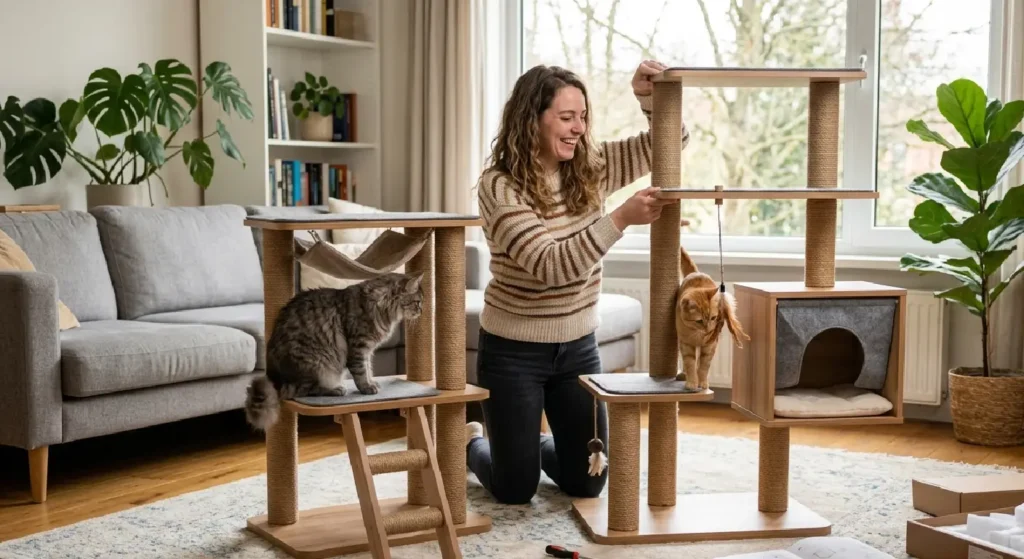
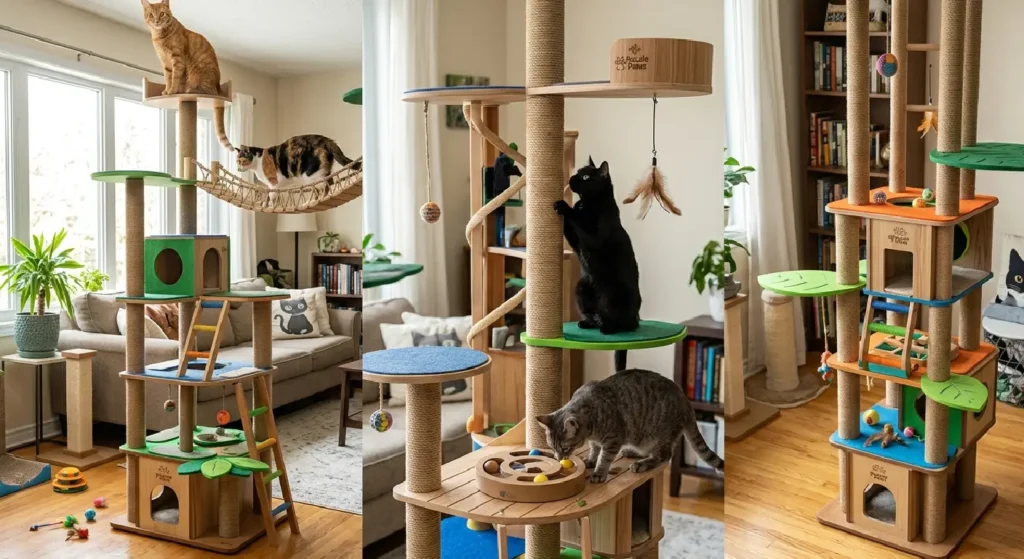
The Importance of Cat Trees for Multiple Cats
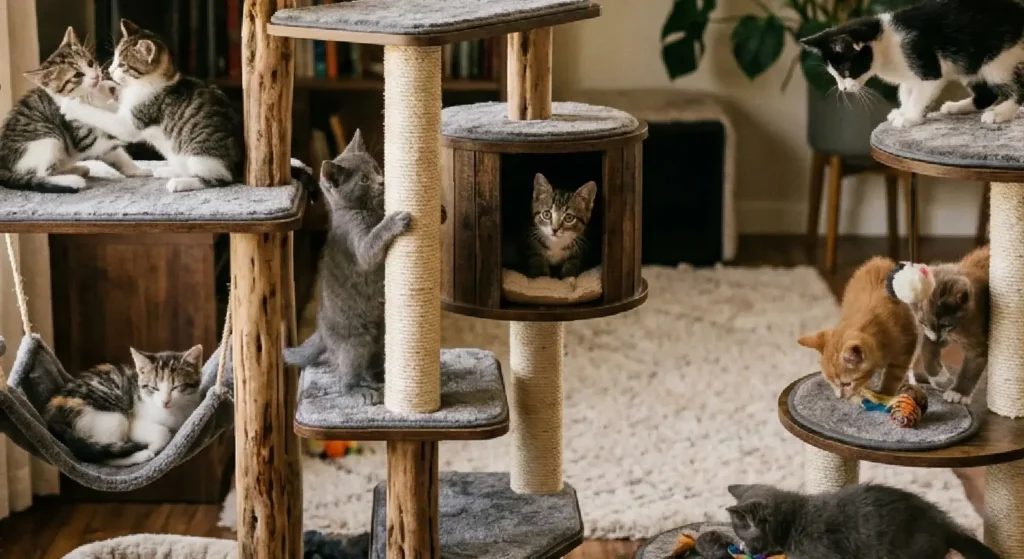
Cat trees are one of the most valuable investments for any household with multiple cats. They add vertical territory, which is exactly what felines crave. Climbing, perching, and surveying a room from a height satisfies deep instincts and keeps muscles strong. Just as importantly, cat trees act as territorial landmarks, letting each member of the group claim a level or a perch as their own. This vertical layering is one of the simplest ways to expand usable space without adding square footage.
Best Placement for Cat Trees
- Spread cat trees across several rooms so that no one is forced to share a single structure or compete for the top perch.
- Position at least one cat tree beside a window, giving your pets sunlight, fresh views, and hours of bird-watching entertainment.
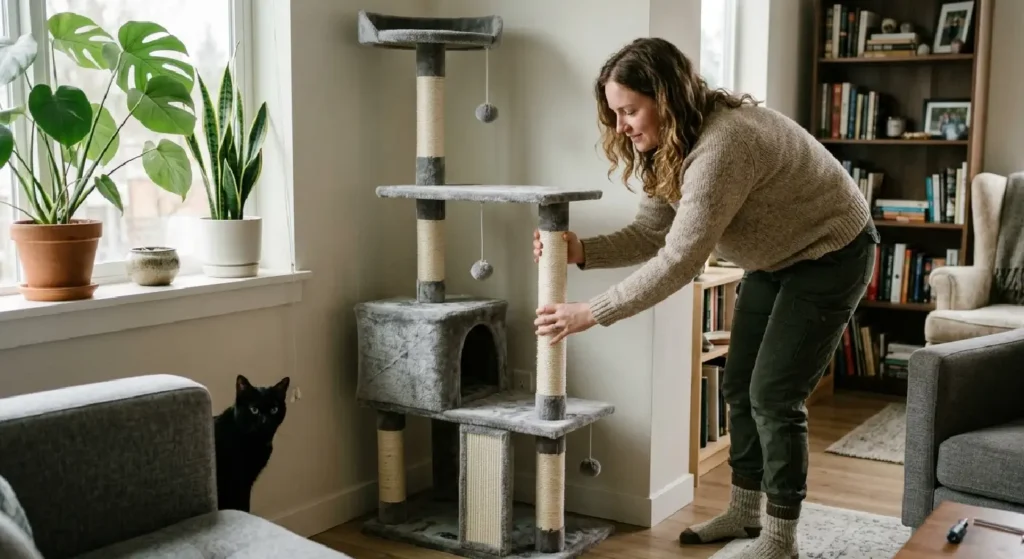
- Anchor every cat tree firmly so it stays steady even when several animals are climbing, leaping, or wrestling on it.
When cat trees are distributed thoughtfully, the whole home becomes a three-dimensional playground that meets the needs of multiple cats at once.
Essential Supplies for Multiple Cats
Beyond cat trees, several core supplies keep a multi-cat home running smoothly. The guiding principle is the same throughout: provide more than the bare minimum so that nobody is squeezed into sharing a single resource.
Food and Water Stations
- Set out separate food and water bowls so that everyone can eat without crowding or guarding.
- Spread feeding stations around the home rather than lining bowls up side by side, which lets shy eaters among your multiple cats dine in peace.
- Refresh water often, since several cats drinking from the same dish can empty it faster than you expect.
Litter Boxes
- Follow the classic rule of one litter box per cat plus one extra, which keeps multiple cats from queuing or avoiding a soiled box.
- Tuck litter boxes into quiet, easy-to-reach spots so that nervous pets are not ambushed mid-use.
- Scoop daily, because felines are quick to reject a box that feels dirty or overused.
Scratching Posts
- Offer several scratching posts so the natural urge to scratch and stretch never sparks a turf war.
- Place posts near cat trees and favorite lounging zones to redirect claws away from furniture.
- Mix vertical posts with horizontal scratchers, since multiple cats often have different scratching preferences.
Multi-Cat Setup Essentials at a Glance
| Essential Item | Recommended Amount | Best Placement | Why It Matters for Multiple Cats |
|---|---|---|---|
| Cat Trees | At least one per cat | Spread across rooms; one beside a window | Adds vertical territory and personal perches, easing competition |
| Food Bowls | One per cat, in separate spots | Quiet corners, away from litter and water | Prevents resource guarding and lets shy eaters relax |
| Water Bowls | One per cat, plus extras | Away from food; placed in multiple rooms | Encourages hydration and avoids guarding of a single source |
| Litter Boxes | One per cat, plus one spare | Quiet, open, easy-to-exit areas | Stops queuing and accidents while supporting clean habits |
| Scratching Posts | Several (vertical + horizontal) | Near cat trees and favorite lounging zones | Saves furniture and satisfies the natural urge to scratch |
| Hideaways & Beds | More than the number of cats | Bedrooms and low-traffic nooks | Gives each cat a private retreat to decompress alone |
| Wall Shelves & Perches | As many as space allows | Linked as "highways" along the walls | Lets cats pass at height and avoid floor-level conflicts |
| Interactive Toys | A rotating selection | Stored and swapped throughout the home | Burns energy, encourages bonding, and prevents boredom |
Building Vertical Territory and Safe Pathways
One of the most overlooked strategies for multiple cats is creating “highways” through a room. Shelves, window perches, and the tops of furniture can be linked so that animals move around at height without crossing paths on the floor. This matters because face-to-face encounters in tight spaces trigger most conflicts. By opening up vertical routes, you let everyone pass one another comfortably, retreat upward when they feel uneasy, and claim elevated lookout points. Wall-mounted shelves and bridges turn even a small apartment into rich territory for multiple cats.
Creating Harmony Among Multiple Cats
Even in a well-stocked home, multiple cats occasionally clash. A few habits go a long way toward keeping relationships smooth and stress low.
Provide Individual Hideaways
- Give each cat a private retreat, such as a covered bed or an enclosed perch, where multiple cats can decompress alone.
- Rotate and refresh these hideaways now and then to keep them interesting and to prevent any one cat from hoarding them.
Playtime and Enrichment
- Schedule interactive play with wand toys and chasers, which helps multiple cats burn energy and bond rather than bicker.
- Swap toys in and out regularly so that boredom never builds up among multiple cats.
Regular Veterinary Check-ups
- Keep every cat on a consistent veterinary schedule, since pain or illness in one animal can disrupt the whole group.
- Maintain individual records for vaccinations and parasite prevention so the health of multiple cats is never left to guesswork.
Managing Resources to Prevent Conflict
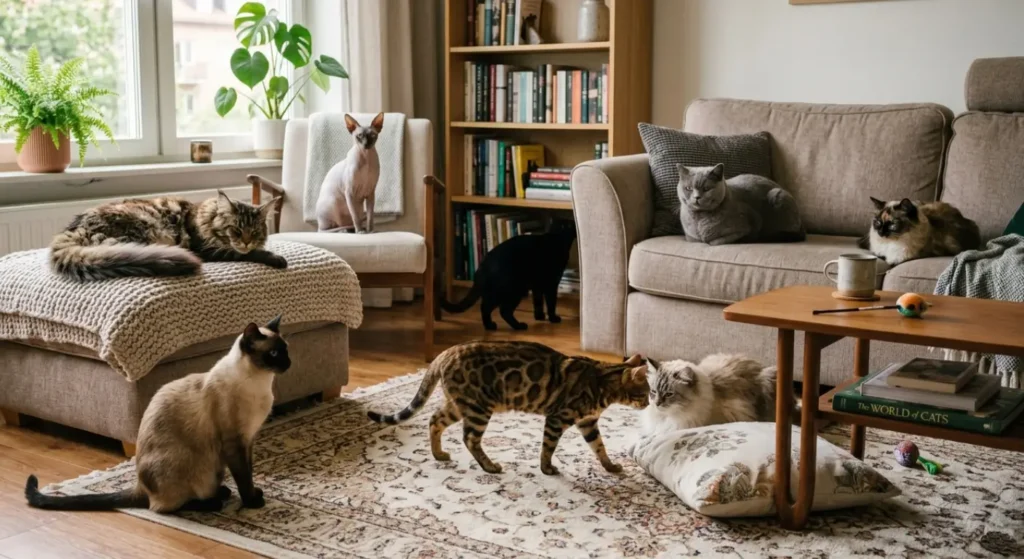
The single biggest predictor of peace among multiple cats is whether resources feel scarce or plentiful. Scarcity breeds guarding behavior, where one animal blocks access to food, a litter box, or a favorite napping spot. To defuse this, duplicate the things your felines value most and scatter them so no chokepoints form. Feeding in separate rooms, offering more beds than there are pets, and avoiding narrow corridors near litter areas all signal that there is plenty to go around.
Introducing a New Cat to a Multi-Cat Home
Adding to a group of multiple cats works best slowly. Start by keeping the newcomer in a separate room with its own food, water, and litter box. Swap bedding or use scent-soaked cloths so the residents and the new arrival grow familiar with one another’s smell before they ever meet. Progress to brief, supervised visits, and reward calm behavior. Rushing introductions is the fastest way to create lasting tension, while patience usually produces a stable, friendly household. Room-by-Room Setup Ideas for Multiple Cats
- Living room: Anchor a tall cat tree near a window and add wall shelves for elevated lounging, giving everyone a shared yet spacious hub.
- Bedroom: Place a quiet hideaway and a soft perch here so timid pets have a calm refuge.
- Hallways: Keep these clear of food and litter to avoid bottlenecks where animals might feel cornered.
- Spare room or nook: Reserve a low-traffic space for an extra litter box and feeding station, ideal when managing multiple cats in a busy household.
Signs your multiple cats may be stressed watch for hiding, over-grooming, litter-box avoidance, reduced appetite, or sudden aggression. These behaviors often mean that your pets feel crowded or under-resourced. Catching the signals early lets you add a litter box, a feeding station, or another perch before small frictions harden into lasting rivalries.
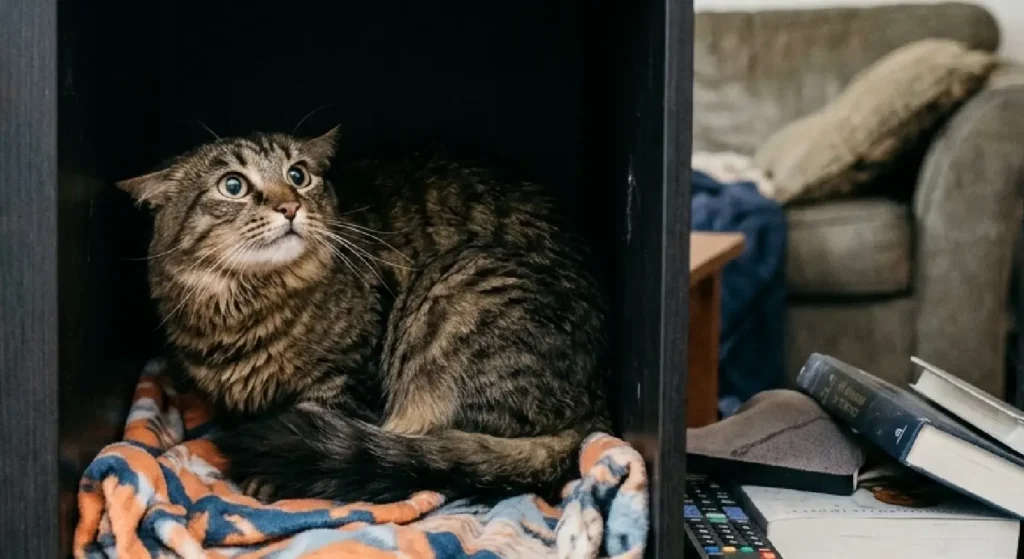
Signs Your Multiple Cats May Be Stressed
Watch for hiding, over-grooming, litter-box avoidance, reduced appetite, or sudden aggression. These behaviors often mean that your pets feel crowded or under-resourced. Catching the signals early lets you add a litter box, a feeding station, or another perch before small frictions harden into lasting rivalries.
Conclusion
Setting up a comfortable home for multiple cats comes down to one idea repeated everywhere: choice and abundance. When you supply enough cat trees, bowls, litter boxes, scratching posts, and quiet hideaways, competition fades and multiple cats coexist comfortably. Add vertical territory, smart room layouts, and a little daily attention to play and health, and you create a space where multiple cats genuinely thrive. With thoughtful planning and a bit of creativity, your multi-cat household can become a calm, joyful place for every furry resident.
Frequently Asked Questions (FAQs)
1. How many litter boxes do I need for multiple cats?
The standard guideline is one litter box per cat plus one spare. For three cats, that means four boxes, spread across different areas so no one is forced to share or wait.
2. Do multiple cats need their own food bowls?
Yes. Separate bowls, ideally in different spots, prevent resource guarding and let shy eaters feed without stress.
3. How many cat trees should I have for multiple cats?
Aim for at least one cat tree per cat, or enough perches that every animal has a high spot. Spreading several cat trees around the home keeps everyone from competing for a single structure.
4. How do I introduce a new cat to my existing cats?
Go slowly. Isolate the newcomer at first, swap scents over several days, then allow short supervised meetings. Patience helps multiple cats accept one another with minimal conflict.
5. Why are my multiple cats suddenly fighting?
Sudden fighting often points to scarce resources, a new stressor, or an undiagnosed illness. Adding duplicate resources and a vet check usually calms multiple cats down.
6. Is vertical space really that important for multiple cats?
Very. Climbing and perching let your pets expand their territory upward, avoid floor-level confrontations, and retreat when they feel uneasy.
7. Can multiple cats share a water bowl?
They can, but separate water stations are safer. Several cats drinking from one dish empty it quickly and may guard access, so multiple bowls work better.
8. How much space do multiple cats need?
There is no fixed square footage. Even small homes suit several felines when you use vertical territory, shelves, and well-placed resources to multiply usable space.
9. How do I stop one cat from bullying the others?
Increase resources, create escape routes and high perches, and use play to redirect energy. If bullying continues, a vet or behaviorist can help your multiple cats settle.
10. Should multiple cats have separate sleeping areas?
Offering more beds and hideaways than you have pets is ideal. Individual retreats give everyone the option to rest alone whenever they want privacy.