How to Get Your Cat to Sleep in Their Bed
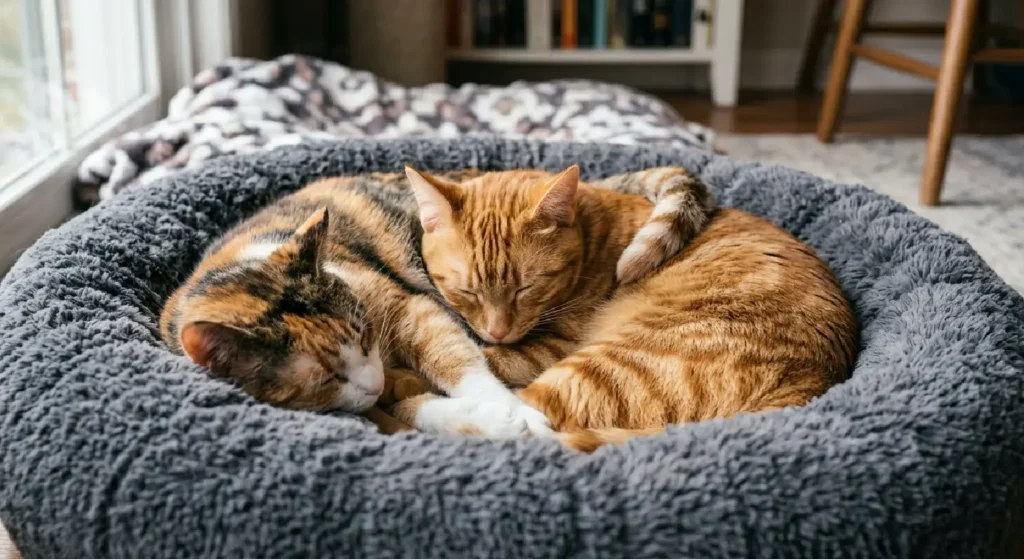
Every cat owner wants their pet to have a snug, secure place of its own to rest. Yet our feline companions often have their own opinions, claiming the couch, a laundry pile, or the middle of our pillows instead of the spot we picked out for them. If you have been trying to get your cat to sleep in their bed without much luck, you are in good company. This guide walks through practical, vet-friendly ways to get your cat to sleep in their bed, with a close look at how cat trees and other supplies can help.
Why a Comfortable Bed Matters for Your Cat
Before we dig into how to get your cat to sleep in their bed, it helps to understand why a dedicated sleeping spot matters in the first place. Cats are deeply driven by comfort and routine. They instinctively hunt for warm, sheltered corners where they feel protected, and a bed of their own gives them exactly that. A familiar resting place builds a sense of safety and predictability that most cats quietly crave.
A designated bed also keeps your cat off places you would rather keep fur-free, like the dining chairs or your freshly folded clothes. When you get your cat to sleep in their bed consistently, you are really helping them form healthy habits and clear boundaries that benefit both of you.
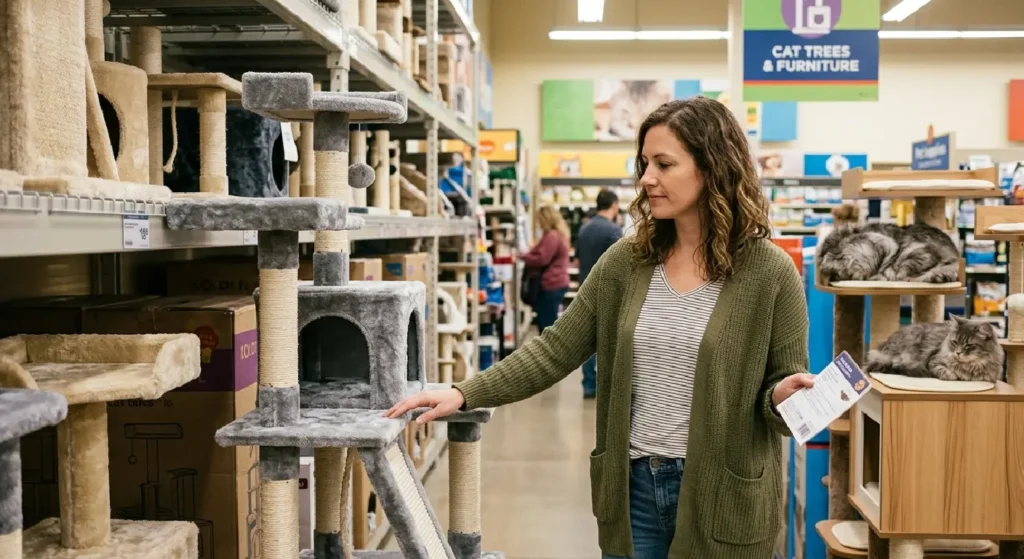
The Benefits of Cat Trees and Cat Supplies
When the goal is to get your cat to sleep in their bed, cat trees and a few smart supplies become powerful allies. A good cat tree offers several advantages:
- Vertical territory: Cats are climbers by nature and love a high vantage point. A cat tree gives them elevated perches to lounge and doze on.
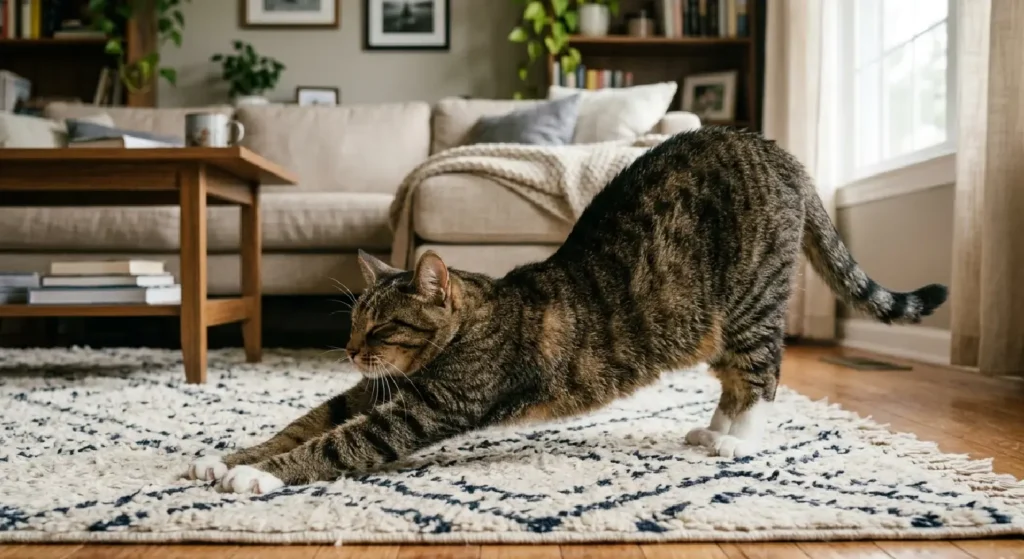
- A place to scratch: Most trees include scratching posts, letting your cat work off that scratching urge while sparing your sofa.
- Built-in nooks: Many trees feature padded platforms or enclosed cubbies where a cat can curl up and feel hidden.
Investing in a sturdy cat tree, paired with cozy blankets and a quality bed, creates a stimulating little world that naturally pulls your cat toward resting in their own space.
Choosing the Right Bed for Your Cat
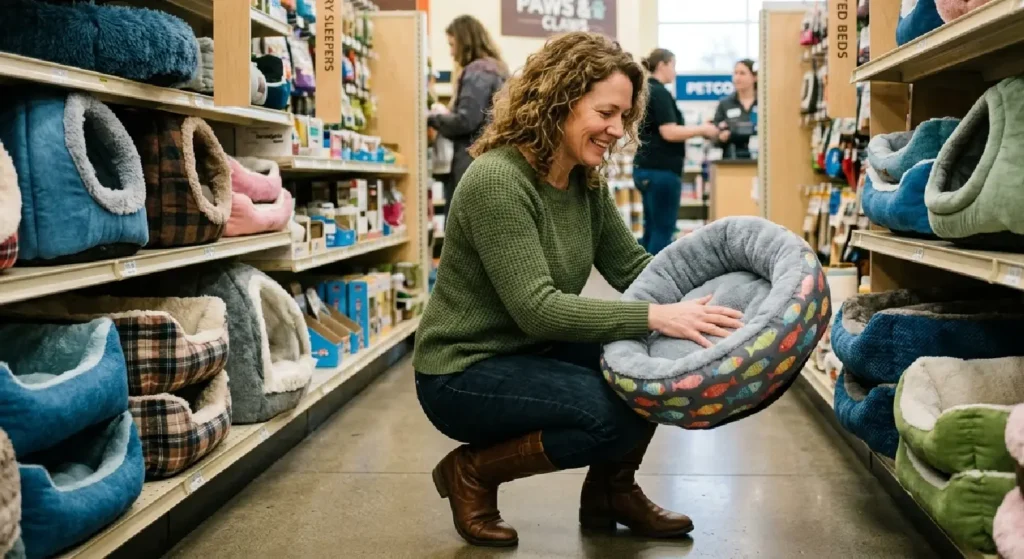
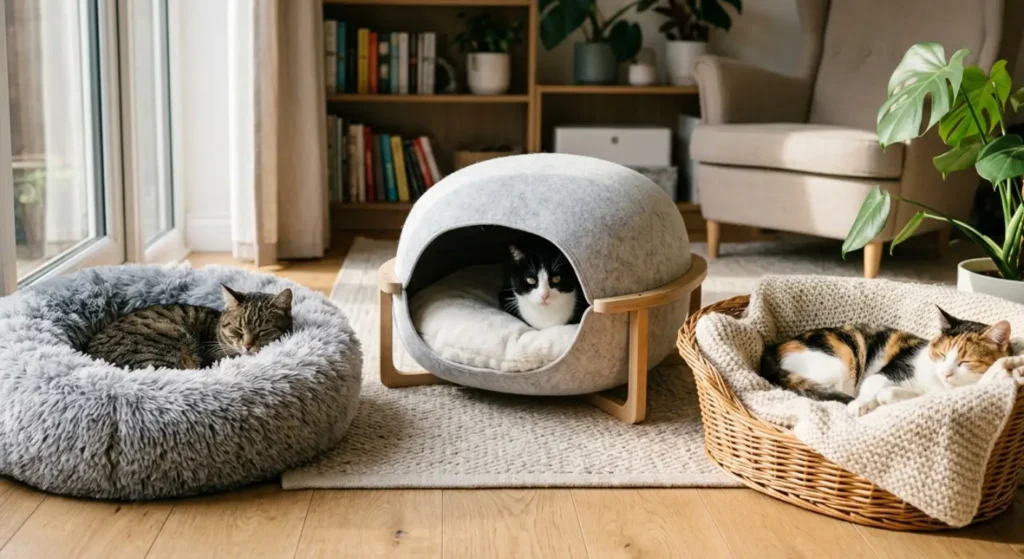
Not every bed suits every cat, so picking the right one is a big step toward success. To get your cat to sleep in their bed, match the bed to your cat’s personality:
- Bolster or donut beds suit cats who like to curl up against raised edges for security.
- Cave or covered beds appeal to shy cats and those who prefer to burrow out of sight.
- Flat mat-style beds work well for cats who sprawl out, especially in warm weather.
- Heated or self-warming beds are a favorite for senior cats and those who chase sunbeams.
Soft, washable fabrics make upkeep easy, and a bed sized correctly, snug but not cramped, encourages your cat to settle in rather than spill over the sides.
Cat Bed Types: Which One Suits Your Cat?
| Bed Type | Best For | Key Features |
|---|---|---|
| Bolster / Donut Bed | Cats who curl up for security | Raised edges to lean against; cozy and enclosed feel |
| Cave / Covered Bed | Shy cats and burrowers | Hooded design; hidden, den-like privacy |
| Flat Mat-Style Bed | Cats who sprawl out | Open surface; ideal for warm weather |
| Heated / Self-Warming Bed | Senior cats and sunbeam-chasers | Gentle warmth; eases stiff joints |
| Cat Tree Perch / Cubby | Climbers who like height | Elevated platforms; scratching posts; enclosed nooks |
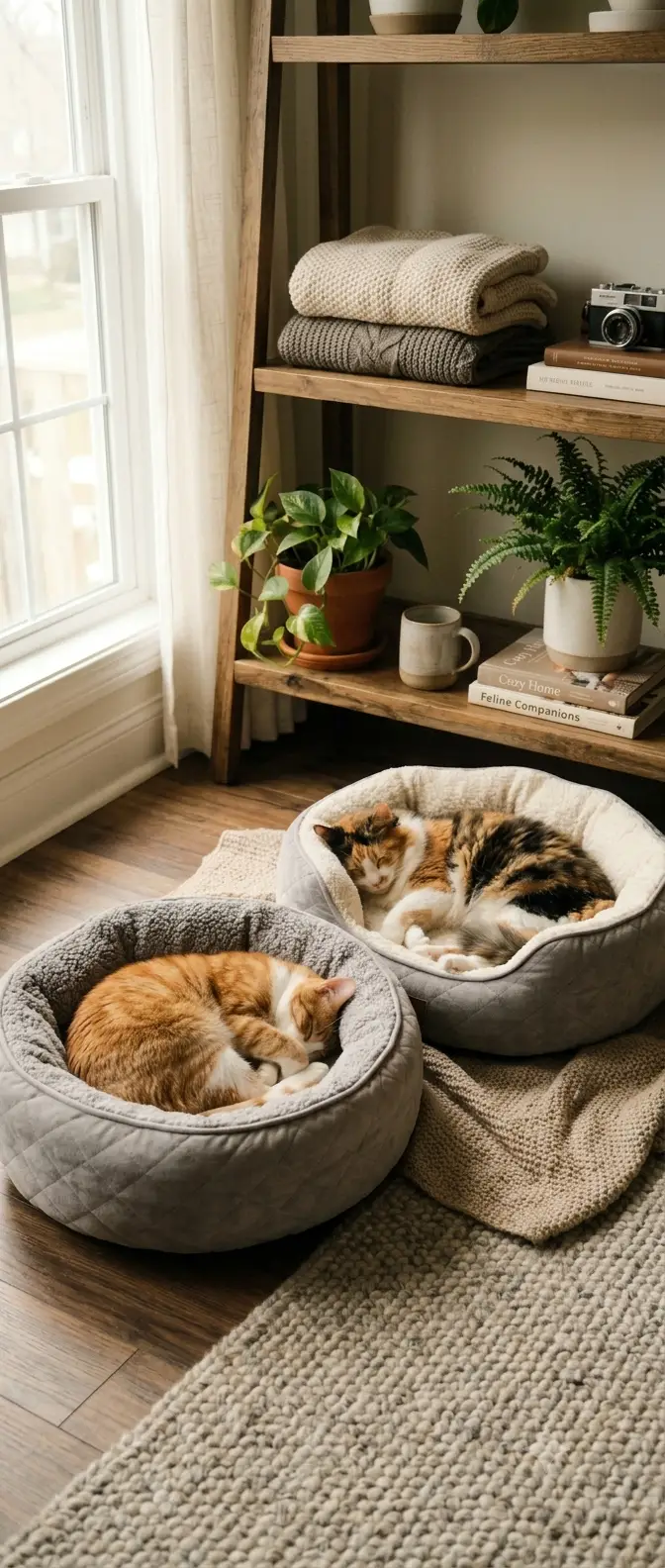
Proven Strategies to Get Your Cat to Sleep in Their Bed
With the groundwork in place, here are the core techniques to get your cat to sleep in their bed reliably.
Get the Placement Right
Location can make or break a cat bed. Cats like to survey their surroundings while they rest, so a quiet, slightly elevated spot tends to win them over. Set the bed somewhere calm, away from noisy appliances and busy hallways. A sunny windowsill or a warm radiator nearby adds an extra layer of appeal.
Positioning a cat tree close to a window is a great trick, letting your cat enjoy the view and the natural light as they drift off. Tucking a soft blanket or cushion into the bed makes it that much more inviting.
Make Their Bed Smell Like Home
Scent is central to how cats feel safe. To get your cat to sleep in their bed, rub a soft cloth on your cat’s cheeks and dab it onto the bedding, or place a lightly worn t-shirt of yours inside. Familiar smells turn a strange new bed into a trusted retreat. Synthetic feline pheromone sprays can also help anxious cats relax.
Use Positive Reinforcement
Reward-based training is one of the gentlest and most effective ways to get your cat to sleep in their bed. Whenever your cat chooses to settle in their bed, offer a treat, soft praise, or a short play session. Over time, your cat links the bed with good things and returns to it on their own.
Adding a favorite toy or a blanket that already smells like your cat can boost the bed’s appeal. Cats thrive on routine, so building a gentle bedtime ritual reinforces the habit even faster.
How to Get Your Cat to Sleep in Their Bed: Quick Reference
| Strategy | What to Do | Why It Works |
|---|---|---|
| Smart Placement | Put the bed in a quiet, elevated, draft-free spot near a window | Lets cats watch the room and feel safe |
| Positive Reinforcement | Reward with treats, praise, or play when they use the bed | Builds a positive link to the bed |
| Multiple Beds | Offer cozy spots in several rooms | Gives cats choice and respects their roaming |
| Familiar Scent | Add their scent or a worn t-shirt; try pheromone sprays | Familiar smells make the bed feel secure |
| Patience & Routine | Keep a steady bedtime routine; never force it | Consistency turns the bed into a habit |
Offer More Than One Bed
Some cats simply like options. Placing a few beds or cozy blankets in different rooms gives your cat choices and respects their preference to move around during the day. Multiple resting spots make it far more likely that your cat will pick one of their own rather than your bed.
How Long Does It Take?
There is no single timeline. Some cats adopt a new bed within days, while others need several weeks of gentle encouragement. Kittens and confident cats often adapt quickly, while older or more anxious cats may move slowly. Consistency is what ultimately helps you get your cat to sleep in their bed, so keep the routine steady and let your cat set the pace.
Health and Comfort Considerations
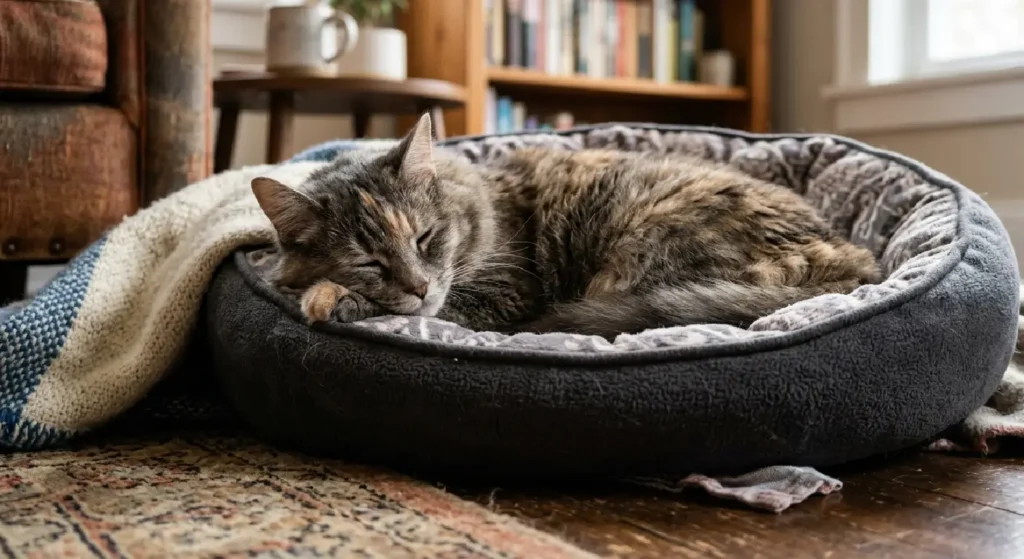
A supportive bed does more than look cozy. For senior cats or those with joint issues, an orthopedic or heated bed can ease stiffness and improve sleep quality. If your cat suddenly abandons a bed they once loved, hides more than usual, or seems restless at night, it may signal discomfort or illness, and a vet check is wise. Good rest is closely tied to overall feline health, which is one more reason to get your cat to sleep in their bed.
Common Mistakes to Avoid
Even with the best intentions, a few missteps can slow your progress. As you work to get your cat to sleep in their bed, steer clear of these:
- Forcing the issue: Never pick up and plop your cat into the bed repeatedly. Pressure breeds resistance.
- Poor placement: A bed in a drafty, loud, or high-traffic corner will be ignored.
- Skipping cleaning: A dirty or odd-smelling bed is a turn-off. Wash bedding regularly.
- Giving up early: New habits take time. Patience is part of the process.
Conclusion
Helping your cat embrace their own bed takes a little patience and a willingness to experiment, but the payoff is a calmer, more contented pet. By choosing the right bed, placing it thoughtfully, using positive reinforcement, layering in familiar scents, and offering a few options around the home, you can steadily get your cat to sleep in their bed. A well-chosen cat tree and a few quality supplies round out a comfortable, enriching space your cat will return to again and again.
Remember that every cat is an individual. If yours does not take to the new bed right away, do not be discouraged. With time, consistency, and a bit of feline psychology on your side, you will help your cat build healthy sleep habits and enjoy restful nights in a bed that is truly their own.
Frequently Asked Questions (FAQs)
1. Why does my cat refuse to sleep in their bed?
Cats often reject a bed because of its location, smell, texture, or size. They may also simply prefer warmer or higher spots. Adjusting placement and adding familiar scents usually helps.
2. Where is the best place to put a cat bed?
A quiet, slightly elevated, draft-free spot works best, ideally near a sunny window or warm surface where your cat can watch the room while feeling secure.
3. How can I make my cat's bed more appealing?
Add a soft blanket, place a favorite toy inside, rub your cat’s scent onto the bedding, and reward your cat with treats or praise whenever they use it.o work, but avoid bleach and ammonia.
4. Should I get more than one cat bed?
Yes, many cats enjoy having several resting spots. Offering beds in different rooms gives your cat choices and increases the chance they will pick their own over your furniture.
5. Do cat trees really help cats sleep in their own space?
They do. Cat trees provide vertical territory, scratching surfaces, and cozy enclosed platforms that satisfy natural instincts and encourage independent resting.
6. How long does it take to train a cat to use their bed?
It varies. Some cats adjust in a few days, while others need several weeks. Confident cats and kittens adapt faster than older or more anxious cats.
7. Is it okay to force my cat into their bed?
No. Forcing creates negative associations. Use gentle encouragement, rewards, and patience instead, and let your cat choose to settle in on their own.
8. What type of bed is best for my cat?
It depends on your cat. Bolster beds suit curlers, covered beds suit shy cats, flat mats suit sprawlers, and heated beds are ideal for seniors or warmth-seekers.
9. Can scent help my cat accept a new bed?
Absolutely. Familiar smells, such as your cat’s own scent or a worn t-shirt of yours, make a new bed feel safe. Feline pheromone sprays can also ease anxiety.
10. When should I be concerned about my cat's sleeping habits?
If your cat suddenly avoids a beloved bed, hides excessively, seems restless at night, or shows signs of discomfort, consult your veterinarian to rule out health issues.