How to Introduce a New Cat Tree or Furniture to Your Cat
Bringing home a brand-new cat tree is genuinely exciting, and your feline friend deserves a dedicated spot to climb, stretch, and nap. A good cat tree supports both physical health and mental wellbeing, giving your pet a place to scratch, perch, and feel secure. Yet many owners are surprised when their cat ignores the shiny new structure for days. The truth is that introducing a cat tree the right way takes a little strategy. In this guide, you will discover exactly how to choose, place, and present a cat tree so your companion embraces it with confidence.
Why Cats Sometimes Resist a New Cat Tree
Before you set up the cat tree, it helps to understand the feline mindset. Cats are territorial creatures who rely heavily on familiar scents to feel safe. A new cat tree arrives smelling of the warehouse, packaging, and manufacturing materials rather than home. To a sensitive nose, that unfamiliar scent can read as “intruder” instead of “comfort.”
On top of that, cats are naturally cautious about change. A large object appearing overnight in their carefully mapped territory can trigger hesitation or even mild anxiety. Recognizing this behavior means you will be patient instead of frustrated when your cat circles the cat tree suspiciously at first. Patience, as you will see throughout this article, is the single most powerful tool you have.
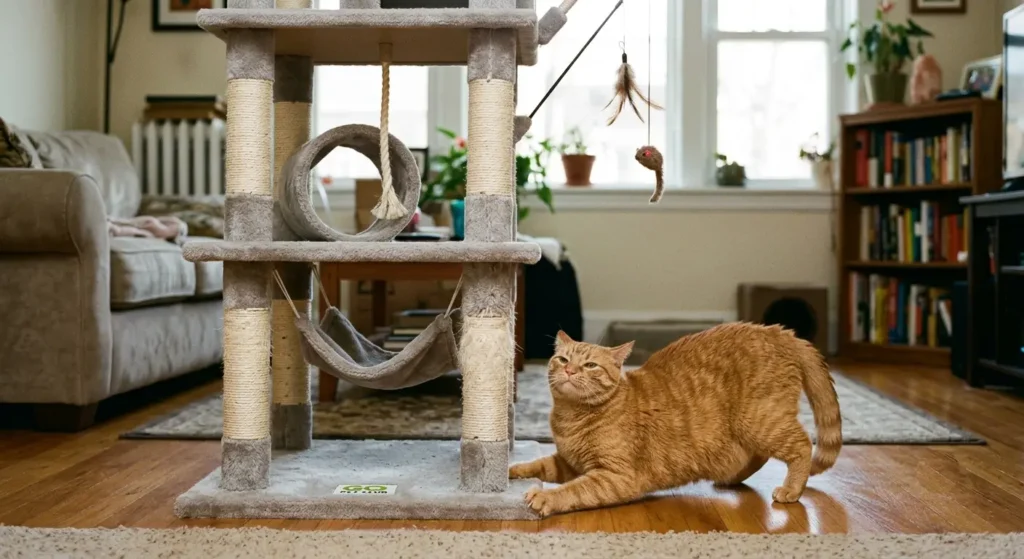

Choose the Right Cat Tree for Your Cat
Success starts long before assembly. Picking a cat tree that genuinely matches your pet’s body, age, and personality dramatically increases the odds of acceptance. Keep these factors in mind while shopping:
- Height and size: Active climbers love a tall cat tree with multiple levels, while kittens and senior cats often prefer lower, easier-to-reach platforms.
- Stability: A wobbly structure feels unsafe and will be avoided. Choose a sturdy base that stays planted even when your cat leaps onto the top perch.
- Scratching surfaces: Cats are driven to scratch, so a frame wrapped in sisal rope or sisal fabric satisfies that instinct and protects your sofa.
- Perches and hideaways: Look for a design that includes both open lookout perches and enclosed cubbies, since cats enjoy surveying their domain and retreating for privacy.
- Material and texture: Soft plush, sisal, and carpet textures appeal to different cats, so consider what your pet already gravitates toward at home.
Matching the cat tree to your individual cat is the first quiet step toward a smooth introduction.
Where to Place the Cat Tree in Your Home
Location can make or break the entire experience. Because cats are territorial, the cat tree should sit where your pet already feels relaxed and in control. Use these placement guidelines:
- Pick a calm corner. A quiet, low-traffic area lets your cat investigate the cat tree without feeling cornered or rushed.
- Position it near a window. Cats adore watching birds, squirrels, and passing activity, so a window-side spot doubles as in-home entertainment.
- Keep it in a social zone. Many cats prefer it placed where the family spends time, so they feel included rather than exiled.
- Avoid noisy spots. Steer clear of washing machines, heating vents, and busy doorways, since sudden sounds can sour your cat’s first impression.
If you have the space, try positioning it near an existing favorite napping spot. Familiar surroundings ease the transition enormously.
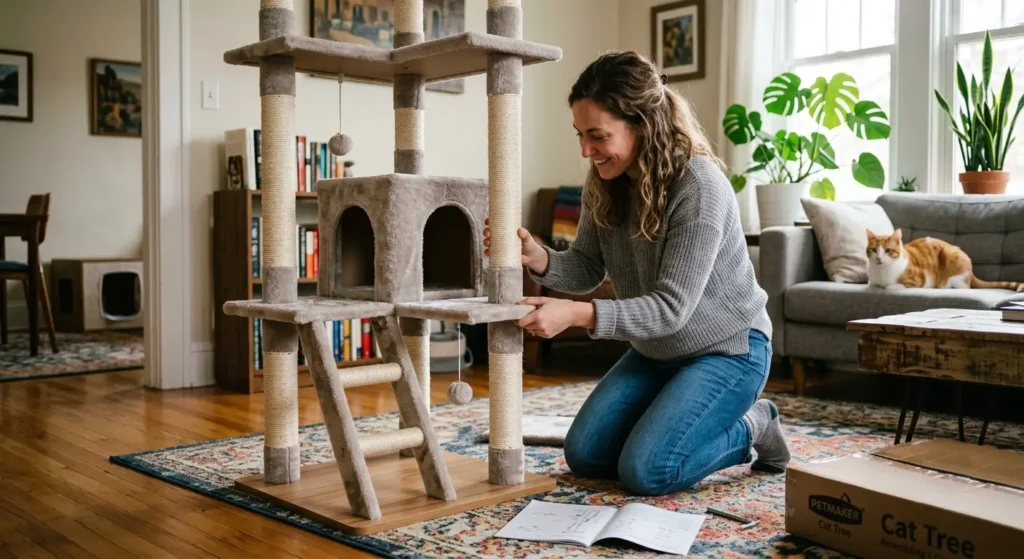
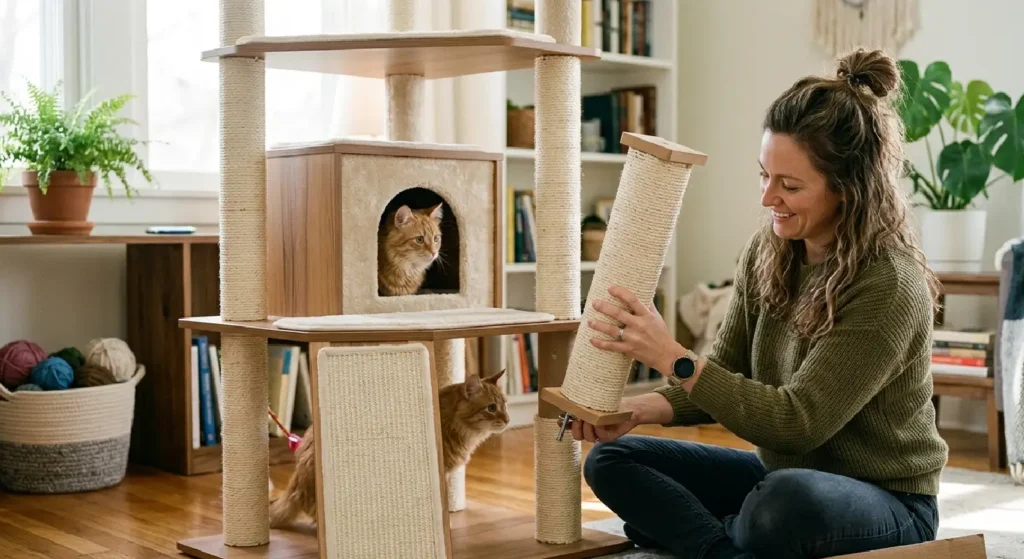
Prepare the Cat Tree Before the Introduction
Here is a step that most articles skip, yet it makes a real difference. Right out of the box, a cat tree smells like a stranger. You can fix that quickly:
- Transfer your cat’s scent. Gently rub a soft cloth on your cat’s cheeks (where their scent glands live) and then wipe it across the posts and platforms.
- Add familiar bedding. Place a blanket, towel, or worn t-shirt your cat already sleeps on into one of the cubbies.
- Let it air out. If there is a strong chemical or factory odor, leave it in a ventilated room for a day before presenting it to your pet.
By the time your cat investigates, the new perch will already carry the comforting scent of home rather than the factory.
How to Introduce the Cat Tree to Your Cat
Now for the main event. With the right cat tree chosen, placed, and scented, you can begin the actual introduction. Resist the urge to force the issue, and instead follow this gentle sequence:
Let curiosity lead
Set up the cat tree and simply walk away. Leaving it untouched for a few days allows your cat to approach on their own terms.
Sweeten the deal with catnip
Sprinkle a pinch of catnip or silvervine on the lower levels to turn it into an irresistible discovery.
Dangle a toy
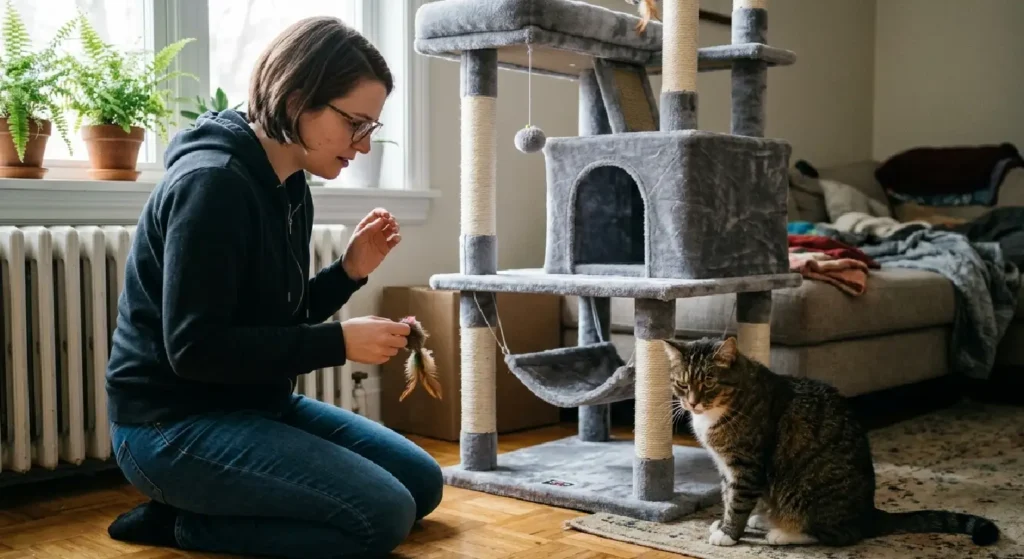
Hang a feather wand or small toy from a perch so chasing it naturally leads your cat up the levels.
Reward every win
The moment your cat touches, sniffs, or climbs the structure, offer a treat and warm praise to reinforce the positive association.
Never use force
Picking your cat up and plonking them on a platform usually backfires, creating fear rather than affection for the new perch.
Repeat these encouraging cues daily. With consistency, most cats progress from cautious sniffing to enthusiastic climbing within a week or two.
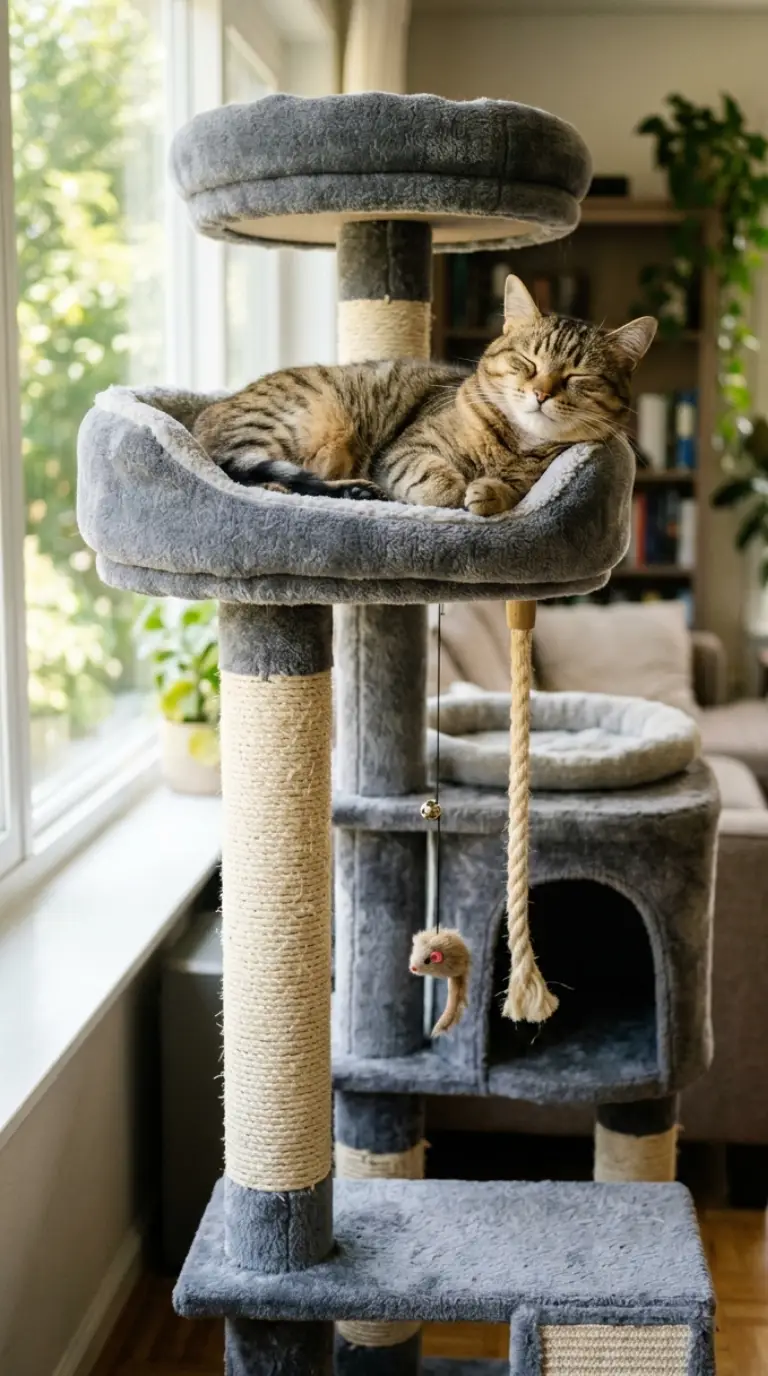
Encourage Play and Ongoing Interaction
Acceptance is wonderful, but lasting enthusiasm comes from keeping the cat tree fresh and fun. Once your cat is comfortable, build interaction into your routine:
- Rotate the toys. Swapping accessories every week or so keeps your cat curious and prevents boredom.
- Play together. Use a wand toy or laser pointer to guide your cat up and around it during daily play sessions.
- Create a cozy nook. Tuck a soft cushion or blanket into a platform so it becomes the preferred napping headquarters.
- Add vertical interest. Position a bird feeder outside the nearby window so your cat has a live show to watch from the top perch.
The more rewarding the structure feels, the more your pet will choose it over the back of the couch.
Special Tips for Multi-Cat Households
Introducing a cat tree gets more nuanced when several cats share a home. Resources like perches and cubbies can become points of competition, so plan ahead:
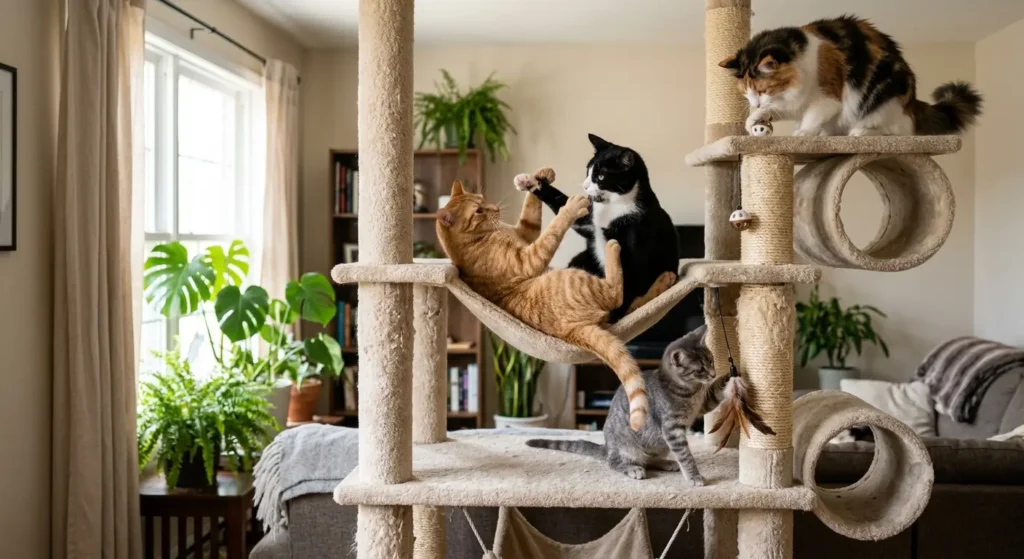
- Offer enough levels. A taller cat tree with multiple platforms lets each cat claim personal space and reduces squabbles.
- Consider two structures. In larger groups, a second unit (or a wall shelf) prevents a dominant cat from monopolizing the prime perch.
- Watch the dynamics. If one cat guards it aggressively, temporarily add extra feeding and resting spots elsewhere to ease tension.
- Introduce gradually. Let each cat explore the new addition separately at first, then allow shared access once everyone seems relaxed.
A thoughtfully chosen cat tree can actually improve harmony in a multi-cat home by giving every feline a place to call their own.
Cat Tree Introduction Roadmap
| Step | What to Do | Why It Helps |
|---|---|---|
| 1. Choose | Pick a sturdy cat tree sized to your cat's age, with sisal scratching posts, perches, and hideaways. | A stable, well-matched structure feels safe and satisfies your cat's natural instincts. |
| 2. Place | Set it in a calm corner near a window, away from noisy appliances and busy doorways. | A secure, engaging spot helps a territorial cat relax and feel in control. |
| 3. Prepare | Rub your cat's scent onto the posts, add familiar bedding, and air out any factory odor. | Familiar scents turn a "stranger" into a trusted part of the home. |
| 4. Introduce | Leave it out, add catnip and a dangling toy, reward every climb, and never force contact. | Voluntary, positive exploration builds lasting confidence and affection. |
| 5. Encourage | Rotate toys, play interactive games on it, and add a cozy cushion for napping. | Ongoing fun keeps your cat choosing the perch over the furniture. |
| 6. Maintain | Vacuum platforms, tighten bolts, re-wrap worn sisal, and refresh with catnip. | Regular upkeep keeps it safe, stable, and appealing for years. |
Common Mistakes to Avoid
Even well-meaning owners can unintentionally sabotage a cat tree introduction. Sidestep these frequent missteps:
- Forcing interaction too soon, which teaches your cat to associate the cat tree with stress.
- Choosing a flimsy model, since instability is the fastest way to make a cat distrust a new perch.
- Hiding it in an isolated room, leaving the structure out of sight and out of mind.
- Giving up after a few days, when many cats simply need a longer adjustment window.
- Skipping scent transfer, which leaves it smelling foreign and unwelcoming.
Avoiding these errors keeps the whole process smooth and stress-free.
Signs Your Cat Has Accepted the New Cat Tree
How do you know the introduction worked? Watch for these encouraging signals:
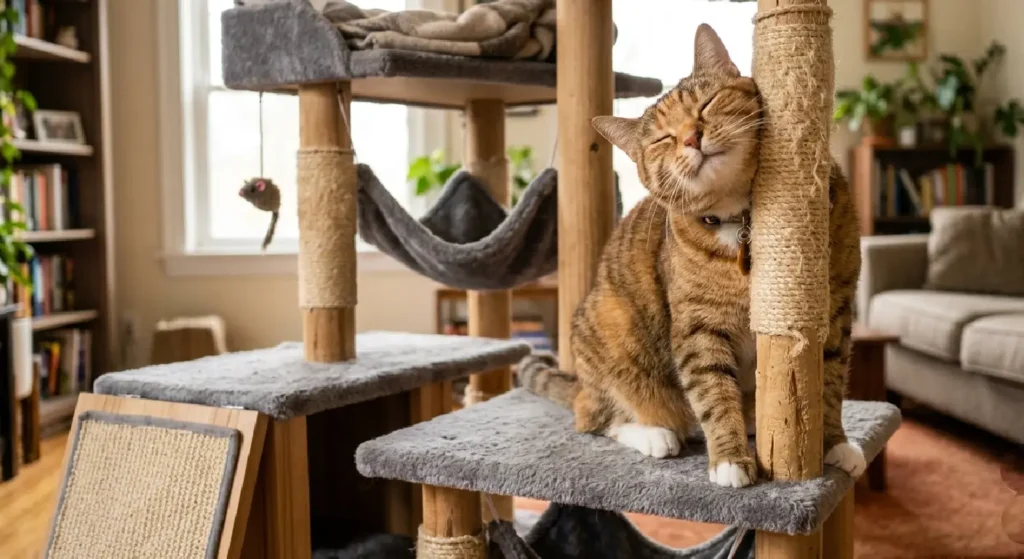
- Your cat scratches the posts of the cat tree instead of the furniture.
- They nap on the platforms or curl up inside the cubbies.
- They climb to the top perch to observe the room or window.
- They rub their cheeks against it, marking it as their own territory.
When these behaviors appear, congratulations: the structure has officially become part of your cat’s kingdom.
Maintaining the Cat Tree Over Time
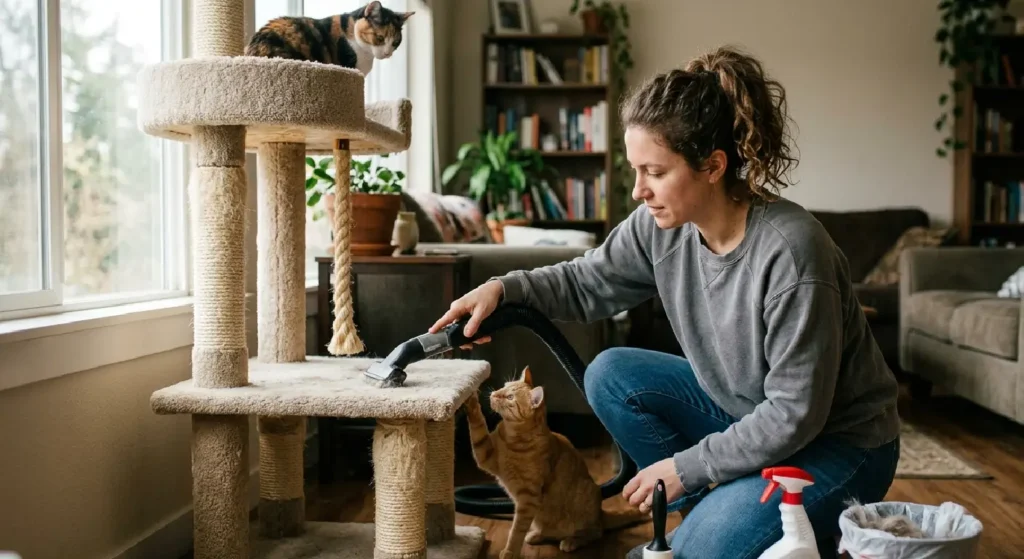
A little upkeep keeps the cat tree appealing for years. Vacuum the platforms regularly to remove loose fur, spot-clean any soiled areas, and re-secure bolts so the structure stays stable. When the sisal posts wear down, many models let you replace or re-wrap them, extending the lifespan of your investment. Refreshing it occasionally with new toys or a sprinkle of catnip also reignites your cat’s interest if enthusiasm ever dips.
Conclusion
Introducing a new cat tree to your cat is a rewarding project that pays off in years of climbing, scratching, and contented napping. By choosing a sturdy, well-suited cat tree, placing it in a calm and engaging spot, transferring familiar scents, and letting your cat explore at their own pace, you set the stage for genuine acceptance. Add daily play, sidestep the common mistakes, and stay patient, and even the most cautious feline will eventually claim the cat tree as a favorite retreat. Before long, watching your cat lounge proudly on their new perch will feel like the most natural thing in the world.
Frequently Asked Questions (FAQs)
1. How long does it take for a cat to get used to a new cat tree?
Most cats warm up to a new cat tree within a few days to two weeks. Shy or older cats may need longer, so stay patient and let your pet approach on their own schedule.
2. Why is my cat ignoring the new cat tree?
Usually it is because the structure still smells unfamiliar or sits in an uncomfortable spot. Transfer your cat’s scent onto it, add familiar bedding, and reposition it to a calmer, window-facing location.
3. Should I use catnip to attract my cat to the cat tree?
Yes. A light sprinkle of catnip or silvervine on the lower levels often makes it far more inviting and encourages that first curious climb.
4. Where is the best place to put a cat tree?
A quiet corner near a window in a room your family uses is ideal. Cats enjoy watching the outdoors while still feeling included in household activity.
5. Can I force my cat onto the cat tree to show them how it works?
No. Forcing a cat onto it typically creates fear and resistance. Instead, lure them up with toys and treats so the experience feels positive and voluntary.
6. How do I choose the right size cat tree?
Match it to your cat’s age and activity level. Energetic adults enjoy tall multi-level structures, while kittens and seniors do better with shorter, easy-to-access designs.
7. Do I need more than one cat tree for multiple cats?
Often, yes. In multi-cat homes, a taller structure with several perches or a second unit helps prevent competition and gives each cat their own space.
8. How can I tell if my cat likes the new cat tree?
Signs include scratching the posts, napping on the platforms, climbing to the top perch, and rubbing their cheeks against it to mark it as their territory.
9. How do I keep my cat interested in the cat tree long-term?
Rotate toys, play interactive games on it, refresh it with catnip, and tuck a cozy blanket into a perch. Keeping it novel maintains your cat’s enthusiasm.
10. How do I clean and maintain a cat tree?
Vacuum the platforms to remove fur, spot-clean stains, tighten any loose bolts for stability, and re-wrap worn sisal posts. Regular care keeps it safe and appealing.