DIY Cat Toys: Fun and Cheap Ways to Keep Your Cat Active
end up weighing cat hammocks against traditional beds, and both choices bring real strengths to the table. The right pick depends on your home, your budget, and the personality of the cat curled up beside you. In this guide, we break down how cat hammocks compare with classic beds so you can decide with confidence.
Some cats crave height and a swaying perch, while others want a soft, walled-in nest they can disappear into. Understanding those instincts is the first step toward a happy, well-rested pet.
Why Keeping Your Cat Active Matters
Before we jump into the projects, it helps to understand why an active lifestyle is so important for your pet. Much like people, cats depend on regular movement to stay at a healthy weight and feel their best. When you encourage your cat to play and move, you help prevent obesity, ease boredom, lower stress levels, and deepen the bond the two of you share. Engaging homemade toys give indoor cats an outlet for the energy they would otherwise spend hunting outdoors, and a well-exercised cat is usually a calmer, friendlier housemate.
Creative DIY Cat Toys Using Cat Trees and Cat Supplies
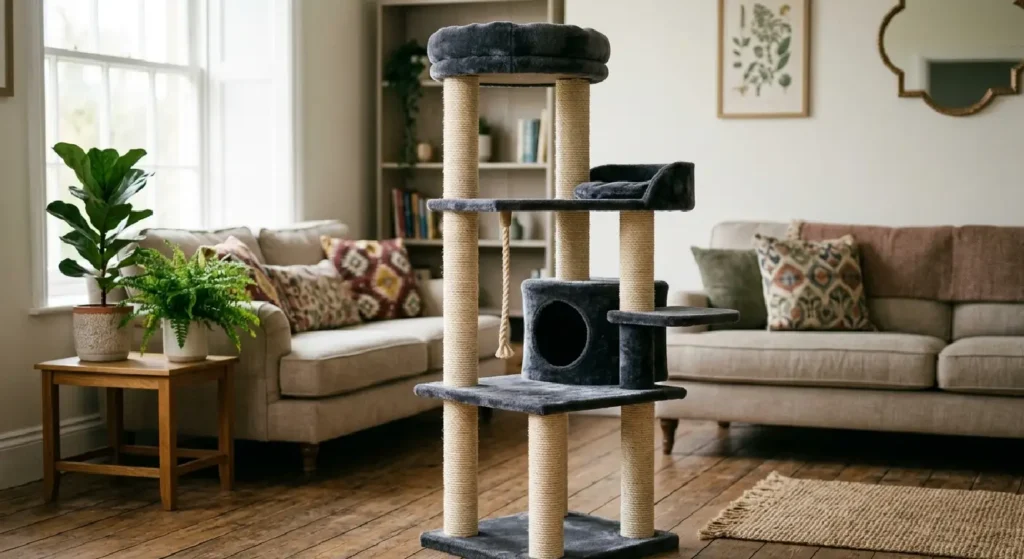
Now for the fun part. Let’s look at several creative homemade toys that make use of cat trees and basic cat supplies. Cat trees, sometimes called cat condos or kitty towers, are multi-level structures that invite cats to climb, scratch, and perch high above the floor. When you build these features into your homemade projects, you create rich play zones that speak directly to your cat’s instincts.
The Benefits of Making DIY Cat Toys
Homemade playthings offer advantages that store-bought options often cannot match. Here is why so many owners turn to homemade toys:
- Budget-friendly: Most homemade toys come together from items you already have at home, so you save money you would otherwise spend on pricey commercial products.
- Customizable: You can shape each toy around your cat’s unique personality, energy level, and play style.
- Eco-conscious: Repurposing boxes, tubes, and fabric scraps cuts down on household waste and shrinks your environmental footprint.
- Endlessly entertaining: A thoughtful homemade toy can deliver hours of fun while keeping your cat both mentally sharp and physically fit.
DIY Puzzle Feeders and Food-Motivated Toys
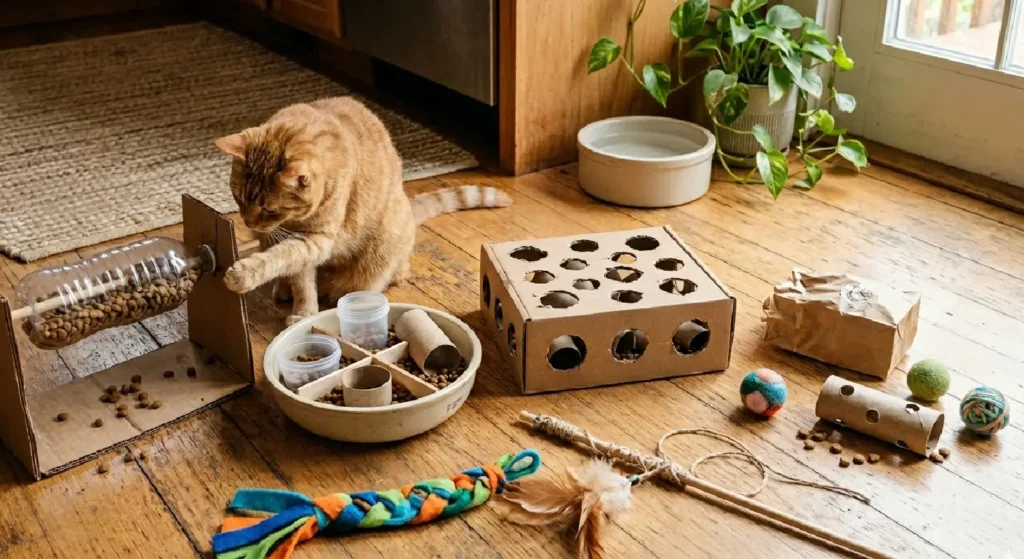
Cats are natural problem-solvers, and food-based DIY cat toys tap into that clever side of their brains. Puzzle feeders slow down fast eaters, fight boredom, and turn mealtime into a rewarding hunt.
- Muffin-tin game: Place a treat in a few cups of a muffin tin, then cover each cup with a ball or crumpled paper for your cat to remove.
- Egg-carton forager: Tuck kibble into the pockets of a clean egg carton so your cat has to fish each piece out with a paw.
- Bottle roller: Cut small holes in a clean plastic bottle, add dry food, and watch your cat nudge it until treats tumble free.
Food-driven toys are especially helpful for indoor cats who need both mental work and a little extra movement during the day.
DIY Cat Tree Climbing Tower
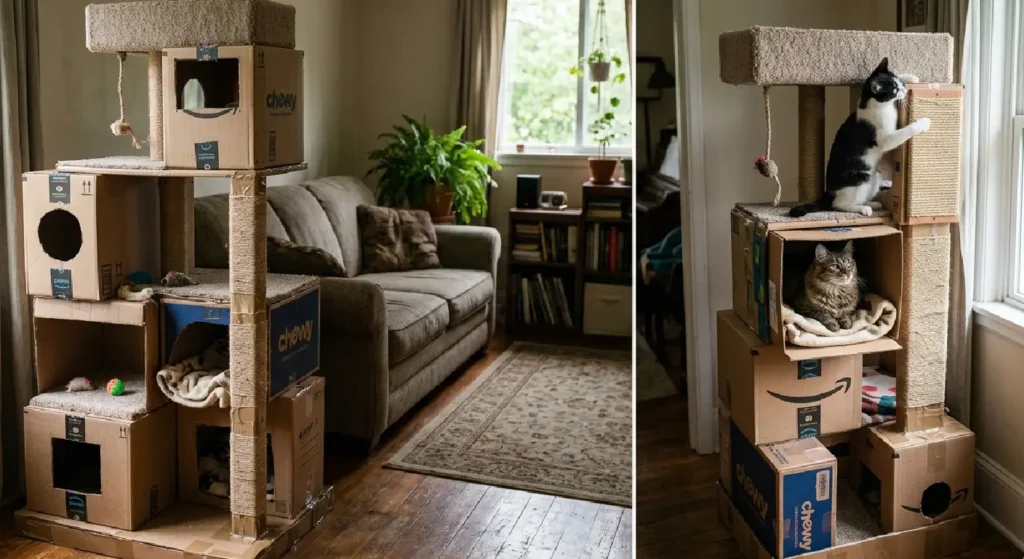
Ready to level up your homemade projects? A climbing tower is one of the most rewarding homemade projects you can assemble from cat supplies. You will need:
- A few cardboard boxes in different sizes
- Scissors
- Glue or tape
- Cat-safe paint or markers (optional)
Here’s how to put it together:
- Cut openings in the boxes so your cat can climb and squeeze through them.
- Stack the boxes and secure them with glue or tape to form one stable tower.
- Add small ramps or platforms between levels so your cat has new routes to discover.
- Decorate the tower with cat-safe paint to make it more inviting (and to match your décor).
Your cat will leap, climb, and explore this tower for hours, gaining plenty of exercise in the process.
Quick DIY Cat Toys from Household Items
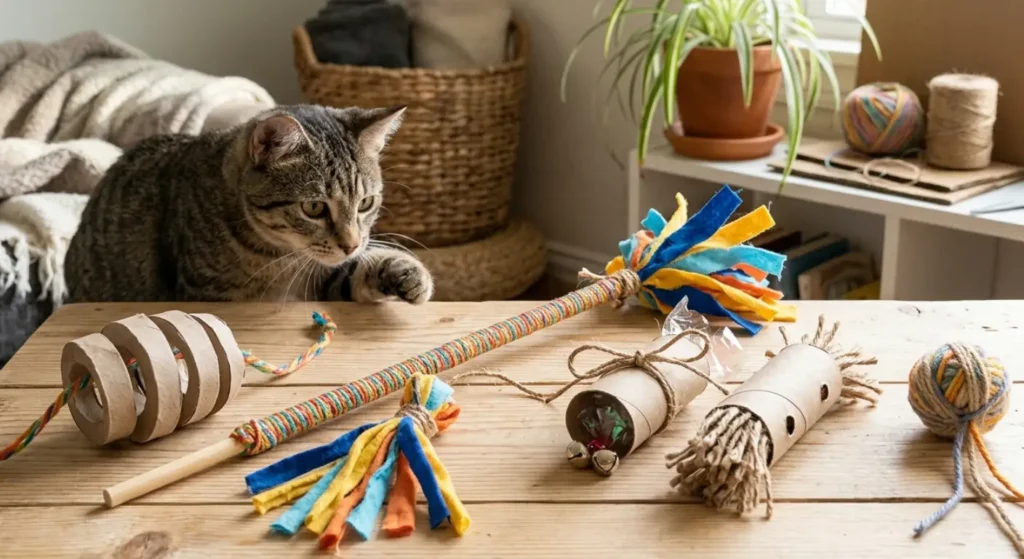
Not every project needs power tools or a free afternoon. Some of the best homemade toys take only a couple of minutes to make from things already sitting in your drawers and recycling bin.
- Sock mouse: Stuff an old sock with cotton and a pinch of catnip, knot the end, and you have an instant pouncing target.
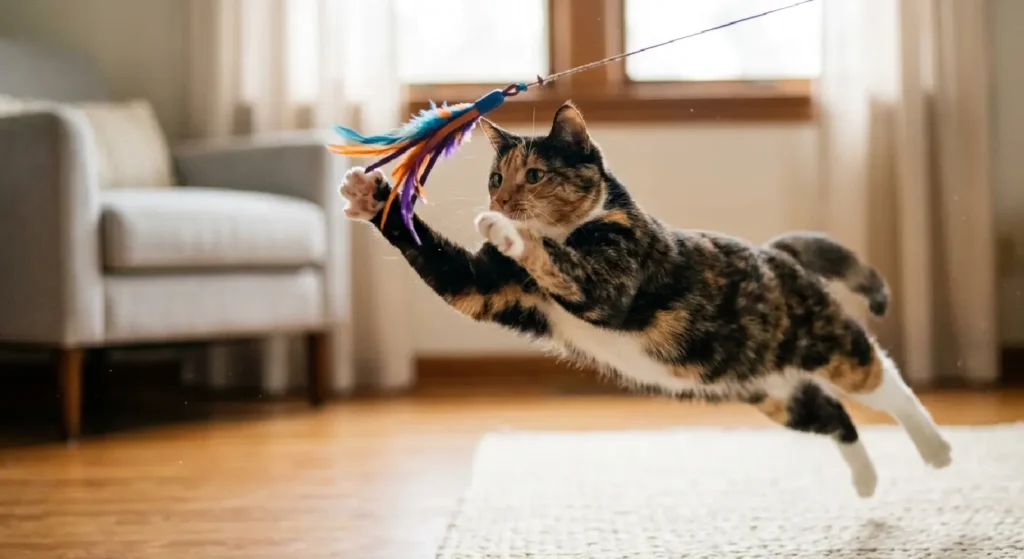
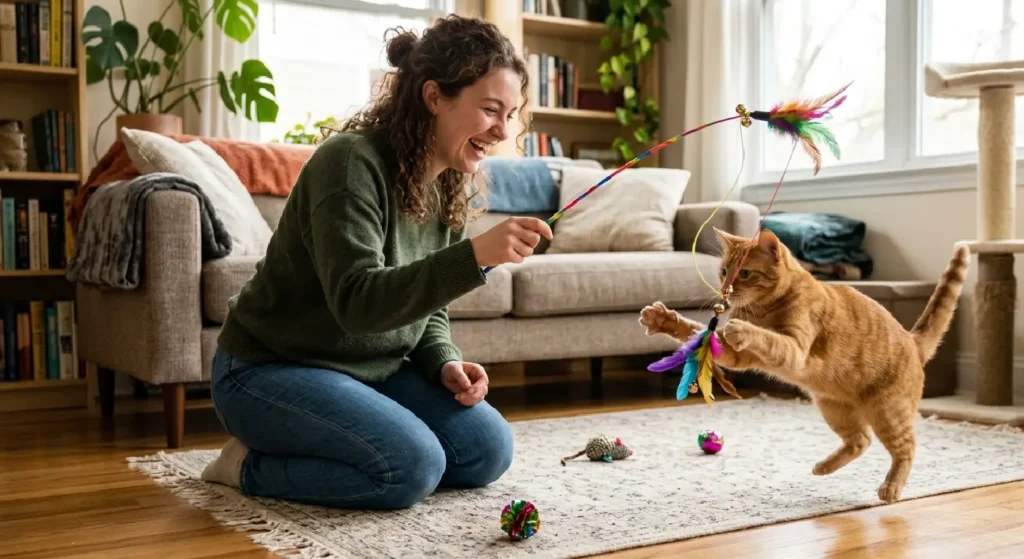
- Feather wand: Tie a feather or fabric ribbon to a stick or chopstick with sturdy string to recreate the thrill of chasing prey.
- Toilet-roll treat puzzle: Fold in the ends of an empty toilet paper roll, drop a few treats inside, and let your cat bat it around to release the reward.
- Crinkle ball: Scrunch a sheet of parchment or wax paper into a tight ball for a lightweight toy that crackles with every swat.
These speedy toys are perfect when your cat is restless and you need to redirect that energy fast.
How to Keep Your Cat Interested Long-Term
Even the cleverest DIY cat toys lose their sparkle if they sit out every single day. Rotate the collection by hiding half of them for a week or two, then bringing them back so they feel brand-new again. Mixing textures, sounds, and motions keeps your cat curious, and short daily play sessions of ten to fifteen minutes do far more for enrichment than one long burst. Pay attention to which toys your cat returns to most, and lean into those favorites with future projects.
DIY Cat Toys at a Glance
Use this quick-reference table to match a project to your time, budget, and your cat’s play style.
| Toy | Main Materials | Difficulty | Time to Make | Best For |
|---|---|---|---|---|
| Scratching post | Cardboard tube or PVC, sisal rope, wood base | Moderate | 30–45 min | Scratchers, furniture savers |
| Climbing tower | Cardboard boxes, glue or tape | Moderate | 45–60 min | Climbers, high-energy cats |
| Sock mouse | Old sock, cotton, catnip | Easy | 5 min | Pouncing, solo play |
| Feather wand | Stick, feather or ribbon, string | Easy | 5 min | Interactive play, bonding |
| Toilet-roll treat puzzle | Empty toilet roll, treats | Easy | 2 min | Food motivation, foragers |
| Crinkle ball | Parchment or wax paper | Easy | 1 min | Quick batting, kittens |
| Muffin-tin game | Muffin tin, balls, treats | Easy | 5 min | Problem-solving, slow feeding |
| Bottle roller | Plastic bottle, dry food | Easy | 10 min | Mental work, active foraging |
Safety Tips for Homemade Cat Toys
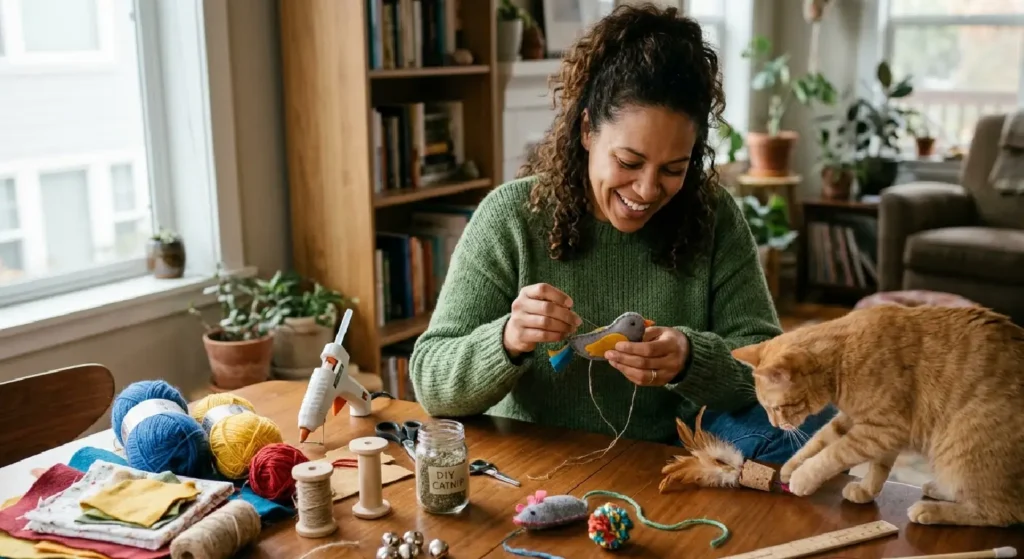
A homemade toy is only a good toy when it is safe. Keep these guidelines in mind as you build:
- Avoid small parts, glued-on eyes, or loose string that your cat could swallow.
- Skip toxic glues, paints, or markers; choose pet-safe, non-toxic supplies instead.
- Inspect every toy regularly and toss anything that becomes frayed, cracked, or chewed apart.
- Always supervise play with string-based toys, and store them out of reach when playtime ends.
Conclusion
Building DIY cat toys is a fun, affordable, and deeply rewarding way to keep your cat active and engaged. By weaving cat trees and simple cat supplies into your projects, you can design stimulating play spaces that honor your cat’s natural behaviors. From scratching posts and climbing towers to puzzle feeders and quick crinkle balls, the possibilities are nearly endless. So roll up your sleeves, get creative, and enjoy watching your cat fall in love with their new homemade toys.
Always check with your veterinarian before introducing new toys or activities, just to be sure they suit your cat’s age, size, and health. With a little imagination and effort, homemade toys can keep your feline friend happy, healthy, and wonderfully entertained for years to come.
For more homemade toy ideas and pet care advice, browse our blog for fresh tips on enriching your cat’s everyday life.
Frequently Asked Questions
1. Are DIY cat toys as good as store-bought ones?
Yes. In many cases they are just as engaging as commercial versions, and they let you customize the toy to your cat’s exact preferences while saving money.
2. What household items make the best DIY cat toys?
Cardboard boxes, toilet paper rolls, old socks, plastic bottle caps, feathers, and crinkly paper are all excellent starting points for homemade toys.
3. Is catnip safe to use in homemade cat toys?
For most cats, catnip is safe and a great way to boost interest. Use it in moderation, and remember that some cats simply don’t respond to it.
4. How do I make DIY cat toys safe for my cat?
Avoid small swallowable parts and loose string, use only non-toxic glue and paint, and inspect each toy often, discarding any that become damaged.
5. How often should I play with my cat?
Aim for a few short sessions of ten to fifteen minutes each day. Regular play keeps your cat active and helps prevent boredom and weight gain.
6. Can DIY cat toys help with bad behavior?
Often, yes. Many destructive habits come from boredom, so engaging homemade toys can redirect that energy and reduce scratching of furniture or nighttime zoomies.
7. Do indoor cats need toys more than outdoor cats?
Indoor cats especially benefit from homemade toys because they have fewer chances to hunt and explore, so homemade enrichment helps fill that gap.
8. What DIY cat toys are best for kittens?
Lightweight, soft toys like sock mice, crinkle balls, and feather wands suit kittens well. Always supervise play and avoid choking hazards.
9. How can I keep my cat from getting bored with the same toys?
Rotate the toys in and out of storage, introduce new textures and sounds, and retire toys for a while before reintroducing them so they feel fresh.
10. Do I need special tools to make homemade cat toys?
Not at all. Most projects need only scissors, glue or tape, and items you already own, making these projects accessible to virtually anyone.