How to Keep Indoor Cats Active & Happy
An indoor cat depends entirely on you for the stimulation it would otherwise find outdoors. Without room to hunt, climb, and patrol a territory, your pet can quickly grow bored, restless, or overweight. The good news is that a happy, energetic companion is well within reach. With the right supplies, a little daily play, and a home set up for curiosity, you can give your indoor cat everything it needs to thrive. This guide walks through the most effective ways to keep your indoor cat active, engaged, and content.
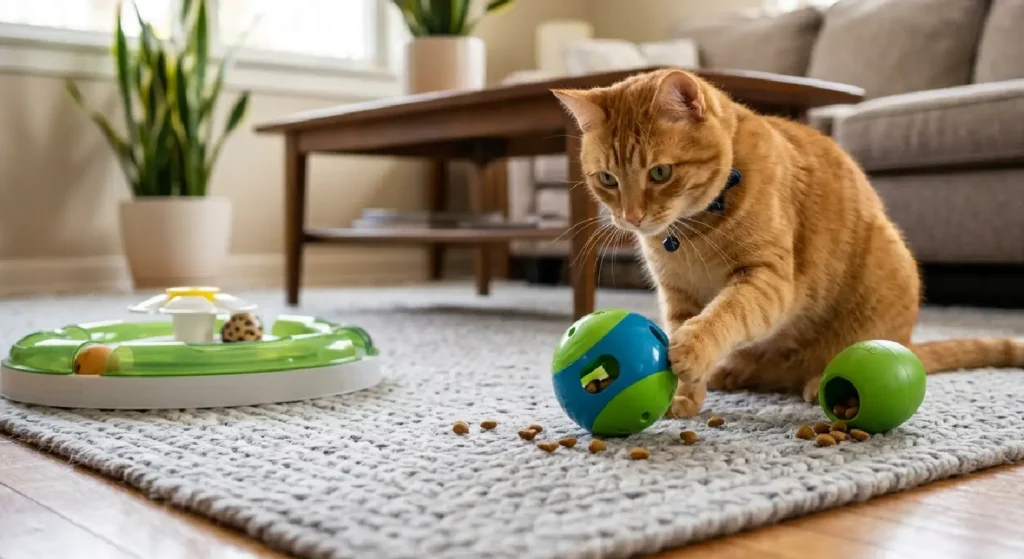
Why Keeping an Indoor Cat Active Matters
A cat that stays inside burns far fewer calories than one that roams, which is why indoor cats are more prone to weight gain and the health problems that follow. Beyond the physical side, an under-stimulated indoor cat often develops behavioral issues such as over-grooming, scratching furniture, excessive meowing, or aggression born of frustration.
Regular activity solves both problems at once. Movement keeps an indoor cat lean and protects its joints, while mental challenges satisfy the instincts that would normally be spent stalking and hunting. When you give a pet consistent outlets for energy, you reduce boredom, lower stress, and prevent many of the issues that send cats to the vet. In short, an active indoor cat is usually a healthy and well-behaved one.
The Benefits of Cat Trees for Indoor Cats
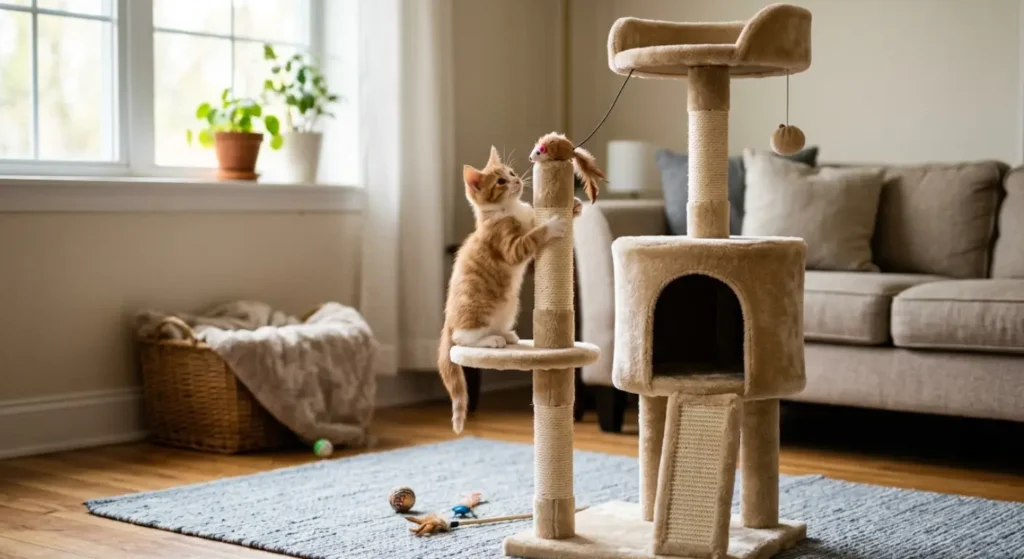
Few purchases pay off as quickly as a sturdy cat tree. These multi-level towers combine climbing routes, scratching surfaces, cozy hideaways, and high perches into a single piece of furniture. The main benefits include:
- Exercise: Climbing and leaping between platforms gives an indoor cat a genuine cardio workout and keeps muscles strong.
- Scratching: Built-in posts let it stretch and shed claw sheaths on an approved surface instead of your sofa.
- Stimulation: New heights and tucked-away nooks give a curious indoor cat fresh territory to explore.
- Comfort: Elevated perches double as safe, quiet spots where your companion can nap and observe the room.
Placing a cat tree near a window multiplies its value, turning it into both a gym and a lookout for your indoor cat.
Other Supplies That Keep an Indoor Cat Happy
A cat tree is the centerpiece, but a few other supplies round out a complete enrichment setup.
Interactive Toys
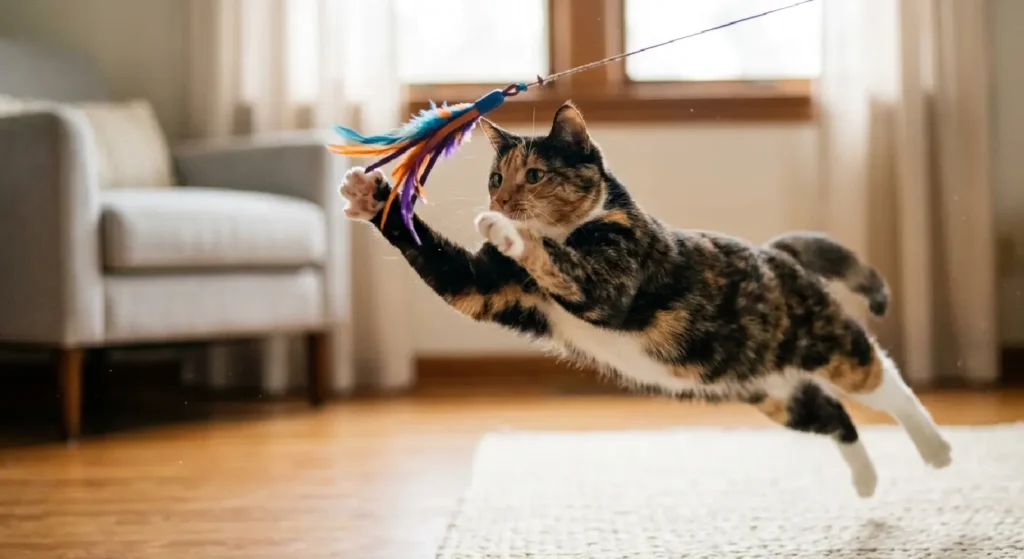
Interactive toys tap straight into the hunting drive. Feather teasers, wand toys, and motorized prey keep an indoor cat chasing, pouncing, and stalking the way nature intended. Laser pointers can be fun in moderation, but always end a laser session with a physical toy your cat can actually catch, so the hunt ends in a satisfying “kill.”
Food Puzzles
Food puzzles make an indoor cat work for every bite. By hiding kibble inside a toy that must be rolled, pawed, or nudged, you turn an ordinary meal into a problem-solving game. Puzzles slow down fast eaters, ease post-meal boredom, and give the brain a real workout.
Window Perches
A window perch hands your indoor cat a front-row seat to the outside world. Birds, squirrels, and passing traffic provide hours of low-effort entertainment, and a sunny ledge is the perfect place for a midday nap. Window perches are one of the simplest ways to enrich an ordinary day.
Build Vertical Space for Your Indoor Cat
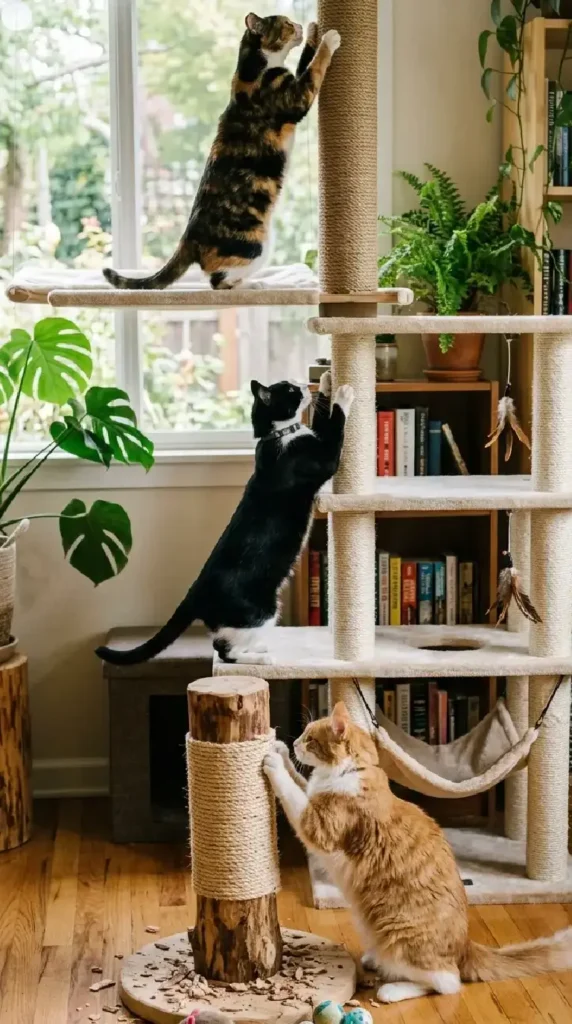
Cats experience the world in three dimensions, not two. In the wild they climb to feel safe and to survey their surroundings, and an indoor cat craves the same height. Wall-mounted shelves, window hammocks, and tall cat trees expand the usable territory of your home without taking up floor space.
Vertical routes also help in multi-pet households, giving a nervous indoor cat an escape path and a private high spot to retreat to. The more climbing options you offer, the larger and more interesting your pet’s world becomes.
Set a Daily Play Routine
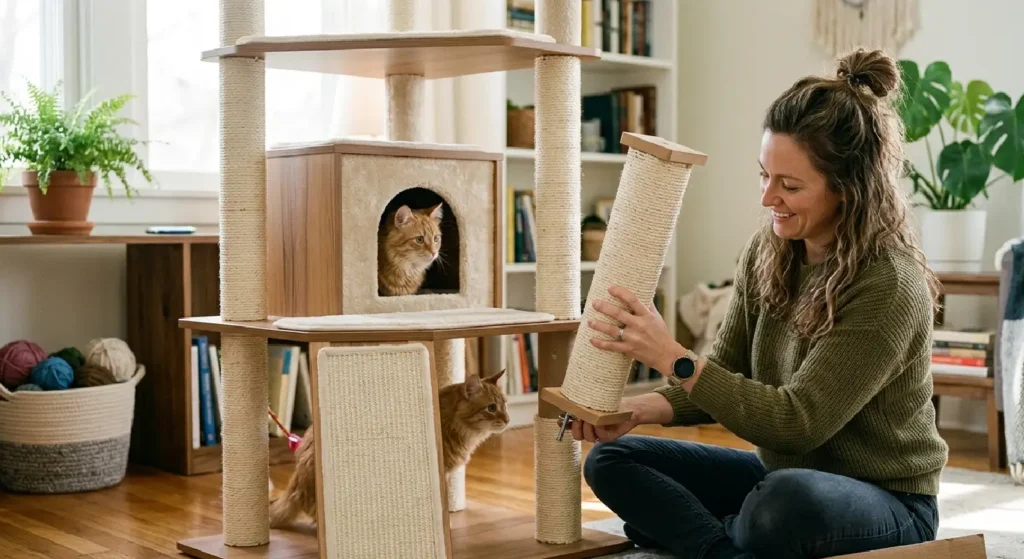
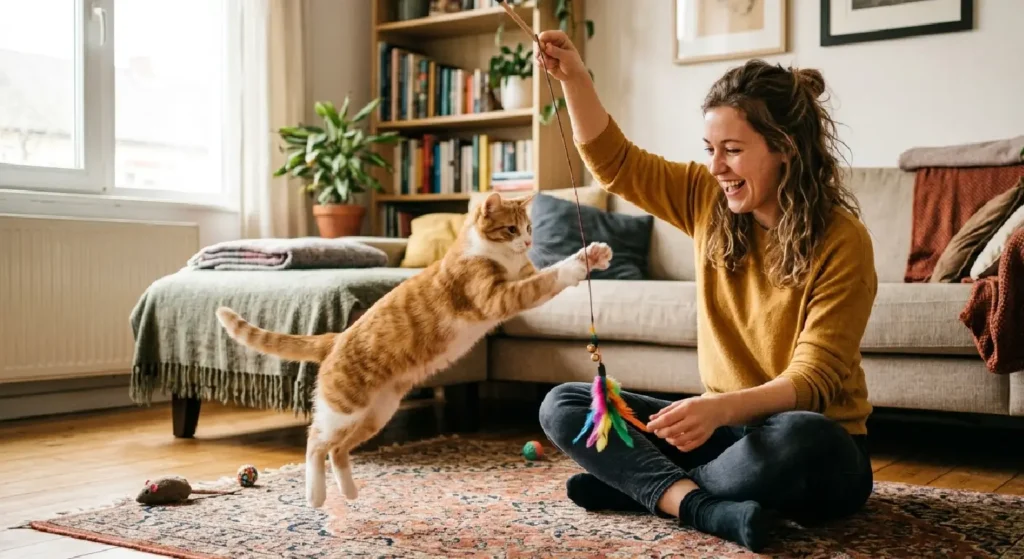
Toys alone are not enough; your indoor cat needs you. Aim for two or three short play sessions a day, around ten to fifteen minutes each, ideally before meals to mimic the natural hunt-eat-groom-sleep cycle. Consistency matters more than length, and a predictable rhythm helps an indoor cat feel secure.
Rotate your toys so a few are always “new,” and follow the energy in the room. Kittens and young adults want fast, intense play, while a senior cat may prefer gentle, slower games. Ending each session with a small treat or meal turns playtime into a complete, deeply satisfying ritual.
How to Get Your Cat to Sleep in Their Bed: Quick Reference
| Enrichment Item | Primary Benefit | How to Use It |
|---|---|---|
| Cat Tree | Exercise, scratching & safe high perches | Place near a window so it doubles as a gym and a lookout. |
| Interactive Toys | Satisfies the natural hunting drive | Use wand or feather teasers; end laser play with a real "catch." |
| Food Puzzles | Mental stimulation & slower eating | Hide kibble inside so meals become a problem to solve. |
| Window Perch | Low-effort entertainment all day | Mount by a busy window for birds, traffic and sunny naps. |
| Vertical Shelves | Expands territory without floor space | Create climbing routes and escape spots in multi-pet homes. |
| Daily Play Routine | Bonding, weight control & less boredom | Do 2–3 sessions of 10–15 min, ideally before meals. |
| Budget & DIY | Free enrichment you can rotate often | Offer boxes, paper bags, ping-pong balls and a little catnip. |
Signs Your Indoor Cat Is Bored
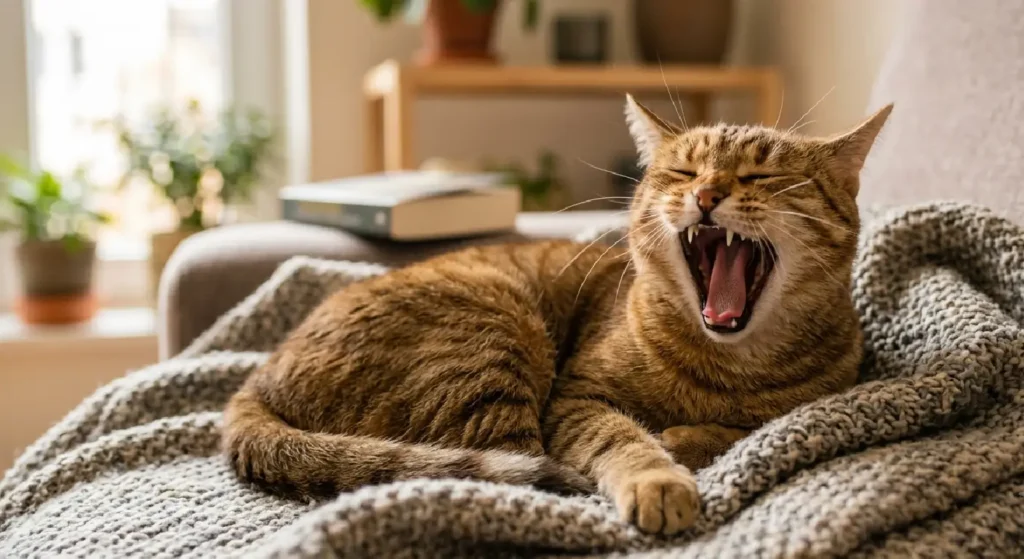
Recognizing under-stimulation early lets you fix it before it becomes a habit. Watch for these common signs that your companion needs more activity:
- Excessive sleeping paired with sudden bursts of frantic energy
- Over-grooming, sometimes to the point of bald patches
- Scratching furniture, knocking objects off shelves, or other “trouble” behavior
- Loud, repeated meowing for attention
- Overeating and steady weight gain
- Aggression or skittishness during handling
If your indoor cat shows several of these, more play, new toys, and added vertical space usually turn things around quickly.
Enrichment Ideas on a Budget
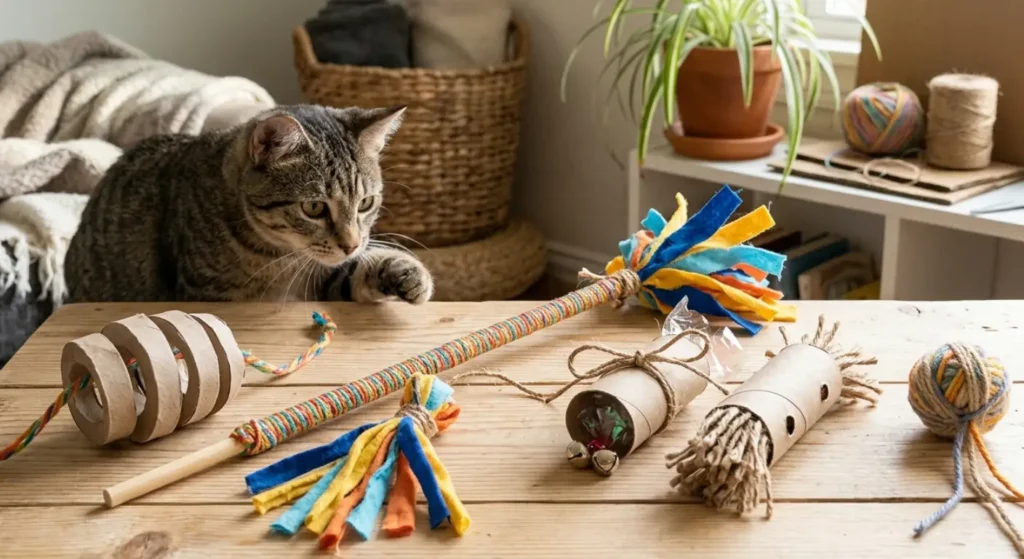
Keeping an indoor cat entertained does not require expensive gear. Plenty of free or cheap options work just as well:
- A cardboard box becomes an instant hideout, tunnel, or scratching surface.
- A paper bag with the handles removed turns into a crinkly play den.
- A ping-pong ball in an empty bathtub gives your cat a self-directed game of chase.
- Sprinkle a little catnip or silvervine on a worn-out toy to revive its appeal.
- Grow a pot of cat grass for safe, satisfying nibbling.
Rotating these simple items keeps the environment fresh without straining your budget.
Tips for Keeping Your Indoor Cat Happy
Bring it all together with a few habits that support any indoor cat:
- Play with your cat every day to strengthen your bond and burn energy.
- Rotate toys regularly so the familiar feels new again.
- Add vertical space such as shelves, perches, and cat trees.
- Keep scratching posts and pads in several rooms.
- Consider a second cat for companionship if your pet is social and your home allows it.
Manage Weight and Exercise Indoors
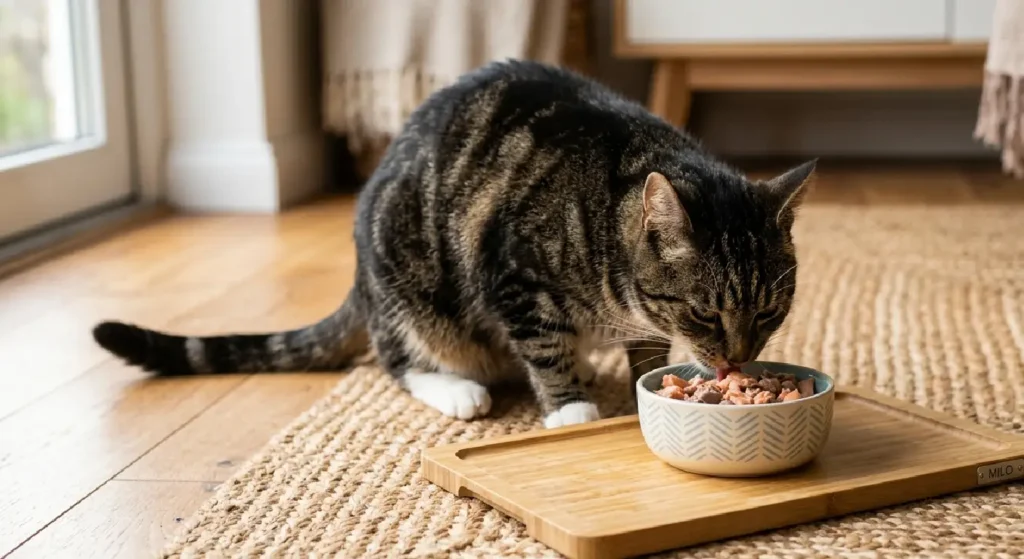
Weight control is one of the biggest health challenges for any indoor cat. Because movement is limited, calories add up fast, and even a little extra weight strains the joints and organs over time.
Combine measured meals with daily active play to keep an indoor cat trim. Food puzzles, wand-toy sprints, and a tall cat tree all encourage natural movement. Weigh your companion every few months and ask your vet for a target range, since a healthy weight is one of the clearest signs of a thriving feline.
Conclusion
A thriving indoor cat is the result of small, consistent choices. By combining a good cat tree, interactive toys, food puzzles, window perches, vertical space, and a steady play routine, you give your companion the exercise and mental stimulation it needs to stay healthy and content. Watch for signs of boredom, manage weight with daily activity, and remember that even simple homemade toys can transform an ordinary day. With a little attention, your indoor cat can live a long, full, and genuinely happy life inside.
Frequently Asked Questions
1. How much exercise does an indoor cat need each day?
Most cats do well with two to three play sessions a day, totaling about 30 to 45 minutes. Kittens and young adults need more vigorous activity, while a senior pet benefits from shorter, gentler sessions.
2. Are indoor cats really happier than outdoor cats?
A well-enriched indoor cat is typically safer and lives longer than an outdoor one, avoiding traffic, predators, and disease. The key is replacing the stimulation of the outdoors with toys, climbing space, and daily play.
3. What is the best toy for an indoor cat?
Wand and feather teasers usually top the list because they let you mimic prey and control the “hunt.” Pairing interactive toys with food puzzles gives your pet both physical and mental exercise.
4. Do indoor cats get lonely when left alone?
They can, especially social breeds. Window perches, food puzzles, and rotating toys help your companion stay occupied, and a compatible second cat can provide daytime company.
5. How do I stop my cat from scratching the furniture?
Provide approved scratching posts and pads near the spots it already targets, and reward your pet for using them. A cat tree with built-in posts redirects scratching naturally.
6. Why is my indoor cat overweight, and how do I help?
Limited movement plus free-feeding is the usual cause. Measure meals, switch to food puzzles, and schedule daily active play to help your companion reach a healthy weight.
7. How can I tell if my cat is bored?
Common signs include over-grooming, destructive scratching, loud meowing, overeating, and sudden bursts of frantic energy. More play and added vertical space usually help quickly.
8. Do I need a cat tree if my home is small?
Yes. Even in a small space, vertical room matters more than floor space for an indoor cat. A slim, tall cat tree or a few wall shelves expand the territory upward.
9. Can I keep my cat active without spending much money?
Absolutely. Cardboard boxes, paper bags, ping-pong balls, and a sprinkle of catnip can entertain your pet at little to no cost, especially when you rotate them often.
10. At what age should I adjust my cat's activity?
Activity should evolve with age. A senior feline, generally around 10 years and older, needs gentler, lower-impact play, while kittens and young adults thrive on fast, energetic sessions.