Do Cats Need Separate Scratching Posts?
For many cat owners, providing a scratching post for their feline friend is a must. Not only does scratching help to keep their claws sharp and in good condition, but it also helps cats to stretch and exercise their muscles. However, some cat owners may wonder if they need to provide separate scratching posts for each cat in a multi-cat household. In this blog post, we will explore the benefits of having separate scratching posts for each cat, as well as provide some tips on choosing the right cat trees and supplies for your furry friends.
Why Scratching Posts Matter So Much for Cats
Scratching is not a bad habit your cat picked up. It is a deeply rooted, instinctive behavior that serves several useful purposes at once. Good scratching posts give your cat a healthy outlet for all of them.
When a cat scratches, it is:
- Conditioning and sharpening its claws by shedding worn outer sheaths
- Stretching the shoulders, back, and legs for a full-body workout
- Leaving both a visual mark and a scent signal from glands in the paws to claim territory
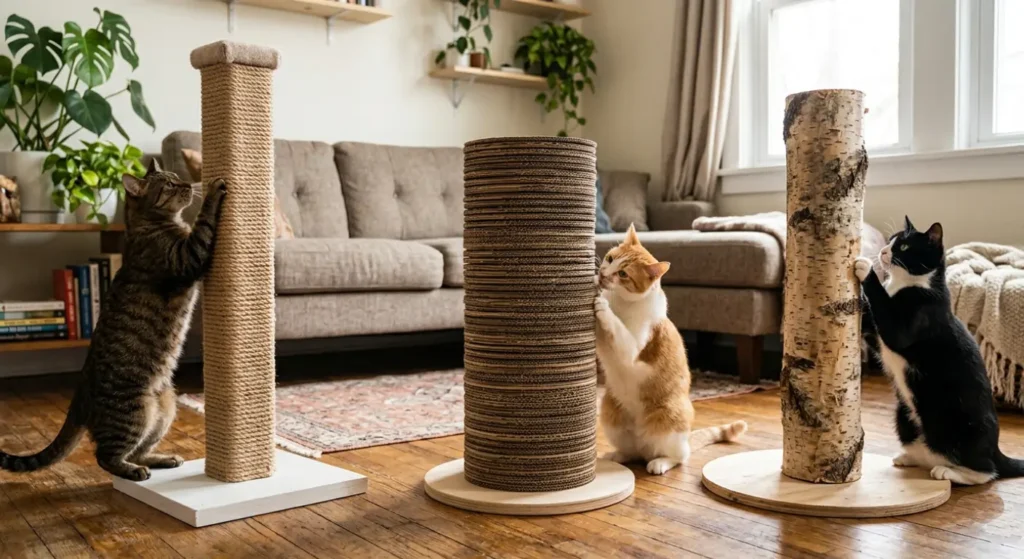
By offering quality scratching posts, you let your cat satisfy these natural urges in a way that protects your sofa, curtains, and door frames. Without enough of them, that energy almost always lands on your furniture instead.
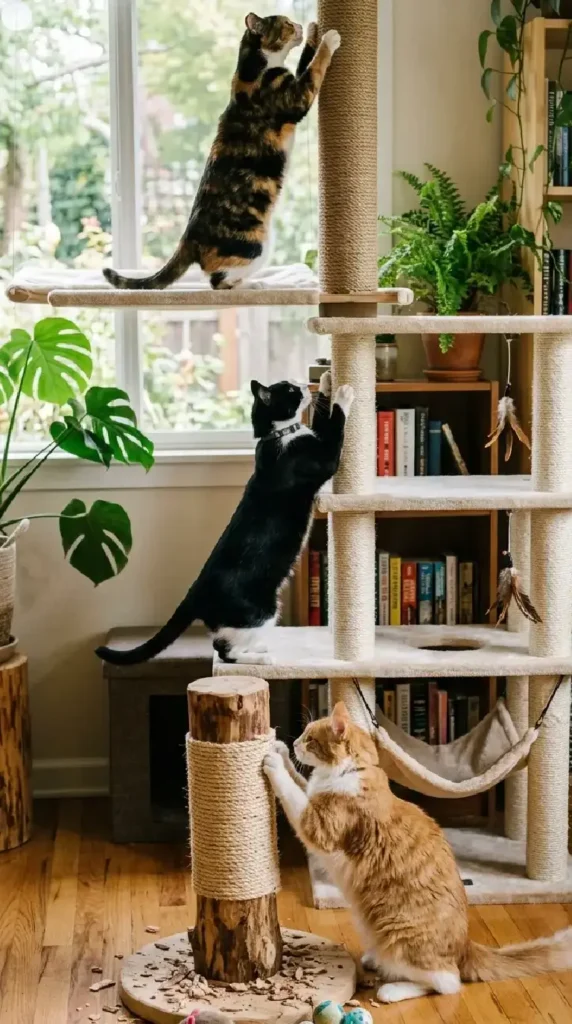
So, Do Cats Need Separate Scratching Posts?
The short answer is yes, in most multi-cat homes separate scratching posts are well worth it. While it can feel easier and cheaper to set out a single post for everyone, cats do not always share resources gracefully. Giving each cat access to its own scratching posts reduces tension and keeps every cat comfortable. Below are the main reasons separate scratching posts make such a difference.
Personal Territory for Each Cat
Cats are territorial by nature, and owning a personal post helps each cat carve out its own space inside your home. When every cat has its own dedicated post, competition drops and the risk of conflict in a multi-cat household goes down with it.
Different Cats, Different Preferences
Just like people, cats have individual tastes. One cat may love a tall vertical column, while another prefers to drag its claws across a flat horizontal surface. Providing a variety of posts means you can match each cat to the style it enjoys most.
Avoiding Sharing Conflicts
Forcing several cats to share one post can trigger bullying or resource guarding, where a dominant cat blocks the others from approaching. Separate scratching posts remove that bottleneck so every cat can scratch whenever the urge strikes, without waiting or fighting for a turn.
How Many Scratching Posts Should You Have?
A reliable rule of thumb is one post per cat, plus one extra. So a two-cat home ideally has three scratching posts spread around the house. This “plus one” approach prevents any cat from feeling cornered and gives shy or lower-ranking cats a safe option that is not being guarded. If your home has multiple floors, place at least one post on each level so no cat has to cross another’s territory just to stretch and scratch.
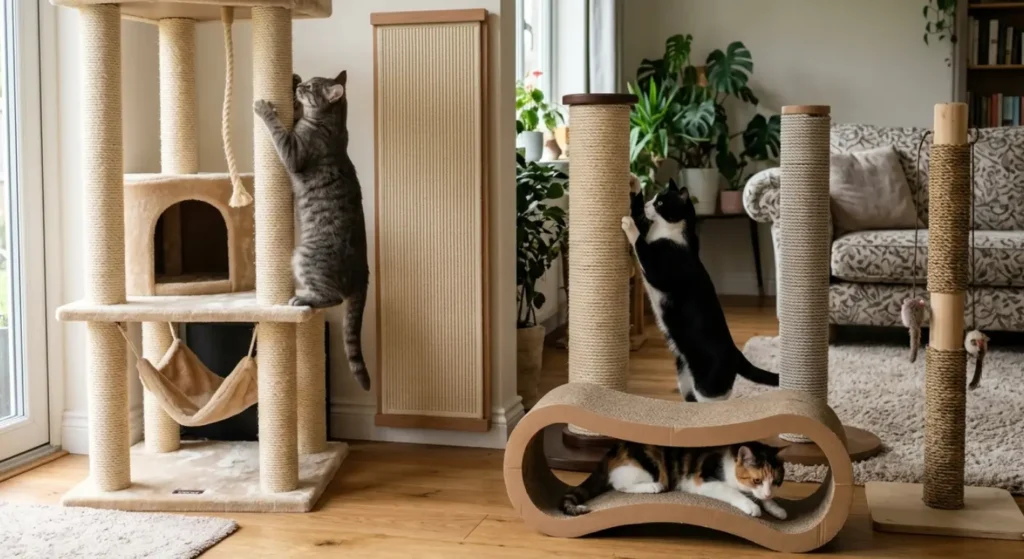
Best Cat Trees by Breed — UK Buyer's Guide
Different cat breeds have different needs when it comes to choosing a cat tree. The table below summarises our top recommendations by breed type to help you find the ideal match.
| Breed / Type | Recommended Cat Tree Style | Key Feature to Prioritise |
|---|---|---|
| Maine Coon | Heavy-duty multi-level cat tree | Wide platforms, 10 kg+ weight rating |
| Ragdoll | Tall cat tree with large condos | Low-access ramps, plush fabric |
| Bengal | Tall, feature-rich cat tree | Multiple platforms, dangling toys |
| British Shorthair | Solid mid-height cat tree | Sturdy construction, cosy hideaway |
| Siamese | Tall interactive cat tree | Sisal posts, hanging toy attachments |
| Senior Cat | Low-to-medium height cat tree | Ramps or wide steps, soft bedding |
| Kitten | Compact starter cat tree | Closely spaced platforms, safe enclosures |
| Multi-Cat Household | Wide-base cat tree, 5+ platforms | Multiple perches to reduce competition |
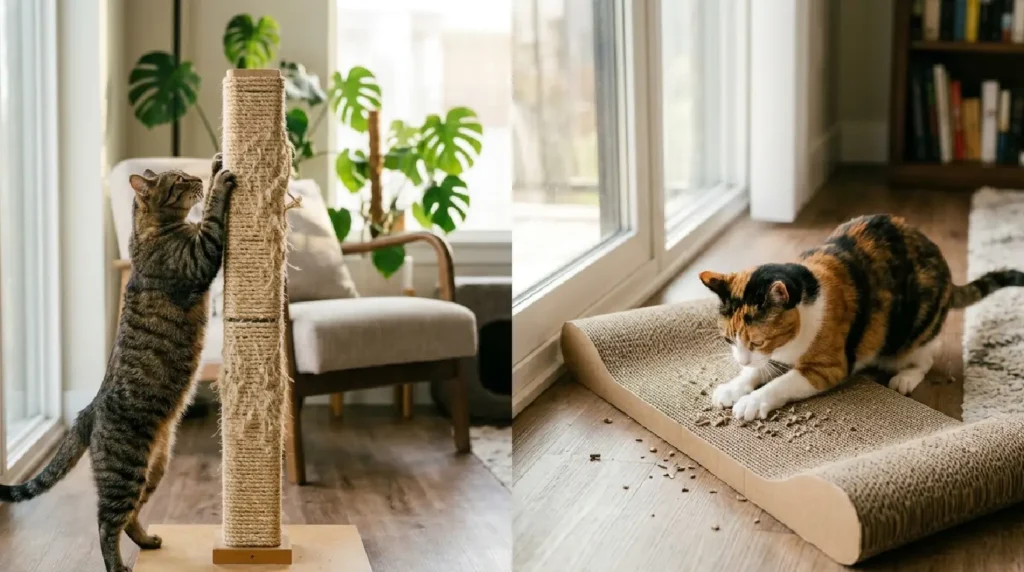
Vertical vs. Horizontal Scratching Posts
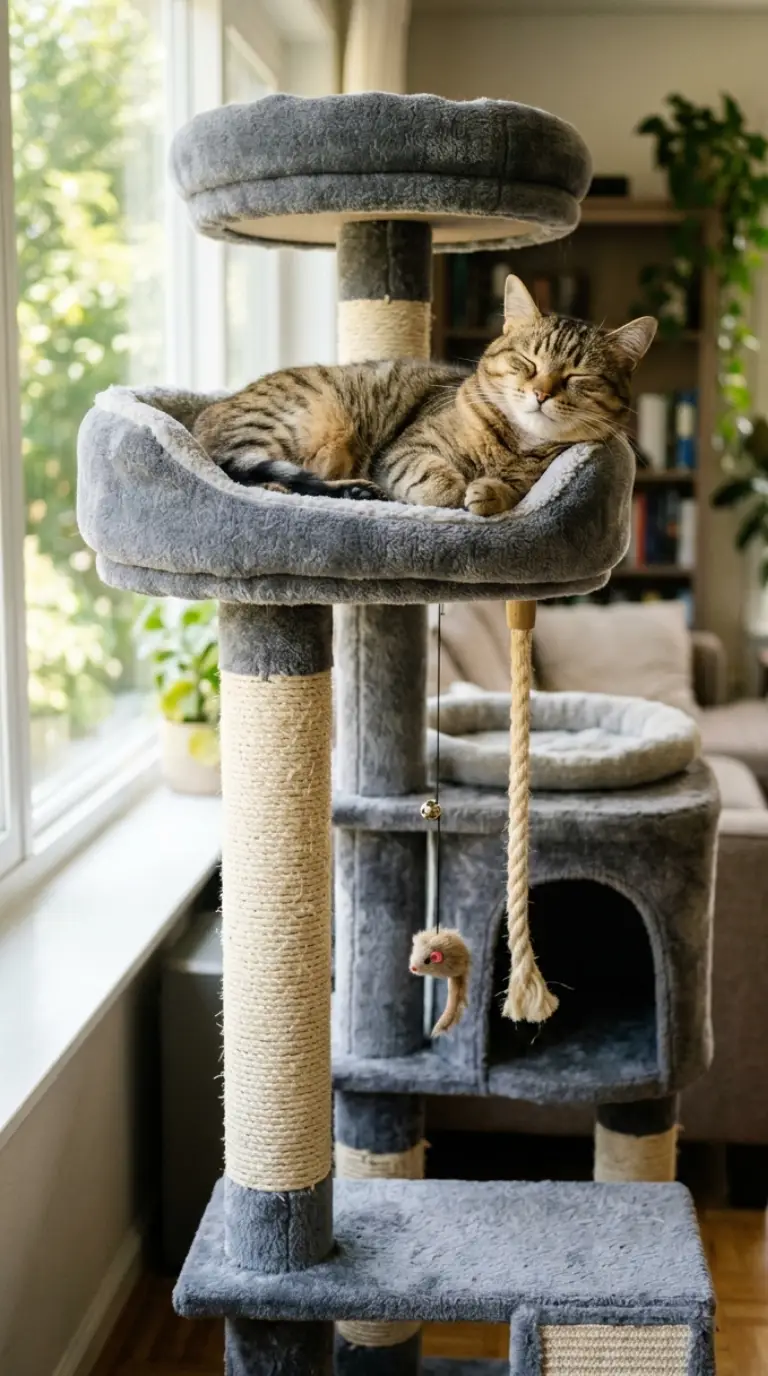
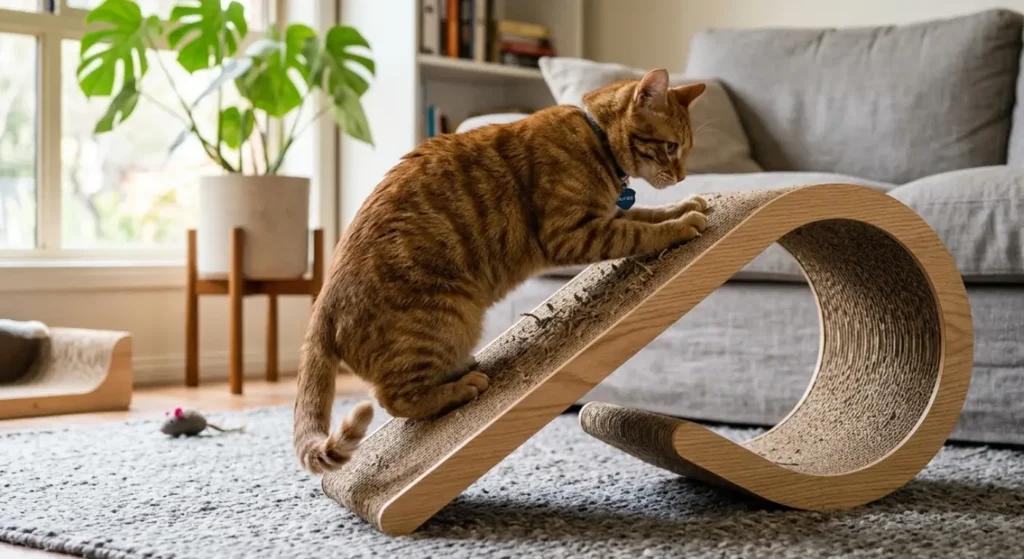
Cats stretch in different directions, so the orientation of your scratching posts matters more than many owners expect. Vertical posts and tall cat trees let a cat reach up and lengthen its spine, which appeals to confident climbers. Horizontal scratchers and angled ramps suit cats that like to dig downward into a surface. Because preferences vary, mixing both vertical and horizontal scratching posts throughout your home covers every cat’s natural style.
Choosing the Right Cat Trees and Scratching Posts
Not every post is created equal. Keeping a few key factors in mind will help you choose scratching posts your cats actually want to use.
Size and Stability
Pick a post that is tall enough for your cat to extend its full body during a stretch, and heavy or wide enough at the base that it will not wobble or tip over. A shaky post feels unsafe, and cats quickly abandon posts they cannot trust.
Material
Scratching posts come in materials such as sisal rope, sisal fabric, carpet, and corrugated cardboard. Many cats love sisal because its coarse texture gives satisfying resistance, but some prefer the softer feel of carpet or the give of cardboard. Offering a mix of materials lets each cat discover its favorite.
Location
Position scratching posts in the places your cats already gather. Near a favorite napping spot is ideal, since cats love to scratch right after waking. High-traffic rooms and entryways also work well. When posts sit in convenient, appealing spots, cats reliably choose them over the arm of your couch.
Vertical vs. Horizontal Scratching Posts
Cats stretch in different directions, so the orientation of your scratching posts matters more than many owners expect. Vertical posts and tall cat trees let a cat reach up and lengthen its spine, which appeals to confident climbers. Horizontal scratchers and angled ramps suit cats that like to dig downward into a surface. Because preferences vary, mixing both vertical and horizontal scratching posts throughout your home covers every cat’s natural style.
How to Encourage Cats to Use Their Scratching Posts
Buying great scratching posts is only half the job; you also want your cats to actually use them. Try these gentle, reward-based tactics:
- Rub a little catnip or use a catnip spray on the surface to draw curious cats in
- Dangle a wand toy near the post so playtime ends with a satisfying scratch
- Reward your cat with praise or a treat the moment it uses the post
- Place posts beside the furniture your cat has been targeting, then slowly shift them where you want
- Never force a paw onto the post, as a forced or negative experience can make a cat avoid scratching posts entirely
Patience pays off. Most cats adopt new posts within a few weeks when the posts are sturdy, well-placed, and rewarding to use.
Common Mistakes to Avoid
Even devoted owners slip up when setting up scratching posts. Steer clear of these frequent missteps:
- Choosing posts that are too short for a full stretch
- Hiding posts in a quiet corner no cat ever visits
- Offering only one material when your cats clearly prefer another
- Throwing out a well-loved post too soon because it looks worn — that shredded look means your cat trusts it
- Skipping the “one per cat plus one” guideline and leaving cats to compete
Conclusion
While a single post might seem simpler, separate scratching posts deliver real benefits in any multi-cat home. Giving each cat its own surface lowers competition, honors individual preferences, and heads off the sharing squabbles that stress cats out. As you shop for cat trees and supplies, weigh size, stability, material, and location so every cat has somewhere appealing to scratch. Provide enough well-chosen scratching posts and you reward your cats with healthier claws, happier moods, and far less interest in your furniture. After all, a well-scratched cat is a contented cat.
Ready to find the perfect setup for your feline family? Explore our selection of cat trees and scratching posts today.
Frequently Asked Questions (FAQs)
1. Do cats really need separate scratching posts in a multi-cat home?
In most cases, yes. Separate scratching posts give each cat its own territory, reduce competition, and prevent the bullying that can happen when several cats are forced to share one surface.
2. How many scratching posts should I have for two cats?
Follow the “one per cat plus one” rule, which means three scratching posts for two cats. The extra post ensures a shy cat always has an unguarded option.
3. Where is the best place to put scratching posts?
Place scratching posts near sleeping areas, in high-traffic rooms, and next to any furniture your cat has been scratching. Cats love to stretch and scratch right after they wake up.
4. What material is best for scratching posts?
Many cats prefer sisal because of its rough, satisfying texture, but others like carpet or cardboard. Offering a mix of materials helps each cat find a favorite.
5. Should scratching posts be vertical or horizontal?
Both. Some cats stretch upward and prefer tall vertical posts, while others dig downward and enjoy horizontal scratchers. Providing both styles suits every cat.
6. How tall should a scratching post be?
Tall enough for your cat to fully extend its body while standing on its hind legs. A short post that prevents a full stretch is far less appealing to most cats.
7. How do I get my cat to use a new scratching post?
Use catnip, play with a wand toy near the post, and reward your cat with treats or praise when it scratches. Placing the post beside targeted furniture also helps.
8. Will separate scratching posts stop my cats from scratching furniture?
They greatly reduce it. When cats have enough attractive, well-placed scratching posts, they usually choose them over your couch or curtains.
9. Can two cats share one scratching post peacefully?
Some bonded cats can, but many will not. Sharing often leads to resource guarding, so separate scratching posts are the safer choice for harmony.
10. When should I replace a scratching post?
Replace a post only when it becomes unstable or so worn that your cat loses interest. A shredded but sturdy post is often your cat’s favorite, so do not toss it too early.