Non-Toxic Materials for Cat Furniture
Every cat owner wants their companion to thrive, and that starts with the spaces where cats sleep, scratch, and climb. Choosing non-toxic cat furniture is one of the simplest yet most overlooked ways to protect your pet’s long-term health. Because cats spend so many hours perched, curled up, and grooming on these surfaces, the materials they touch every day genuinely matter.
Furthermore, cats are naturally curious. Much like toddlers, they explore the world with their mouths and paws, which means they can easily absorb or swallow harmful substances. That is precisely why investing in non-toxic cat furniture is not a luxury but a meaningful safeguard for your feline friend.
In this guide, you will learn which dangerous materials to steer clear of, which safe alternatives to look for, and how to confidently shop for non-toxic cat furniture that supports your cat’s well-being.
The Real Importance of Choosing Non-Toxic Materials
Cats interact with their environment far more intimately than most pets. They knead with their paws, scratch with their claws, and frequently lick their fur after rubbing against surfaces. Consequently, any chemical residue on a cat tree or bed can end up inside their body.
Over time, exposure to questionable materials may trigger respiratory irritation, itchy skin, watery eyes, or, in serious situations, gradual poisoning. Therefore, prioritizing non-toxic cat furniture helps you avoid these preventable risks. In short, the safer the materials, the healthier and happier your cat is likely to be.
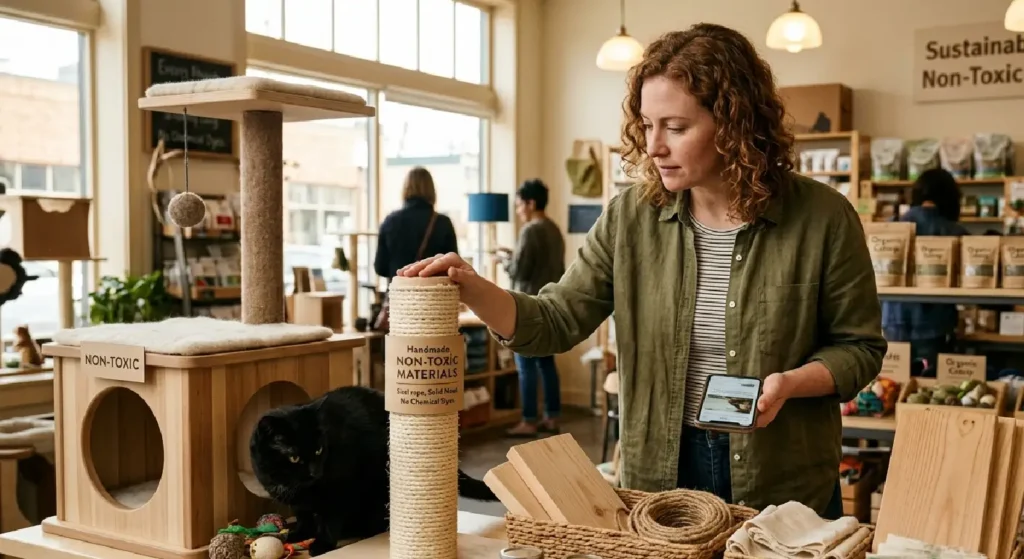
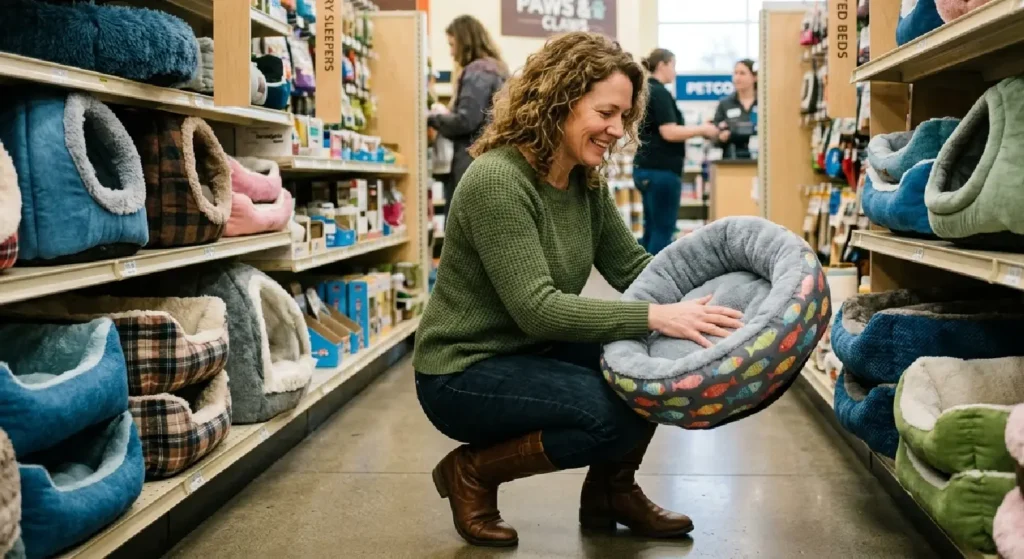
Common Toxic Materials You Should Avoid
When shopping, watch closely for these frequent offenders, which often hide in budget-priced products:
- Formaldehyde – commonly released by cheap glues and pressed wood
- Phthalates – softening agents found in some plastics and synthetic fabrics
- Lead – occasionally present in low-quality paints and finishes
- Bisphenol A (BPA) – a chemical used in certain hard plastics
- Flame retardants – sprayed onto some foams and upholstery fabrics
These substances appear most often in inexpensive, mass-produced items. As a result, reading labels and researching brands before buying is essential if you want truly non-toxic cat furniture.
Non-Toxic Materials for Cat Trees and Climbing Structures
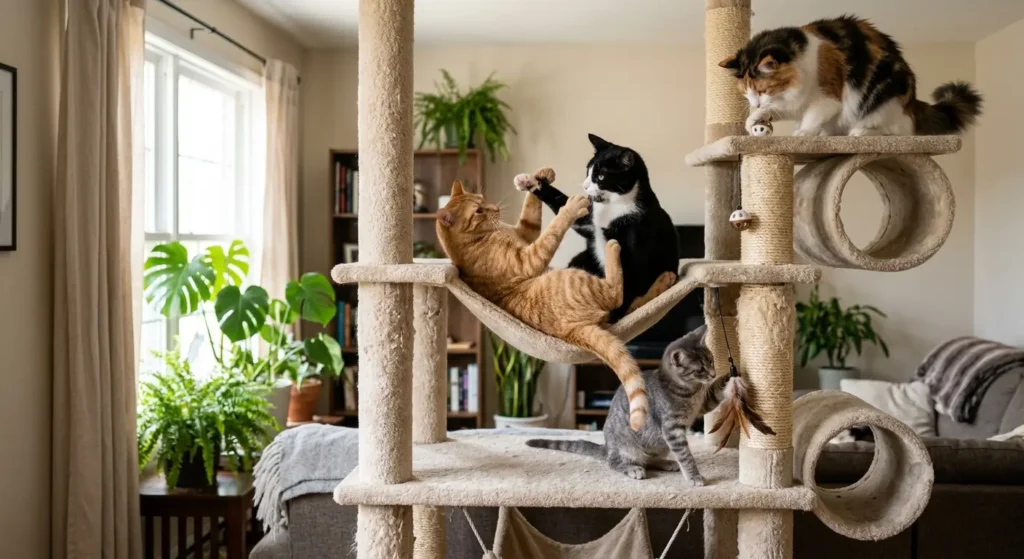
A cat tree is usually the centerpiece of any feline play area. It gives your cat a place to climb, scratch, nap, and survey their territory from above. Since cats use these structures constantly, building or buying a non-toxic cat tree should be a top priority.
When evaluating climbing furniture, look for these safe, pet-friendly materials:
- Natural sisal rope for durable, satisfying scratching posts
- Solid real wood for sturdy platforms and perches
- Cotton or hemp fabric for cozy hammocks and resting spots
- Plant-based, non-toxic dyes and finishes that won’t off-gas chemicals
By choosing these elements, you ensure your cat enjoys a healthy, secure spot to relax. Ultimately, non-toxic cat furniture like a well-made cat tree supports both physical safety and emotional comfort.
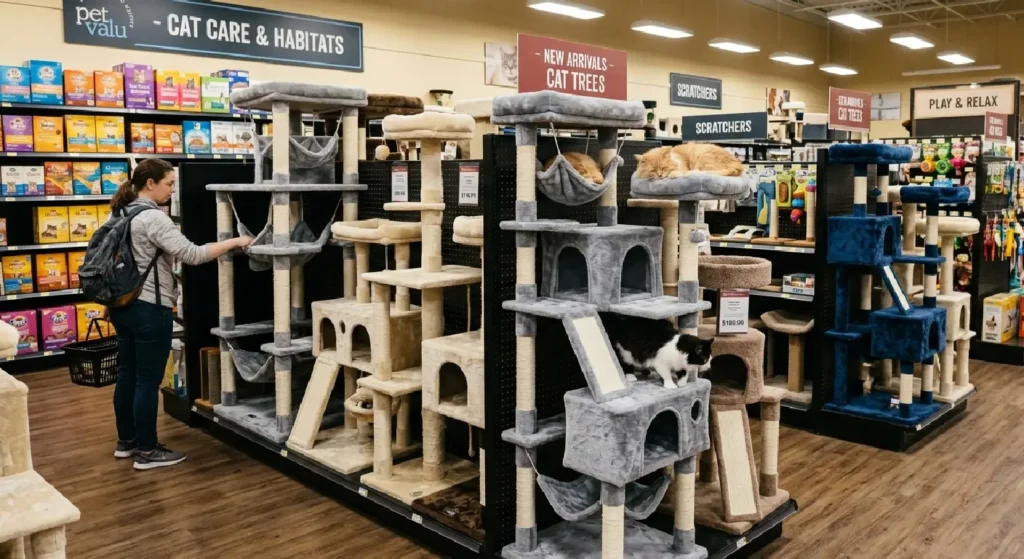
How to Identify Truly Non-Toxic Cat Furniture When Shopping
Marketing language can be misleading, so knowing how to verify safety claims is invaluable. Use this practical checklist whenever you shop for non-toxic cat furniture:
- Read the full materials list. Vague descriptions like “premium fabric” often hide synthetic blends.
- Look for recognized certifications. Labels such as OEKO-TEX, GREENGUARD, or CertiPUR-US indicate tested, lower-emission materials.
- Check the adhesives. Pressed-wood pieces held together with formaldehyde-heavy glue are best avoided.
- Question very low prices. Suspiciously cheap items frequently cut corners on safety.
- Contact the manufacturer. Reputable brands gladly share sourcing and finishing details.
By following these steps, you can confidently separate genuinely safe products from those that simply sound healthy. This diligence is the heart of choosing reliable non-toxic cat furniture.
DIY Non-Toxic Cat Furniture: A Budget-Friendly Option
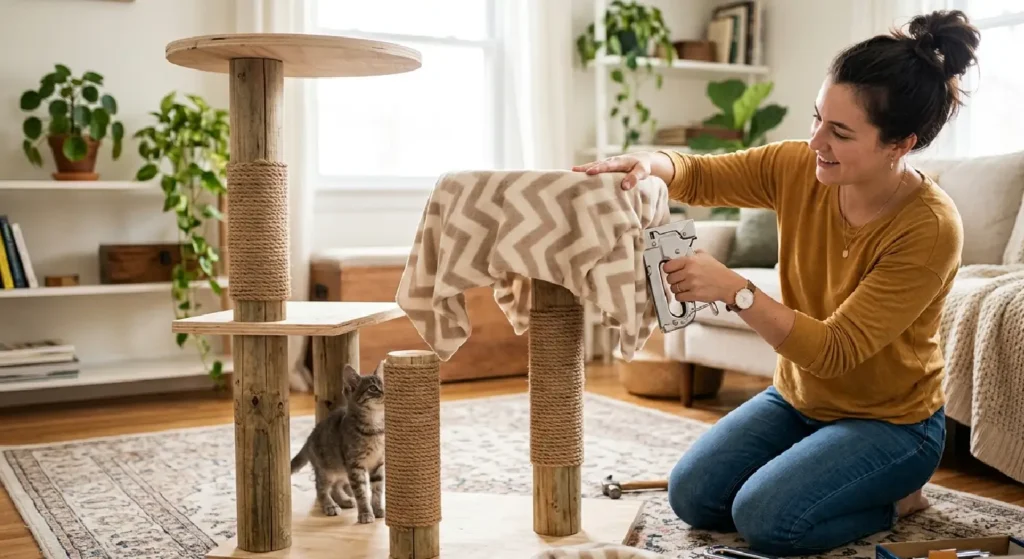
If store prices feel steep, building your own pieces is a rewarding alternative. Crafting DIY non-toxic cat furniture lets you control every material from start to finish.
Start with untreated solid wood, wrap posts in natural sisal rope, and add covers sewn from organic cotton. Use water-based, low-VOC sealants if you want a protective finish. Because you select each component yourself, you can guarantee the result is both safe and durable. Moreover, homemade projects often cost less while perfectly fitting your space and your cat’s preferences.
Vacuum fabric surfaces weekly to remove fur and dander. For spot cleaning, use diluted, pet-safe solutions rather than harsh commercial disinfectants, since strong chemicals can linger and irritate your cat. Additionally, inspect sisal rope and wooden joints periodically for wear, replacing parts before they splinter or fray. With consistent care, your non-toxic cat furniture will remain safe and inviting for years.
Non-Toxic Cat Furniture: Materials at a Glance
A quick reference for what to avoid and what to choose when shopping for safe, pet-friendly furniture.
| Furniture / Supply | Avoid (Toxic) | Choose (Non-Toxic) | Why It Matters |
|---|---|---|---|
| Scratching Posts | Synthetic carpet treated with adhesives | Natural sisal rope | Durable and satisfying to scratch, with no chemical coating to ingest. |
| Platforms & Perches | Pressed wood with formaldehyde glue | Solid real wood | Avoids off-gassing fumes that can irritate the lungs and eyes. |
| Hammocks & Beds | Flame-retardant or phthalate fabrics | Cotton or hemp | Breathable natural fibers cats lick and rub against safely. |
| Dyes & Finishes | Lead paint, solvent-based stains | Water-based, low-VOC finishes | Prevents heavy-metal exposure and lingering toxic fumes. |
| Bowls & Carriers | BPA-containing hard plastic | BPA-free plastic | Reduces chemical leaching into food, water, and daily contact. |
| Toys | Soft PVC with phthalates | Natural rubber & organic catnip | Chew-safe materials free from pesticides and softening chemicals. |
| Mats & Scratchers | Bonded synthetic blends | Natural plant fibers | Keeps everyday surfaces chemical-free across your cat's routine. |
Tip: Look for OEKO-TEX, GREENGUARD, or CertiPUR-US certifications to confirm low-emission, tested materials.
Conclusion
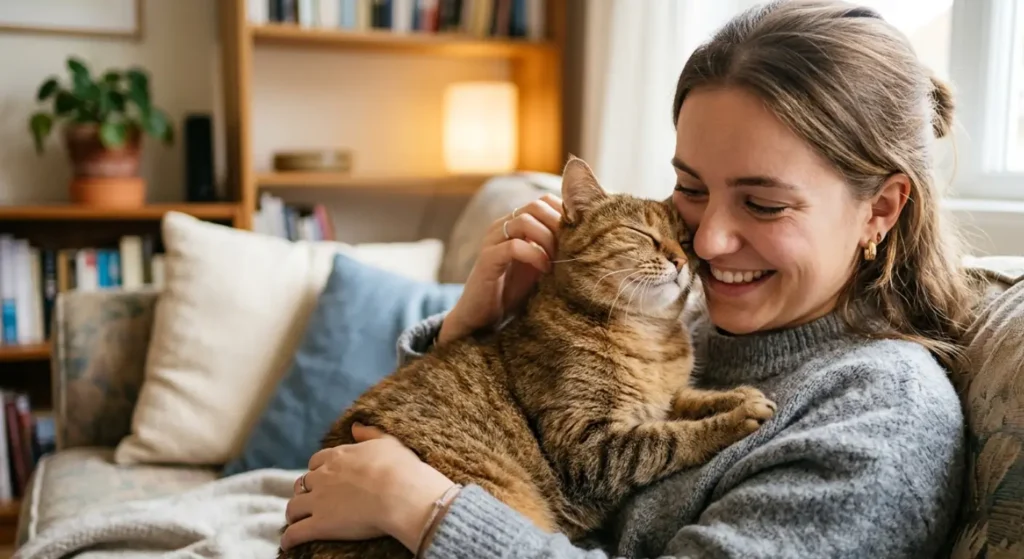
Selecting non-toxic cat furniture is one of the most caring decisions you can make for your feline companion. By avoiding hazardous chemicals and favoring natural, certified materials, you create a space that nurtures your cat’s health and happiness. Although safer products may cost a little more upfront, the lasting peace of mind is well worth it. Ultimately, a thoughtful, chemical-free environment lets your cat climb, scratch, and rest exactly as nature intended.
Frequently Asked Questions
1. What makes cat furniture non-toxic?
Non-toxic cat furniture is built from natural or certified materials, such as solid wood, sisal rope, organic cotton, and water-based finishes, that release no harmful chemicals your cat could absorb or ingest.
2. Which materials should I avoid in cat furniture?
Steer clear of formaldehyde, phthalates, lead, BPA, and chemical flame retardants. These substances commonly appear in cheaply made products and can harm your cat’s health over time.
3. Is sisal rope safe for cats?
Yes. Natural sisal rope is a plant-derived fiber that is durable, satisfying to scratch, and free from harmful chemicals, making it a staple of non-toxic cat furniture.
4. Are painted or stained cat trees safe?
They can be, provided the dyes and finishes are non-toxic and water-based. Avoid pieces finished with lead-based paint or solvent-heavy stains that may off-gas fumes.
5. How can I tell if a cat tree is truly non-toxic?
Read the complete materials list, look for certifications like OEKO-TEX or GREENGUARD, check the adhesives used, and contact the manufacturer if any details are unclear.
6. Is BPA harmful to cats?
BPA is a chemical linked to health concerns, so choosing BPA-free plastic for bowls, toys, and supplies is a smart way to keep your cat safe.
7. Can I make my own non-toxic cat furniture?
Absolutely. Using untreated solid wood, natural sisal rope, organic cotton, and low-VOC sealants lets you build affordable, safe pieces while controlling every material yourself.
8. Are fabric hammocks and beds safe for cats?
They are when made from natural fibers like cotton or hemp. Avoid synthetic fabrics treated with flame retardants or phthalate-based softeners.
9. How do I clean non-toxic cat furniture without chemicals?
Vacuum regularly and spot-clean with diluted, pet-safe solutions. Harsh disinfectants can leave irritating residues, so gentle cleaning keeps furniture both safe and fresh.
10. Is non-toxic cat furniture worth the higher price?
Yes. While safer materials may cost more initially, they reduce health risks, last longer, and provide lasting peace of mind, making them a worthwhile investment in your cat’s well-being.